Enlarged Prostate After 40: Symptoms, Causes and What Actually Helps
Short answer
An enlarged prostate after 40 — benign prostatic hyperplasia — is a non-cancerous growth that presses on the urethra and changes how you urinate. It is extremely common, it does not turn into cancer, and symptoms are usually manageable. Treatment ranges from monitoring to medication, procedures and surgery.
Most men do not go looking for information about an enlarged prostate after 40 because of a diagnosis. They go looking because something changed. The stream is not what it was. The nights are broken. There is a nagging sense of not being finished when they leave the bathroom.
And then they hit a wall of content that is either terrifying, vague, or trying to sell them a bottle of capsules within the first two paragraphs.
This guide is the plain version. What is actually happening in your body, what the symptoms mean, what doctors can genuinely do about it, and what the evidence says about the supplements marketed for it — including where that evidence is weak. It is the hub of our prostate coverage, and each section links to a deeper article if you want the detail.
What is an enlarged prostate, and why does it happen?
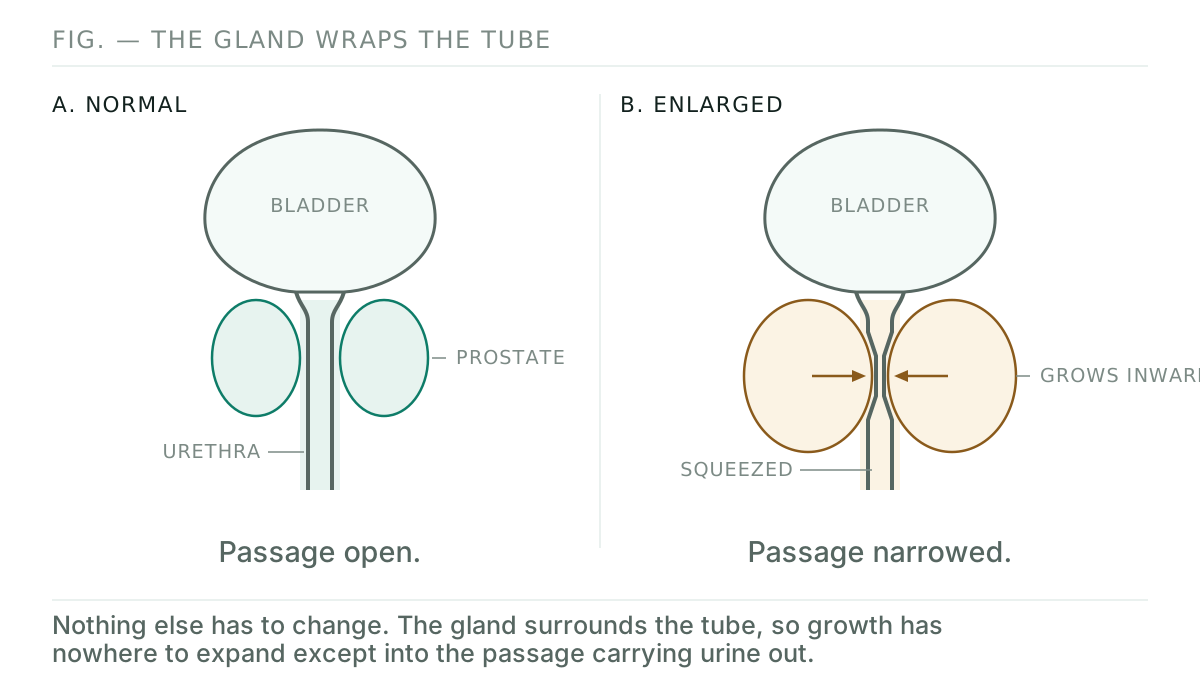
The prostate is a small gland that sits below the bladder and wraps around the urethra, the tube urine passes through. From midlife onwards it tends to grow. Because of where it sits, growth squeezes the tube it surrounds — which is why a gland problem shows up as a plumbing problem.
The medical name is benign prostatic hyperplasia, usually shortened to BPH. "Benign" matters here: it means non-cancerous. The growth is driven largely by hormonal changes over time and is considered a normal part of male ageing rather than a disease you caught or caused.
Benign prostatic hyperplasia becomes more common with every decade of life, affecting roughly half of men by their sixties and the large majority of men by their eighties.
National Institute of Diabetes and Digestive and Kidney Diseases (NIDDK), National Institutes of HealthTwo things follow from that statistic. First, you are not unlucky — this is closer to grey hair than to illness. Second, prostate size and symptom severity are not tightly linked. Some men with a large prostate have almost no trouble; some with modest enlargement are up four times a night. Where the growth sits matters more than how much there is.
What are the symptoms of an enlarged prostate?
Symptoms fall into two groups. Storage symptoms are about the bladder holding urine — going often, sudden urgency, and waking at night. Voiding symptoms are about getting urine out — a weak stream, a delay before it starts, straining, stopping and starting, and dribbling at the end.
Most men have some of both. The mix is useful information for a doctor, so it is worth noticing which side dominates for you.
Storage symptoms
- Waking at night to urinate. Often the first symptom men actually notice, because it costs them sleep. We cover it in depth in why you wake up three times a night to pee.
- Going more often during the day, in smaller amounts each time.
- Sudden urgency — the feeling that you need a bathroom now, not in ten minutes.
Voiding symptoms
- A weaker stream than you used to have. This is the change men most often measure themselves against, and it has its own guide: weak urine stream after 50.
- Hesitancy — standing there waiting for it to start.
- Straining to push urine out.
- A feeling of incomplete emptying, covered in why your bladder never feels empty.
- Post-void dribbling after you think you have finished.
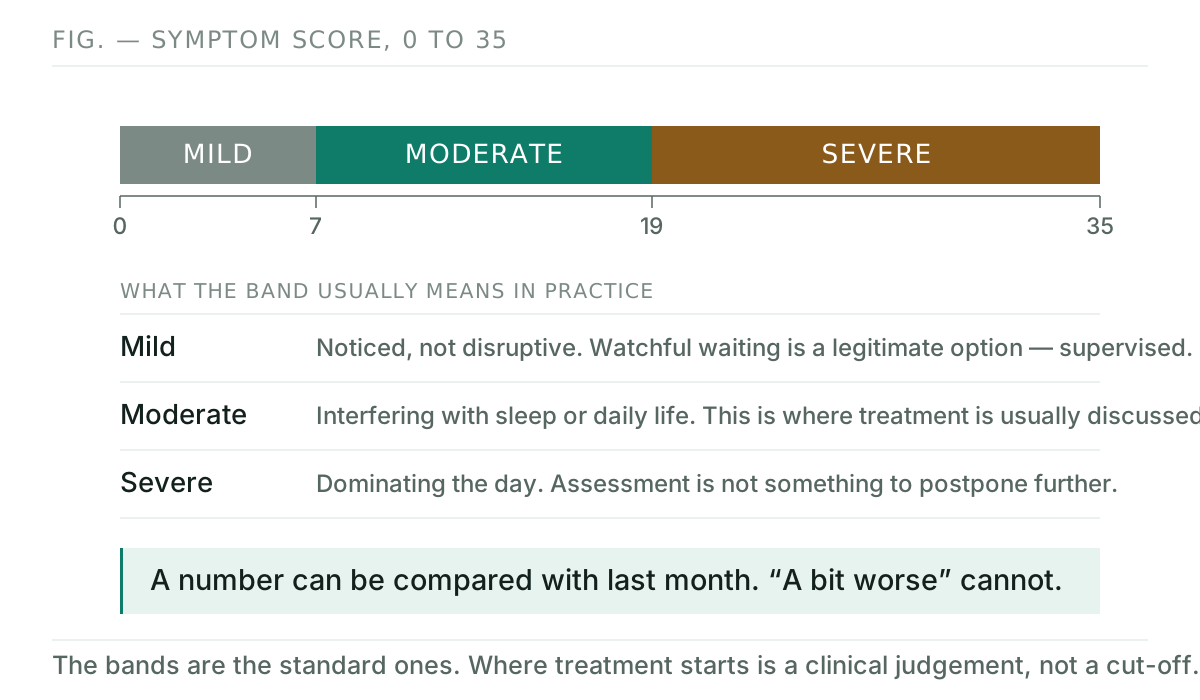
Urologists commonly use the International Prostate Symptom Score, a seven-question questionnaire that grades severity from mild to severe. Filling one in before your appointment turns "things aren't right" into a number your doctor can track over time — and it is the same tool they will use to judge whether a treatment worked.
Is an enlarged prostate the same as prostate cancer?
No, and this is the fear that keeps most men from raising it. BPH is non-cancerous. It does not turn into prostate cancer and it does not increase your risk of developing it. They are separate conditions that happen to affect the same gland in the same age group.
The complication is that they can produce overlapping symptoms and can exist in the same man simultaneously. That is precisely why symptoms alone cannot tell you which you have, and why "it's probably just my prostate" is not a safe conclusion to reach on your own. We go through the distinction carefully in BPH versus prostate cancer.
How do doctors actually diagnose it?
The workup is more straightforward than most men expect. It usually begins with your symptom history and a questionnaire, followed by a urine test to rule out infection. A physical examination and often a PSA blood test come next, with flow or ultrasound measurements added when the picture needs clarifying.
Typical steps, roughly in order:
| Step | What it involves | What it tells the doctor |
|---|---|---|
| Symptom score | A seven-question form you fill in | Severity, and a baseline to measure treatment against |
| Urine test | A sample in a cup | Rules out infection, blood or sugar as the cause |
| Digital rectal exam | Brief physical examination, seconds long | Size, shape and texture of the gland |
| PSA blood test | Standard blood draw | One input among several — BPH itself can raise PSA |
| Uroflowmetry | You urinate into a measuring device | Objective flow rate rather than your impression of it |
| Post-void ultrasound | Painless scan of the bladder after urinating | How much urine is left behind |
The PSA line deserves a note. An enlarged prostate can raise PSA on its own, so a raised result is not automatically a cancer signal — it is a reason for context and follow-up, interpreted alongside everything else. Going in knowing that spares a lot of unnecessary fear while you wait for results.
What treatments actually work?
Real options exist at every level of severity, and most men never need surgery. Treatment is usually matched to how much the symptoms interfere with your life rather than to the size of the gland, which is why the symptom score matters more than the measurement.
| Approach | Roughly who it suits | What to know |
|---|---|---|
| Watchful waiting | Mild symptoms that do not bother you much | Active monitoring with lifestyle changes, reviewed periodically |
| Alpha blockers | Moderate symptoms wanting fast relief | Relax muscle rather than shrink the gland; often work within weeks; can cause dizziness and changes to ejaculation |
| 5-alpha reductase inhibitors | Larger glands, longer horizon | Actually reduce prostate size over months, not days; sexual side effects possible; they lower PSA readings, which your doctor must account for |
| Combination therapy | More significant symptoms | Both drug classes together, with both side effect profiles |
| Minimally invasive procedures | Men wanting to avoid surgery or long-term medication | Several techniques exist that lift, shrink or steam obstructing tissue; usually day procedures |
| Surgery | Severe symptoms, or complications | Long-established and effective; reserved for when other routes are unsuitable or have failed |
We have deliberately not listed drug names and doses here, because the choice depends on your other medications, your blood pressure and your priorities — including whether sexual side effects are acceptable to you. That trade-off is a conversation, not a lookup.
Do prostate supplements help with an enlarged prostate?
This is where honest coverage separates from marketing. No supplement has been shown to reliably shrink the prostate. Cochrane's systematic review of saw palmetto, the most studied ingredient in the category, found no improvement over placebo for urinary symptoms at the doses tested.
That does not mean nobody should ever try one. It means you should go in with accurate expectations, a defined trial period, and a clear refund path — rather than the belief that you are buying a proven treatment. The full evidence, including the studies the ads cite and what they actually showed, is in what the Cochrane review actually found on saw palmetto.
Several ingredients common in men's health formulas affect blood pressure, and one works directly against blood pressure medication. Proprietary blends hide the doses, which makes the risk impossible to assess. Before starting anything, go through prostate supplements and blood pressure medication and take the bottle to a pharmacist.
If you have decided to trial one anyway, two practical questions decide whether the experiment tells you anything: how long to give it, and how to measure change. We cover the first in how long prostate supplements take to work.
What can you change at home?
Lifestyle changes will not shrink a prostate, but they can meaningfully reduce how much the symptoms interfere with your life — particularly the night-time ones. They are also the only part of this you control completely, and they cost nothing to try.
- Move fluids earlier in the day rather than reducing total intake. Dehydration concentrates urine and irritates the bladder.
- Cut alcohol and caffeine in the evening. Both irritate the bladder and alcohol suppresses the hormone that concentrates urine overnight.
- Empty twice before bed — urinate, wait a few minutes, try again.
- Do not hold on for hours. Repeatedly overfilling the bladder works against you.
- Stay active. Sedentary time is associated with worse urinary symptoms; regular walking is a reasonable place to start.
- Review over-the-counter medicines. Some decongestants and antihistamines can worsen urinary retention — ask a pharmacist before taking them.
None of this is a cure, and any page promising one is selling something. The realistic goal is a life where you rarely think about your bladder — and that goal is achievable for most men.
When should you see a doctor?
Being unable to urinate at all is an emergency called acute urinary retention and needs immediate care. Blood in your urine, fever alongside urinary symptoms, or severe pain also warrant urgent assessment rather than a routine appointment several weeks away.
Short of those, the practical trigger is the effect on your life. If broken sleep is affecting your mood, your work or your safety driving, that is reason enough — you do not need to reach a severity threshold to be taken seriously. Untreated obstruction can also lead to bladder or kidney problems over time, so waiting is not a neutral choice.
One last thing worth saying plainly: this is an ordinary conversation for a doctor. They have it several times a week. The embarrassment is real, but it is entirely one-sided.
Key takeaways
- Benign prostatic hyperplasia is a non-cancerous growth. It does not turn into prostate cancer.
- The trouble comes from where the growth sits — pressing on the urethra — rather than from the size of the gland by itself.
- Treatment is a range rather than a single option: monitoring, medication, procedures, surgery.
- Prescription treatment has evidence behind it that no supplement in this category comes close to matching.
- Being unable to pass urine at all is an emergency, not something to keep an eye on.
Where to go from here
This guide is the overview. Each of these goes deeper into one part of it:
- Why Do I Wake Up 3 Times a Night to Pee? — the symptom most men notice first.
- Weak Urine Stream After 50: What It Means — the change men measure themselves against.
- Can't Fully Empty Your Bladder? What's Going On — the symptom that travels with the others.
- BPH vs Prostate Cancer: How to Tell the Difference — the fear worth resolving properly.
- Saw Palmetto for Prostate: What the Cochrane Review Actually Found — the evidence behind the main ingredient.
- Prostate Supplements and Blood Pressure Medication — essential reading if you take prescriptions.
- How Long Do Prostate Supplements Take to Work? — how to run a trial that actually tells you something.
- PSA Levels by Age: What Your Number Actually Means — what the figure means, what moves it, and why the trend beats one reading.
- What Actually Happens at a Prostate Exam — the appointment described plainly, start to finish.
- Prostate Medications: What Each One Actually Does — the two prescription classes, what each does and how fast.
- Prostatitis or Enlarged Prostate? How to Tell — the other condition that produces the same symptom list.
- Prostate Surgery Options: When Medication Is Not Enough — what each procedure does, and what makes it not a choice.
- Foods and Drinks That Make Prostate Symptoms Worse — the free change worth trying before anything else.
- Enlarged Prostate and Sex: What Actually Changes — the question men ask last, answered properly.
- Pelvic Floor Exercises for Men: Doing Them Right — the free option that fails when the wrong muscle is used.
Frequently asked questions
At what age does the prostate start to enlarge?
Prostate growth typically begins in a man's forties and continues gradually with age. Many men have measurable enlargement long before they notice symptoms, because the prostate can grow considerably before it presses on the urethra enough to change how you urinate.
Does an enlarged prostate turn into prostate cancer?
No. Benign prostatic hyperplasia is a non-cancerous condition and does not become cancer or increase your risk of it. The two can exist in the same man at the same time, which is why symptoms alone cannot distinguish them and proper testing matters.
Can an enlarged prostate be cured?
There is no cure that permanently reverses prostate growth, but symptoms can often be controlled well. Options range from monitoring and lifestyle changes to prescription medication, minimally invasive procedures and surgery, depending on how much the symptoms affect your life.
How is an enlarged prostate diagnosed?
Diagnosis usually combines a symptom questionnaire, a physical examination, a urine test and often a PSA blood test. Your doctor may add a flow measurement or an ultrasound to check how much urine remains in your bladder after you urinate.
Do prostate supplements shrink the prostate?
No supplement has been shown to reliably shrink the prostate. Cochrane's review of saw palmetto, the most studied ingredient, found no benefit over placebo for urinary symptoms at the doses tested. Prescription medication is the only proven route to reducing prostate size.
When does an enlarged prostate become an emergency?
Being unable to urinate at all is a medical emergency called acute urinary retention and needs immediate care. Blood in the urine, fever with urinary symptoms, or severe pain also require urgent assessment rather than waiting for a routine appointment.
Sources
- National Institute of Diabetes and Digestive and Kidney Diseases (NIH) — Prostate Enlargement (Benign Prostatic Hyperplasia)
- Mayo Clinic — Benign prostatic hyperplasia: diagnosis and treatment
- Urology Care Foundation (American Urological Association) — Benign Prostatic Hyperplasia (BPH)
- Cleveland Clinic — Benign prostatic enlargement
- Cochrane Library — Serenoa repens for benign prostatic hyperplasia

Male Health Guide Editorial Team
We write about the health problems men over 40 actually search for at 3 a.m. — and we say plainly when the evidence for a popular product is thin. We do not invent credentials and we do not publish sponsored copy as editorial. Read more about how we work.
Medical disclaimer: This article is general information, not medical advice. We are not doctors, and nothing here diagnoses, treats or cures any condition. Urinary symptoms can have causes other than an enlarged prostate, some of them serious. Please speak to a qualified healthcare professional about your own situation, and never start, stop or change a prescribed medication based on what you read online.