PSA Levels by Age: What Your Number Actually Means
Short answer
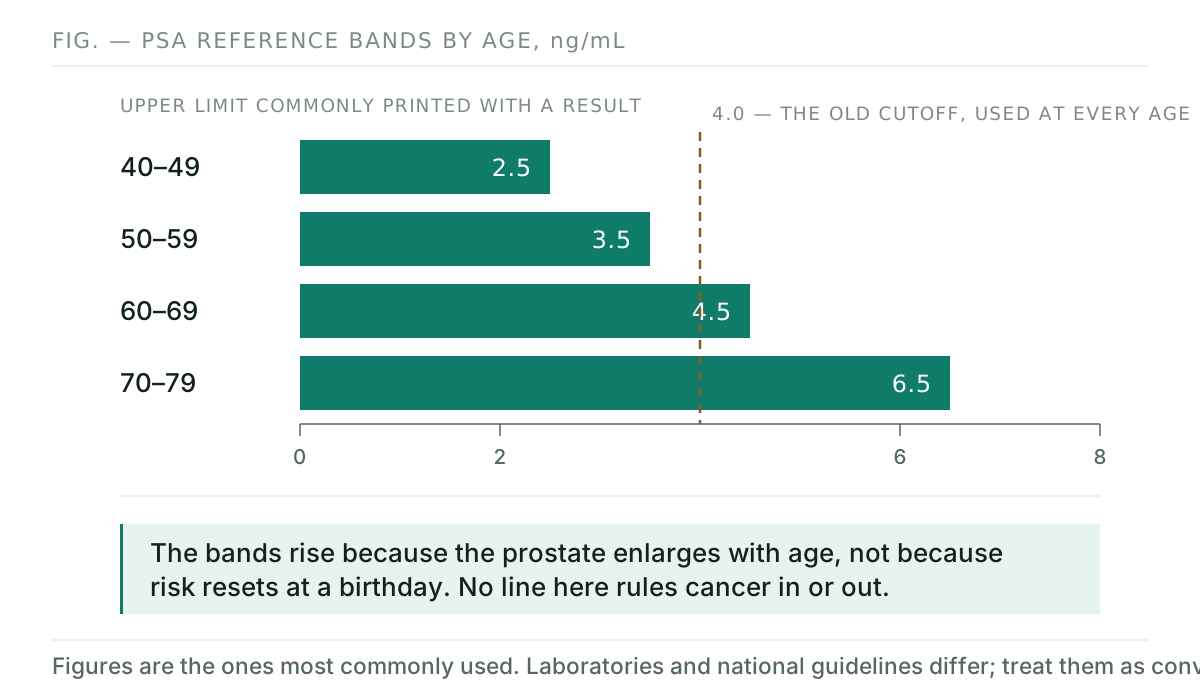
There is no agreed normal PSA level. Many labs use age-related ranges rising from about 2.5 ng/mL in your forties to about 6.5 in your seventies, because the prostate enlarges with age. No figure rules cancer in or out: benign enlargement raises PSA, finasteride halves it, and the trend across two readings tells you more than either one alone.
You have a number on a piece of paper and a question that seems like it should have a simple answer. Is it normal for a man my age?
The honest answer is that the question is built on an assumption the test does not support. PSA was never a pass-or-fail exam, and the threshold most men have heard of was a convention rather than a discovery. Understanding what the number is actually made of changes what you should do with it.
This article covers what the reading measures, the age ranges labs use and why they are not settled, everything that moves the figure up and down, and what genuinely happens after a high result. It is part of our complete guide to an enlarged prostate after 40.
Is there a normal PSA level for my age?
Not in the sense most men mean. There is no line above which something is wrong and below which everything is fine. What exists is a set of reference ranges that rise with age, used because the prostate grows over a lifetime and a larger prostate makes more PSA.
The figures below are the ones most commonly printed alongside a result. Different laboratories and different national guidelines use different numbers, which is itself the most useful thing to know about them.
| Age | Commonly used upper limit | What it is not |
|---|---|---|
| 40–49 | About 2.5 ng/mL | Not a diagnosis, not a threshold agreed across guidelines, and not a level that rules cancer in or out. A reading inside the band can still warrant follow-up if it has climbed; a reading above it is most often explained by something benign. |
| 50–59 | About 3.5 ng/mL | |
| 60–69 | About 4.5 ng/mL | |
| 70–79 | About 6.5 ng/mL |
The figure almost everyone has heard is 4.0 ng/mL, applied to men of any age. It became the standard cutoff in routine practice, and it was chosen for convenience rather than because anything changes at that point. Cancers occur below it and most men above it do not have cancer.
In the Prostate Cancer Prevention Trial, men whose PSA had remained at or below 4.0 ng/mL throughout the study were offered a biopsy at the end of it. Prostate cancer was found in roughly 15 percent of them.
Thompson I.M. et al., New England Journal of Medicine — Prevalence of Prostate Cancer among Men with a PSA Level ≤ 4.0 ng per MilliliterThat finding is not a reason for alarm, and it is not an argument that every man should be biopsied. It is the clearest available demonstration that PSA is a probability, not a verdict. Whether a raised reading means cancer specifically is covered in BPH versus prostate cancer.
What is the test actually measuring?
Prostate-specific antigen is a protein made by prostate tissue. Its job has nothing to do with cancer: it liquefies semen. Small amounts leak into the bloodstream, and the test measures how much.
The name is precise and it is the source of nearly all the confusion. PSA is specific to the prostate. It is not specific to prostate cancer. Anything that enlarges, inflames, irritates or disturbs prostate tissue can push more of the protein into the blood, and cancer is only one item on that list.
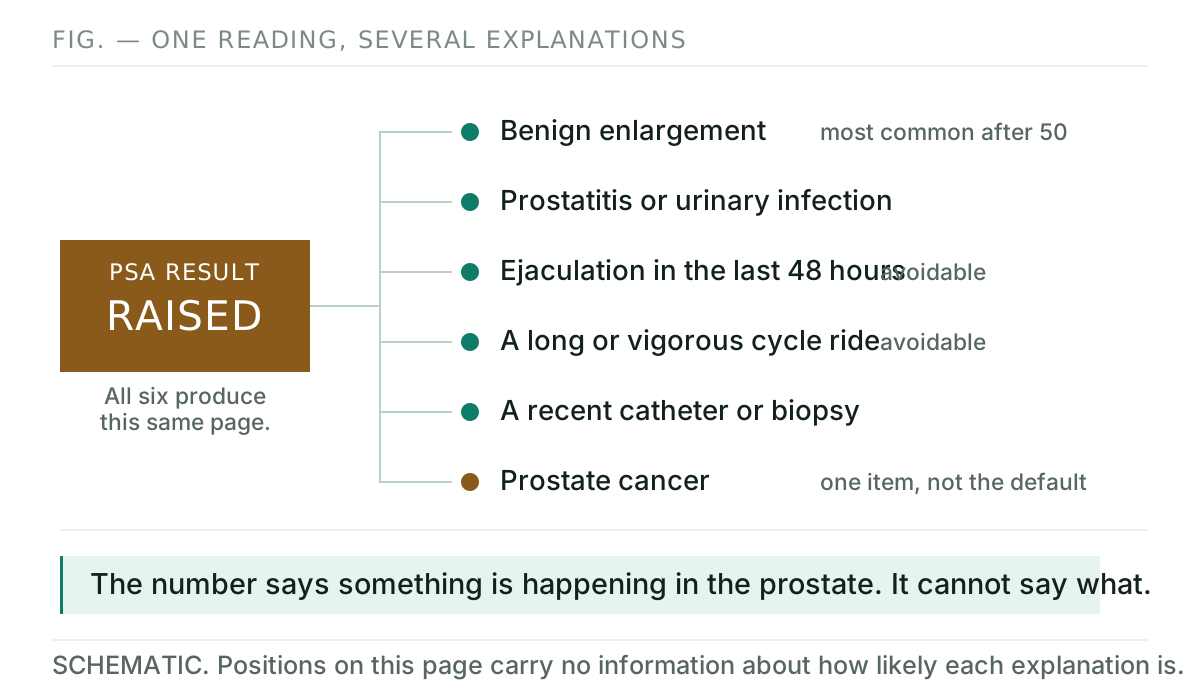
A raised PSA says something is going on in the prostate. It does not say what.
This is why a result is a starting point for a conversation rather than an answer. It is also why the same number means different things in two different men, and why a clinician will want context that the number alone does not carry.
What raises PSA that has nothing to do with cancer?
Quite a lot, and the most common cause in men over 50 is simply an enlarged prostate. Benign prostatic hyperplasia adds tissue, and more tissue makes more PSA. The men most likely to be sent for a test — those with urinary symptoms — are the same men most likely to have a benign reason for a raised figure.
- Benign enlargement. The usual explanation after 50, and the reason age-related ranges exist at all.
- Prostatitis or a urinary infection. Inflammation can raise PSA sharply, sometimes far above the reference band, and it settles once treated.
- Ejaculation in the previous 48 hours. A modest but real rise, and entirely avoidable.
- A long or vigorous cycle ride. Sustained pressure on the perineum. Avoid for a few days before the test.
- A catheter, a cystoscopy or a recent biopsy. Anything that physically disturbs the gland. A biopsy raises PSA for weeks.
- A rectal examination immediately before the blood draw. The effect is small, but the fix is free: have blood taken first.
What can make your PSA look lower than it is?
This direction gets far less attention and matters just as much, because a falsely reassuring number is the one nobody questions.
The most important example is prescription prostate medication. Finasteride and dutasteride, the 5-alpha-reductase inhibitors used to shrink an enlarged prostate, roughly halve PSA after several months of treatment. Clinicians allow for that when they know about it. If they do not know, a reading that looks comfortably normal may not be.
If you take finasteride or dutasteride — including at the low dose prescribed for hair loss — tell whoever orders the test. This is not a small correction. A PSA of 2.0 in a man on long-term finasteride may represent an untreated value of around 4.0. Supplements are a different matter: saw palmetto has not been shown to meaningfully change PSA, which is covered in prostate supplement side effects.
Body weight also has an effect. PSA tends to read lower in men with a higher body mass index, thought to be a dilution effect across a larger blood volume rather than anything happening in the prostate itself. It is not something to act on, but it is another reason a single figure carries less information than it appears to.
Why one reading tells you much less than two
PSA fluctuates. The same man tested twice in a fortnight can produce meaningfully different figures without anything having changed, which is why a raised result is normally repeated before anyone acts on it.
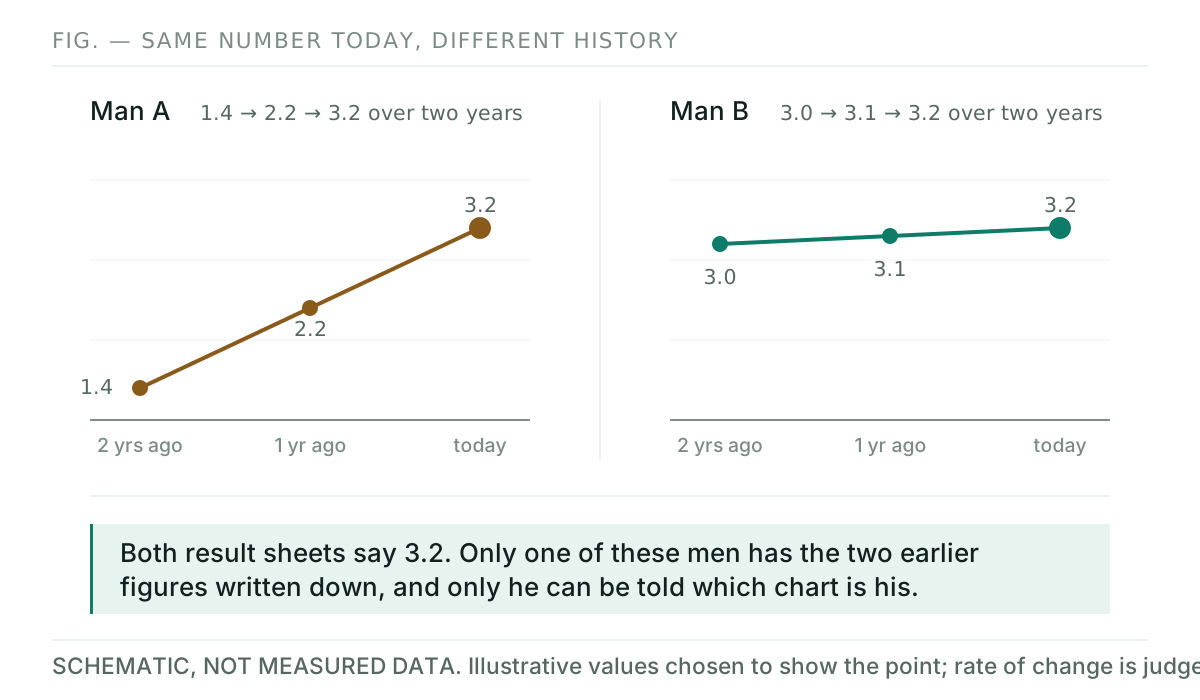
What clinicians find genuinely informative is the direction of travel. A figure of 3.2 means one thing in a man who was 3.0 two years ago, and something else entirely in a man who was 1.4. The absolute number sits inside a band that covers a great many men. The change is yours alone.
This has a practical consequence that costs nothing. Ask for the actual figure, not "normal", and write it down with the date. A result filed as reassurance is worth far less than the same result kept as a baseline.
What actually happens after a high result?
Rarely what men picture. The immediate step is usually to repeat the test, often after an interval and after excluding an infection, because a proportion of raised readings settle on their own once the cause passes.
If it stays raised, the pathway has changed considerably in recent years, and for the better. An MRI scan is now commonly performed before any decision about biopsy, so that a biopsy is targeted at something the scan has identified rather than taken routinely. Some men are spared a biopsy altogether on the strength of the scan.
Other refinements a clinician may use before that point:
- Free PSA ratio. PSA travels in the blood in two forms. A lower proportion of the free form is associated with higher risk, and the ratio helps interpret readings in the middle range.
- PSA density. The reading divided by the size of the prostate. It separates a high figure produced by a large benign gland from a high figure produced by something smaller and more concerning.
- Repeat testing over time. Rate of change, judged against your own previous results rather than a population band.
The main argument against routine screening is not needles or cost. It is overdiagnosis: finding slow cancers that would never have caused symptoms in a man's lifetime, and then treating them, with consequences for continence and sexual function. This is why low-risk disease is now often managed by active surveillance rather than immediate treatment, and why the decision to test is presented as a choice rather than an instruction.
How to avoid a falsely raised reading
A meaningful share of anxious weeks are caused by avoidable interference. None of the following changes your risk of anything. They change the accuracy of the measurement.
- No ejaculation for 48 hours beforehand.
- No long or hard cycling for a few days.
- Postpone if you have urinary burning, frequency or fever. Test after the infection is treated, not during it.
- Blood first, examination second, if both are happening at the same appointment.
- Declare finasteride, dutasteride or any prostate prescription.
- Use the same laboratory where you can. Assays differ slightly, and comparing your own results is the point.
Should you have the test at all?
This is a genuine decision rather than a rule, and the honest sources present it that way. US preventive guidance frames PSA screening for men roughly between 55 and 69 as an individual choice made after discussing benefits and harms with a clinician, and advises against routine screening in men aged 70 and over.
Risk is not evenly spread, and the discussion is generally recommended earlier for men at higher risk — Black men, and men with a father or brother diagnosed young. Age alone is not the only input.
One distinction is worth holding on to. Screening means testing a man with no symptoms to look for disease he does not know about. Testing a man who has urinary symptoms, as part of working out what is causing them, is a different exercise with a different purpose. Much of the caution written about PSA applies to the first situation, not the second. What that appointment involves is covered in what actually happens at a prostate exam.
What to ask for, and what to write down
Almost every man leaves a PSA conversation with a word rather than a number. "Normal", "fine", "nothing to worry about." Those are reasonable things for a clinician to say and they are close to useless a year later, when the only question that matters is whether anything has moved.
Four things are worth asking for, and none of them takes more than a moment.
- The actual figure, to one decimal place. Not the band it fell into. 3.2 and 3.9 sit inside the same reassuring sentence and are not the same result.
- The date it was taken, which is not always the date you were told.
- Which laboratory processed it. Assays differ slightly between labs, and comparing your own readings is the entire point of keeping them.
- Whether anything was adjusted for. Specifically whether the interpretation allowed for finasteride, dutasteride or a recent infection.
Keep those four lines somewhere you will find them — a note on your phone is enough. Two readings a year apart, from the same laboratory, with the medication context recorded, is a more informative piece of evidence than any single result can ever be, and it costs nothing to assemble.
That is good news and it is worth having the number anyway. "Normal" is a statement about where you sit relative to other men. Your own previous reading is a statement about you, and it is the one that will matter if the question comes up again in three years. Ask before you leave; nobody minds, and almost nobody asks.
Key takeaways
- There is no agreed normal PSA. Age-related ranges are conventions, and they differ between guidelines and laboratories.
- PSA is specific to the prostate, not to prostate cancer. Benign enlargement is the most common reason for a raised reading after 50.
- No level rules cancer out. Cancer was found in about 15 percent of men biopsied with a PSA at or below 4.0 in the largest trial to look.
- Finasteride and dutasteride roughly halve the figure, so an undeclared prescription can make a result look falsely reassuring.
- Two readings beat one. Ask for the number, write it down with the date, and use the same laboratory where you can.
Where to go from here
If a PSA result is what brought you here, these are the pieces that follow on:
- What Actually Happens at a Prostate Exam — the appointment itself, described plainly.
- BPH vs Prostate Cancer: How to Tell the Difference — why symptoms cannot answer that question.
- Enlarged Prostate After 40: Symptoms, Causes and What Actually Helps — the complete guide.
- Prostate Supplement Side Effects: What to Watch For — including what supplements do and do not do to a PSA reading.
- My Prostate Symptoms Are Mild. Should I Be Doing Something? — one contributor on why he waited.
- Prostate Medications: What Each One Actually Does — the two prescription classes, what each does and how fast.
Frequently asked questions
What is a normal PSA level for my age?
There is no universally agreed normal. Many labs use age-related reference ranges rising from about 2.5 ng/mL in your forties to about 6.5 in your seventies, because the prostate enlarges with age. These are conventions, not biological thresholds, and different guidelines use different figures.
Does a PSA under 4 mean I do not have prostate cancer?
No. There is no PSA level that rules cancer out. In the Prostate Cancer Prevention Trial, cancer was found in roughly 15 percent of men whose PSA had stayed at or below 4.0 ng/mL and who were biopsied at the end of the study. A low reading lowers the odds; it does not settle the question.
What can raise PSA apart from cancer?
Benign enlargement, prostatitis, a urinary infection, a catheter, a recent biopsy, ejaculation within 48 hours and a long cycle ride can all raise a reading. Benign enlargement is the most common cause of a raised PSA in men over 50, and it is not cancer.
Does finasteride lower PSA?
Yes, substantially. Finasteride and dutasteride roughly halve PSA after several months. Clinicians allow for this when they know you take one, so tell whoever orders the test. An unadjusted reading can look reassuring when it is not.
My PSA came back high. What happens next?
Usually the test is repeated, because single readings vary and infection or recent activity may explain it. If it stays raised, the next steps commonly include an MRI scan before any biopsy is considered, so that a biopsy is targeted rather than routine.
How should I prepare for a PSA test?
Avoid ejaculation for 48 hours and vigorous cycling for a few days beforehand, and postpone the test if you have a urinary infection. Have blood taken before any rectal examination rather than after, and tell the clinician about any prostate medication you take.
Sources
- National Cancer Institute — Prostate-Specific Antigen (PSA) Test
- Thompson I.M. et al. — Prevalence of Prostate Cancer among Men with a PSA Level ≤ 4.0 ng per Milliliter, New England Journal of Medicine
- US Preventive Services Task Force — Prostate Cancer: Screening
- MedlinePlus (National Library of Medicine) — Prostate Diseases
- National Cancer Institute — Prostate Cancer Screening (PDQ) — Patient Version

Male Health Guide Editorial Team
We write about the health problems men over 40 actually search for at 3 a.m. — and we say plainly when the evidence for a popular product is thin. We do not invent credentials and we do not publish sponsored copy as editorial. Read more about how we work.
Medical disclaimer: This article is general information, not medical advice. We are not doctors, and nothing here diagnoses, treats or cures any condition. PSA results must be interpreted in context by a clinician who knows your history. Please speak to a qualified healthcare professional about your own situation, and never start, stop or change a prescribed medication based on what you read online.