Prostate Supplement Side Effects: What to Watch For
Short answer
Prostate supplement side effects are usually mild and digestive, at rates close to placebo in trials. The underreported risks sit elsewhere: vitamin E, which a large trial linked to increased prostate cancer risk; accidentally doubling minerals across products; and delaying a proper diagnosis.
Search for prostate supplement side effects and you will mostly find reassurance. "Well tolerated." "Natural, therefore gentle." "No known side effects." Some of that is fair — the common botanical ingredients genuinely do have a decent safety record.
But the reassuring version skips three things that matter, and all three are documented in mainstream research rather than in anything fringe. None of them is about the herb on the front of the label.
This article covers what trials actually reported, the specific ingredients worth a second look, and the risk that costs men the most — which is not a side effect at all. It is part of our complete guide to an enlarged prostate after 40.
What side effects did the trials actually report?
Mild and digestive, for the most part. Across randomised trials of saw palmetto, the most frequent complaints were nausea, stomach upset and loose stools, at rates broadly similar to placebo. Headache and dizziness appeared less often. Serious adverse events were uncommon.
That is a genuinely reassuring finding and worth stating clearly. Where the evidence shows something is safe, saying so is part of being honest — the same standard that led us to report that saw palmetto did not outperform placebo on effectiveness.
It means men taking dummy capsules reported side effects at almost the same rate. That tells you two things: the ingredient is unlikely to be causing much harm, and some of what people attribute to a supplement is ordinary background noise their bodies would have produced anyway.
Which ingredients carry the most real risk?
The botanicals are rarely the problem. The added vitamins and minerals are where meaningful risk concentrates, because they accumulate, because doses vary wildly between products, and because men often take them from more than one bottle at once without adding up the totals.
| Ingredient | Reported effects | What to watch |
|---|---|---|
| Saw palmetto | Mild digestive upset; possible effect on bleeding | Discuss with a prescriber if you take anticoagulants or daily aspirin |
| Vitamin E | Linked to increased prostate cancer risk in a large trial | Check whether it is in your formula and at what dose |
| Zinc | Nausea at higher doses; long-term excess can impair copper absorption | Add up zinc across every product you take, including multivitamins |
| Selenium | Excess can cause hair and nail changes and digestive upset | Same stacking problem as zinc; the safe range is narrower than people assume |
| Pygeum | Nausea and stomach discomfort | Usually mild and dose-related |
| Stinging nettle root | Mild digestive upset; possible diuretic activity | Relevant if you take prescription water pills |
| Licorice root | Raises blood pressure, lowers potassium | A direct problem if you are treated for hypertension |
If you take prescription medication, the interaction picture matters more than the side effect list, and it is covered separately in prostate supplements and blood pressure medication.
What did the SELECT trial find about vitamin E?
Something that ought to be better known. The Selenium and Vitamin E Cancer Prevention Trial, a large randomised study in healthy men, found that vitamin E supplementation significantly increased the risk of prostate cancer compared with placebo. Selenium showed no protective benefit.
The finding is striking because the trial was designed to demonstrate the opposite. It was built on the reasonable hypothesis that these antioxidants would protect the prostate. Instead, the men taking vitamin E fared worse — a reminder that "antioxidant" is a mechanism, not a guarantee.
In the SELECT trial, men taking vitamin E supplements had a statistically significant increase in prostate cancer incidence compared with men taking placebo.
Klein E.A. et al., Journal of the American Medical Association — Selenium and Vitamin E Cancer Prevention Trial (SELECT)Vitamin E appears in a good number of men's health formulas, usually presented as a benefit. That does not make those products dangerous at every dose, and this is a question for a doctor rather than for a website. But it is a reason to read the panel rather than the marketing, and to raise it if vitamin E is in what you are taking.
Can you overdose by stacking supplements?
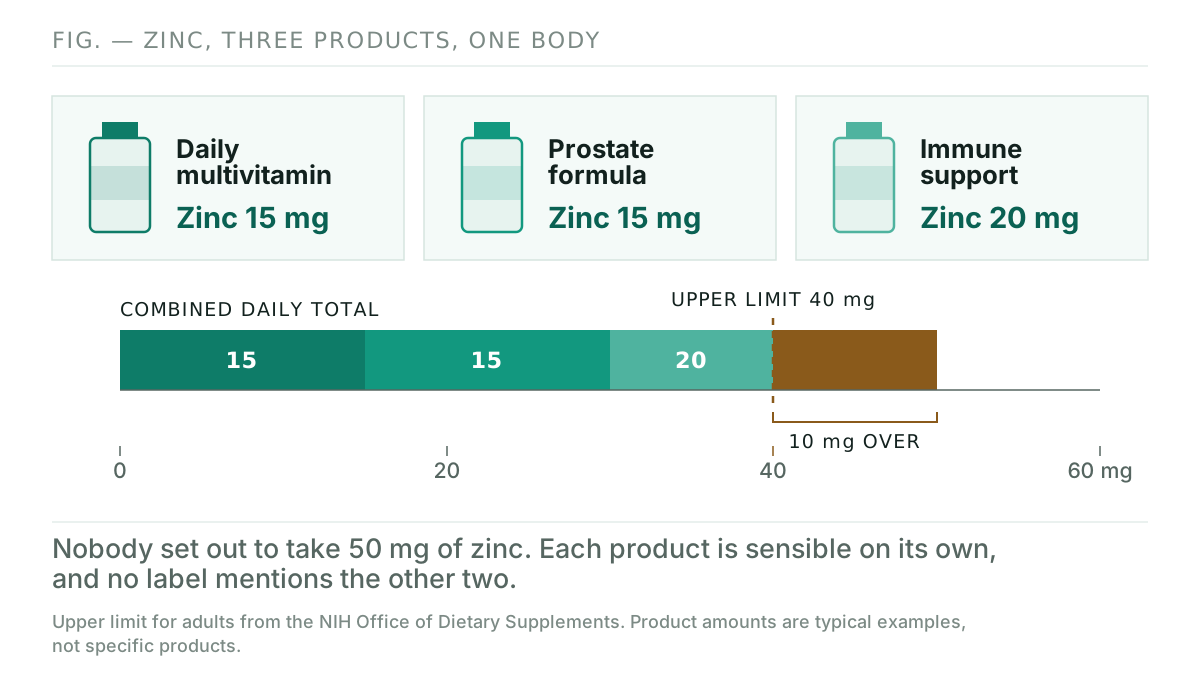
Yes, and it is the most common way men run into trouble in this category. A prostate formula, a daily multivitamin and an immune supplement can each contain zinc. Individually all are reasonable. Added together they can exceed the tolerable upper intake level without anyone noticing.
Proprietary blends make this considerably worse. When the label shows one combined total instead of individual doses, you cannot add anything up — and neither can a pharmacist. That is the practical reason to avoid them, quite apart from the transparency argument.
- List every product you take, including gummies and drink mixes.
- Add up zinc, selenium and vitamin E across all of them.
- Compare the totals against the tolerable upper intake levels published by the NIH Office of Dietary Supplements.
- Take the list to a pharmacist if anything is close or if any product hides its doses.
Do prostate supplements interfere with PSA test results?
Studies of saw palmetto have generally not found meaningful changes in PSA levels, which is reassuring. This differs importantly from prescription 5-alpha reductase inhibitors, which lower PSA substantially — an effect doctors deliberately account for when interpreting results.
The practical rule is simple regardless: tell your doctor everything you take before a PSA test, including supplements you consider trivial. It costs one sentence and removes a variable from a result that may shape what happens next.
What is the most underrated risk of all?
Delay. Every month spent trialling capsules is a month not spent being assessed, and urinary symptoms occasionally have causes that need prompt attention. The capsule rarely harms a man directly. The postponed appointment sometimes does.
This risk is invisible because it does not feel like a side effect. Nothing goes wrong on the day. It is only visible in hindsight, when a man realizes he spent eight months and several hundred dollars working through bottles instead of spending one afternoon getting answers.
The question worth asking is not "is this safe to take?" but "what am I not doing while I take it?"
This is exactly why we argue for a fixed trial window with a hard end date rather than open-ended use — the reasoning is in how long prostate supplements take to work.
What should you do before starting, and what should you watch for?
Two steps before the first capsule, and one habit afterwards. Take the ingredient panel to a pharmacist with your full medication list. Add up any overlapping vitamins and minerals. Then watch for a short list of specific signs during the first fortnight.
Stop and seek advice promptly if you notice:
- Unusual bruising or bleeding, including nosebleeds or bleeding gums
- Yellowing of the eyes or skin, or unusually dark urine
- Severe or persistent abdominal pain
- Rash, swelling of the face or lips, or difficulty breathing — seek emergency care
- Urinary symptoms that suddenly worsen rather than improve
- Dizziness or fainting on standing, particularly if you take blood pressure medication
Being unable to urinate at all is acute urinary retention. It is a medical emergency and needs immediate care — not a phone call to a supplement company, and not a decision to wait until morning.
Everything else on this page is about judgement and trade-offs. That last one is not.
Should you stop before surgery or a biopsy?
Almost certainly yes, and this is the risk men most often walk into without knowing it. Anaesthesia guidance generally advises stopping herbal supplements one to two weeks before an elective procedure, because some affect bleeding, blood pressure or sedation in ways that complicate an operation.
This is not a distant hypothetical for anyone reading this page. A man being investigated for prostate symptoms may end up having a biopsy, a cystoscopy or a procedure to relieve an obstruction. Saw palmetto is the relevant one here: the same possible effect on bleeding that makes it a question for men on blood thinners makes it a question before a procedure that involves cutting.
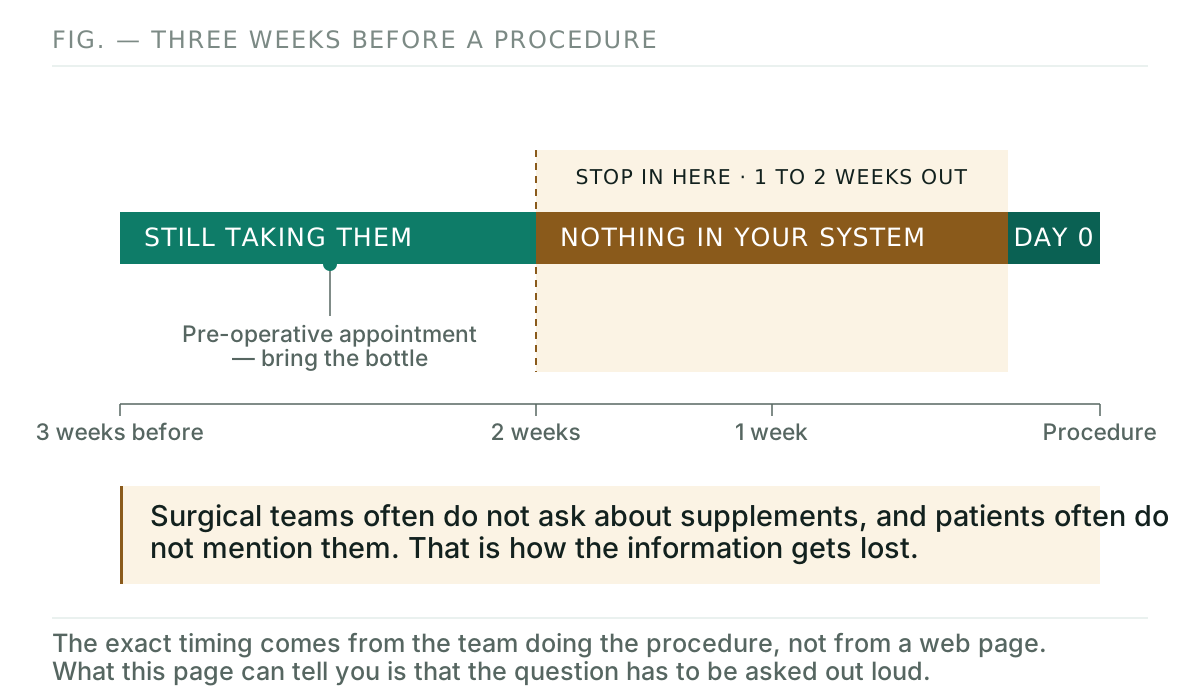
Surgical teams frequently do not ask about supplements, and patients frequently do not mention them, because "it is only a herbal thing" does not feel like medication. Both halves of that are how the information gets lost. Bring the actual bottle to the pre-operative appointment and let them read the label themselves.
The instruction to stop should come from the team performing the procedure, not from a web page, because the timing depends on what you are having done. What this page can tell you is that the question needs to be asked, and that waiting for someone else to raise it is how it goes unasked.
The American Society of Anesthesiologists advises patients to tell their anaesthesiologist about all herbal and dietary supplements, and to stop taking them one to two weeks before surgery.
American Society of Anesthesiologists — patient guidance on herbal supplements and surgeryKey takeaways
- Direct side effects are usually mild and digestive, at rates close to placebo in trials.
- The real risks sit elsewhere. A large trial found vitamin E increased prostate cancer diagnoses.
- Stacking a multivitamin and a prostate formula can push zinc or selenium past sensible limits without you noticing.
- Stop before surgery or a biopsy, and say what you take — the team often does not ask.
- The most underrated risk is delay: months spent trialling capsules are months not spent getting assessed.
Where to go from here
If you are weighing up whether to start or continue a supplement, these go deeper:
- Enlarged Prostate After 40: Symptoms, Causes and What Actually Helps — the complete guide, including treatments with real evidence.
- Prostate Supplements and Blood Pressure Medication — interactions, in detail.
- Saw Palmetto for Prostate: What the Cochrane Review Actually Found — whether it works at all.
- How Long Do Prostate Supplements Take to Work? — setting a trial window and protecting your refund.
- Why Do I Wake Up 3 Times a Night to Pee? — the symptom behind most of these purchases.
- PSA Levels by Age: What Your Number Actually Means — what the figure means, what moves it, and why the trend beats one reading.
Frequently asked questions
What are the most common prostate supplement side effects?
In clinical trials the most frequent complaints were mild and digestive: nausea, stomach upset and loose stools, at rates broadly similar to placebo. Headache and dizziness appear less often. Serious reactions to the common botanical ingredients are uncommon.
Is vitamin E in prostate supplements safe?
A large randomised trial found that vitamin E supplementation significantly increased the risk of prostate cancer in healthy men compared with placebo. Vitamin E appears in many men's formulas, so it is worth checking the label and discussing the dose with a doctor.
Can you take too much zinc or selenium from supplements?
Yes, particularly when stacking products. Excess zinc over time can interfere with copper absorption, and excess selenium can cause hair and nail changes. Men taking a multivitamin plus a prostate formula may exceed tolerable limits without realizing it.
Do prostate supplements interfere with PSA test results?
Studies of saw palmetto have generally not found meaningful changes in PSA levels. This differs from prescription 5-alpha reductase inhibitors, which do lower PSA substantially. Always tell your doctor everything you take before a PSA test.
What is the most underrated risk of prostate supplements?
Delay. Months spent trialling capsules are months not spent getting assessed, and urinary symptoms occasionally have causes that need prompt treatment. The capsule rarely harms you directly; the postponed appointment sometimes does.
When should I stop taking a prostate supplement immediately?
Stop and seek advice for unusual bruising or bleeding, yellowing of the eyes or skin, severe abdominal pain, rash or swelling, or if urinary symptoms suddenly worsen. Being unable to urinate at all requires emergency care rather than a phone call.
Sources
- Klein E.A. et al. — Vitamin E and the Risk of Prostate Cancer: the SELECT trial, JAMA
- NIH Office of Dietary Supplements — Zinc: fact sheet for health professionals
- NIH Office of Dietary Supplements — Selenium: fact sheet for health professionals
- National Center for Complementary and Integrative Health (NIH) — Saw Palmetto: usage, safety and interactions
- Cochrane Library — Serenoa repens for benign prostatic hyperplasia
- U.S. Food and Drug Administration — Tainted Sexual Enhancement and Energy Products

Male Health Guide Editorial Team
We write about the health problems men over 40 actually search for at 3 a.m. — and we say plainly when the evidence for a popular product is thin. We do not invent credentials and we do not publish sponsored copy as editorial. Read more about how we work.
Medical disclaimer: This article is general information, not medical advice. We are not doctors, and nothing here diagnoses, treats or cures any condition. Supplement safety depends on your own health, medications and doses. Please speak to a qualified healthcare professional or pharmacist about your own situation, and never start, stop or change a prescribed medication based on what you read online.