Can You Take Prostate Supplements With Blood Pressure Medication?
Short answer
Prostate supplements and blood pressure medication can sometimes be combined, but not always, and the answer depends entirely on the specific ingredients and doses. Some ingredients lower blood pressure further, one common botanical raises it, and proprietary blends hide the amounts. A pharmacist can check yours in minutes, free.
If you have searched for whether prostate supplements and blood pressure medication mix, you have probably noticed something strange: almost nobody answers it. You will find thousands of pages about whether a supplement works, and almost none about whether it is safe alongside the pills already in your kitchen drawer.
That gap is not an accident. Answering it honestly means admitting that the research is thin, that many products do not disclose their doses, and that the responsible advice sometimes ends in "don't buy this one". None of that sells bottles.
So here is the version nobody writes. It will not tell you that your combination is fine — no article can do that responsibly. It will tell you exactly which ingredients matter, why, and what to ask so you get a real answer in about five minutes. It is part of our complete guide to an enlarged prostate after 40.
Why is this question so hard to find an answer to?
Three things collide. Supplements are regulated as food rather than medicine in the United States, so they are not required to prove safety in combination with drugs. Most interaction research studies single ingredients, not finished blends. And many labels hide doses behind the phrase "proprietary blend", which makes assessment guesswork.
The result is a genuine information vacuum. It gets filled by two bad substitutes: sales pages that simply assert the product is "100% natural and safe", and forum threads where strangers describe what happened to them. Neither is a substitute for someone looking at your actual medication list.
Nothing on this page tells you to start, stop or change any medication. Blood pressure drugs are prescribed for serious reasons, and stopping one abruptly can be dangerous. If anything here raises a question about your treatment, take the question to your prescriber — do not act on it alone.
Which prostate supplement ingredients actually affect blood pressure?
A handful do, and it is worth knowing them by name. Some widen blood vessels and lower pressure, which can add to what your medication is already doing. One raises pressure and works directly against your treatment. Others mainly interact with different drug classes entirely, such as blood thinners.
This is the part of the label to actually read. Ingredients from any of these groups deserve a conversation before you start:
| Ingredient | What it may do | Why it matters if you take BP medication |
|---|---|---|
| L-arginine, L-citrulline | Widen blood vessels via nitric oxide | Effects may add to antihypertensives — dizziness or light-headedness on standing |
| Beetroot / concentrated nitrate | Lowers blood pressure | Same additive concern; common in "blood flow" and combined men's formulas |
| Licorice root (glycyrrhizin) | Raises blood pressure, lowers potassium | Works against your medication; potassium loss compounds risk with some diuretics |
| Stinging nettle root | May have mild diuretic activity | Potential additive effect with prescription water pills |
| Added potassium | Raises blood potassium | ACE inhibitors and ARBs already retain potassium — the combination needs checking |
| Saw palmetto | Not primarily a blood pressure agent | Main flagged concern is bleeding risk with anticoagulants and antiplatelets |
Notice what the table does not say. It does not say any of these will harm you. It says each one gives your pharmacist a specific thing to check — which is completely different from walking in and asking "is this stuff okay?"
What about saw palmetto specifically?
Saw palmetto is the ingredient most men are actually asking about, since it appears in nearly every prostate formula. It is not primarily associated with blood pressure changes. The interaction most often raised for it involves blood thinners, because of a possible effect on bleeding and clotting.
That distinction matters because many men over 40 take both a blood pressure drug and a daily low-dose aspirin or an anticoagulant. If that describes you, the saw palmetto question belongs to the second prescription, not the first. Its effectiveness is a separate matter, which we cover in what the Cochrane review actually found on saw palmetto.
Why does a "proprietary blend" make this riskier?
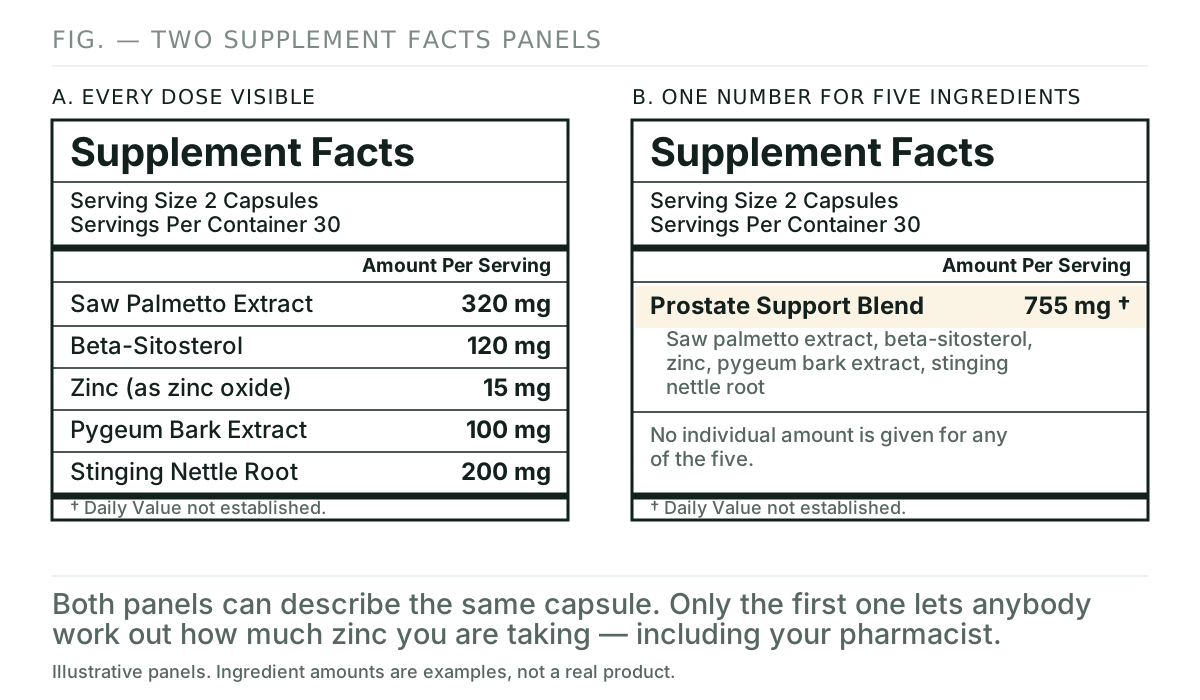
Because interaction risk usually depends on dose, and a proprietary blend deliberately withholds it. The label shows one combined milligram total for eight or ten ingredients, so you cannot tell whether a blood-pressure-active ingredient is present at a token amount or a meaningful one.
This is the single most practical filter you can apply when choosing a product. A company that publishes full doses is making itself accountable and making your pharmacist's job possible. A company hiding behind a blend is asking you to trust it with information it will not give you.
If the supplement facts panel does not list an individual dose for every active ingredient, treat it as unassessable and choose a different product. This one rule eliminates a large share of the market — and it eliminates exactly the share you cannot evaluate.
What has the FDA found hidden inside men's supplements?
This is the part that turns a theoretical concern into an urgent one. The FDA maintains a public database of tainted products and has repeatedly found men's health supplements containing undeclared prescription drugs — including sildenafil and tadalafil, the active ingredients in erectile dysfunction medication.
The danger is specific and it centers on blood pressure. Those drugs can cause a significant drop in blood pressure, and combining them with nitrate medication used for chest pain can be life-threatening. A man taking a heart medication who swallows a "natural" capsule that secretly contains sildenafil has no way of knowing he has just created that combination.
The FDA publishes an ongoing database of tainted sexual enhancement and men's health products found to contain undeclared prescription drug ingredients, and warns that these can interact dangerously with nitrates found in some prescription medications.
U.S. Food and Drug Administration — Health Fraud Product DatabaseIt is worth checking that database by product name before you buy anything in this category. It takes under a minute, it is free, and it is a step essentially no review site tells you to take.
Who should you actually ask, and what should you say?
Ask a pharmacist. They are trained specifically in drug interactions, they have your medication list on file, they do not need an appointment, and in most places the conversation costs nothing. For this exact question they are usually better placed than a rushed appointment with a busy doctor.
Take these four things with you, and it becomes a two-minute conversation:
- The physical bottle, or a clear photo of the supplement facts panel. Not the brand name — the ingredient panel. The name tells them nothing.
- Your full medication list, including doses. Add anything over the counter: aspirin, ibuprofen, antacids, other supplements.
- One specific question: "Does anything in this panel interact with what I take, or affect my blood pressure or potassium?"
- A second question most men forget: "If I start this, what should I watch for in the first two weeks?"
The right question is never "is this supplement safe?" It is "is this supplement safe with my medication, at this dose?" — and only one person in the conversation has your medication list.
What warning signs mean you should stop and call someone?
If you do start something, treat the first two weeks as a monitoring period. Stop and seek advice if you feel dizzy or faint when standing up, notice your heart racing or skipping, develop new swelling in your ankles, bruise or bleed more easily than usual, or feel unusually weak or fatigued.
Seek emergency care immediately for chest pain, fainting, severe shortness of breath or confusion. Do not attempt to work out whether the supplement caused it — that is a question for afterwards, and bringing the bottle with you helps answer it.
A simple habit makes this far more useful: take your blood pressure at home at the same time each day for a week before starting anything, then keep measuring after. If a supplement is moving your numbers in either direction, you will see it in the log rather than guessing from how you feel. That log is also the most persuasive thing you can hand a doctor.
Key takeaways
- Sometimes yes, sometimes no. The answer depends on the specific ingredients and doses, never on the category.
- Some ingredients lower blood pressure further. One common botanical raises it.
- A proprietary blend hides the amounts, which makes the question unanswerable rather than reassuring.
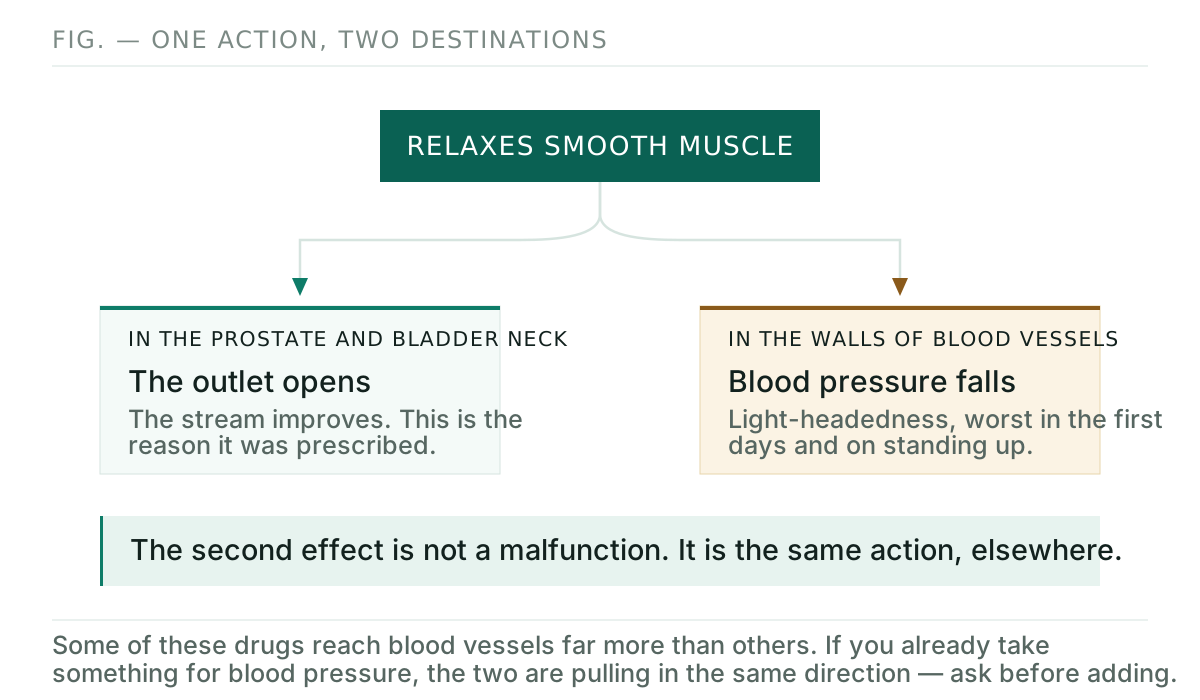
- The drugs prescribed for prostate symptoms lower blood pressure by the same action that opens the outlet, so this is not a rare interaction.
- A pharmacist can check your combination in minutes, free, with no appointment.
Where to go from here
If you are weighing up whether to try a prostate supplement at all, these are the next pieces to read:
- Enlarged Prostate After 40: Symptoms, Causes and What Actually Helps — the complete guide this article belongs to.
- Saw Palmetto for Prostate: What the Cochrane Review Actually Found — whether the main ingredient works at all.
- Why Do I Wake Up 3 Times a Night to Pee? — the symptom that sends most men looking for a supplement in the first place.
- Prostate Supplement Side Effects: What to Watch For — beyond interactions.
- How Long Do Prostate Supplements Take to Work? — setting a realistic trial period.
Frequently asked questions
Can I take a prostate supplement while on blood pressure medication?
Possibly, but nobody can tell you that safely without knowing your specific medication and the full ingredient list with doses. Some ingredients lower blood pressure further, one raises it, and proprietary blends hide the amounts. Your pharmacist can check yours in minutes, for free.
Does saw palmetto affect blood pressure?
Saw palmetto is not primarily known for altering blood pressure. The interaction most often flagged for it involves blood-thinning medications, because of a possible effect on bleeding. If you take an anticoagulant or antiplatelet drug, raise saw palmetto with your prescriber before starting.
Which supplement ingredients can lower blood pressure too much?
L-arginine, L-citrulline and concentrated beetroot or nitrate extracts widen blood vessels and can lower blood pressure on their own. Combined with antihypertensive medication, the effects may add together, which can cause dizziness, light-headedness on standing, or fainting.
Is licorice root dangerous with blood pressure medication?
Licorice root is one of the clearest concerns. It can raise blood pressure and lower potassium, working directly against your medication. It appears in some men's health blends. If licorice or glycyrrhizin is on the label, discuss it with a pharmacist before taking it.
Why do proprietary blends make this harder to assess?
A proprietary blend lists ingredients without individual doses. Since interaction risk usually depends on the amount, an undisclosed dose means neither you nor your pharmacist can properly judge the risk. Products that publish full doses are easier to evaluate and safer to discuss.
What symptoms mean I should stop and call someone?
Stop and seek advice if you feel dizzy or faint when standing, notice your heart racing, develop swelling, get unusual bruising or bleeding, or feel unusually weak. Seek emergency care for chest pain, fainting, or confusion. These are not symptoms to wait out.
Sources
- U.S. Food and Drug Administration — Tainted Sexual Enhancement and Energy Products
- National Center for Complementary and Integrative Health (NIH) — Saw Palmetto: usage, safety and interactions
- NIH Office of Dietary Supplements — Potassium: fact sheet for health professionals
- Cleveland Clinic — Blood pressure medications: types and considerations
- Mayo Clinic — L-arginine: evidence and cautions
- National Institute of Diabetes and Digestive and Kidney Diseases (NIH) — Prostate Enlargement (Benign Prostatic Hyperplasia)

Male Health Guide Editorial Team
We write about the health problems men over 40 actually search for at 3 a.m. — and we say plainly when the evidence for a popular product is thin. We do not invent credentials and we do not publish sponsored copy as editorial. Read more about how we work.
Medical disclaimer: This article is general information, not medical advice, and it is not a substitute for a pharmacist or doctor reviewing your own medication list. We are not clinicians. Nothing here diagnoses, treats or cures any condition. Never start, stop or change a prescribed medication — particularly blood pressure medication — based on something you read online.