Prostate Medications: What Each One Actually Does
Short answer
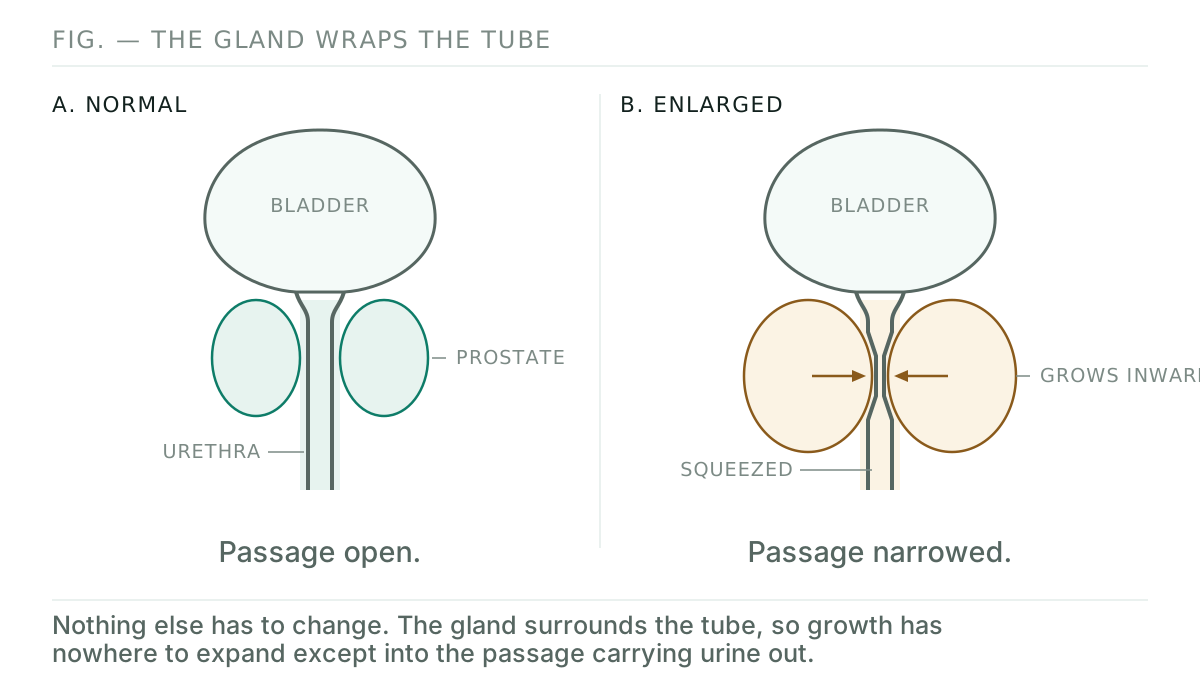
There are two main classes. Alpha blockers such as tamsulosin relax muscle around the outlet and work within days, but do not shrink the prostate. Finasteride and dutasteride shrink the gland over three to six months and reduce the long-term risk of retention, but act slowly and carry sexual side effects.
We have written repeatedly on this site that prescription treatments for an enlarged prostate have evidence behind them that no supplement in the category comes close to matching. That is true, and until now we have never said what those treatments actually are.
This page fixes that. It is not a recommendation to take anything — that is a conversation with a clinician who knows your history. It is a description of what is on the table, so that the conversation starts from something better than a blank page.
It is part of our complete guide to an enlarged prostate after 40.
What are the two main prostate medications?
Almost everything prescribed for benign enlargement belongs to one of two families, and the difference between them is not a matter of strength. They do genuinely different things to genuinely different parts of the problem.
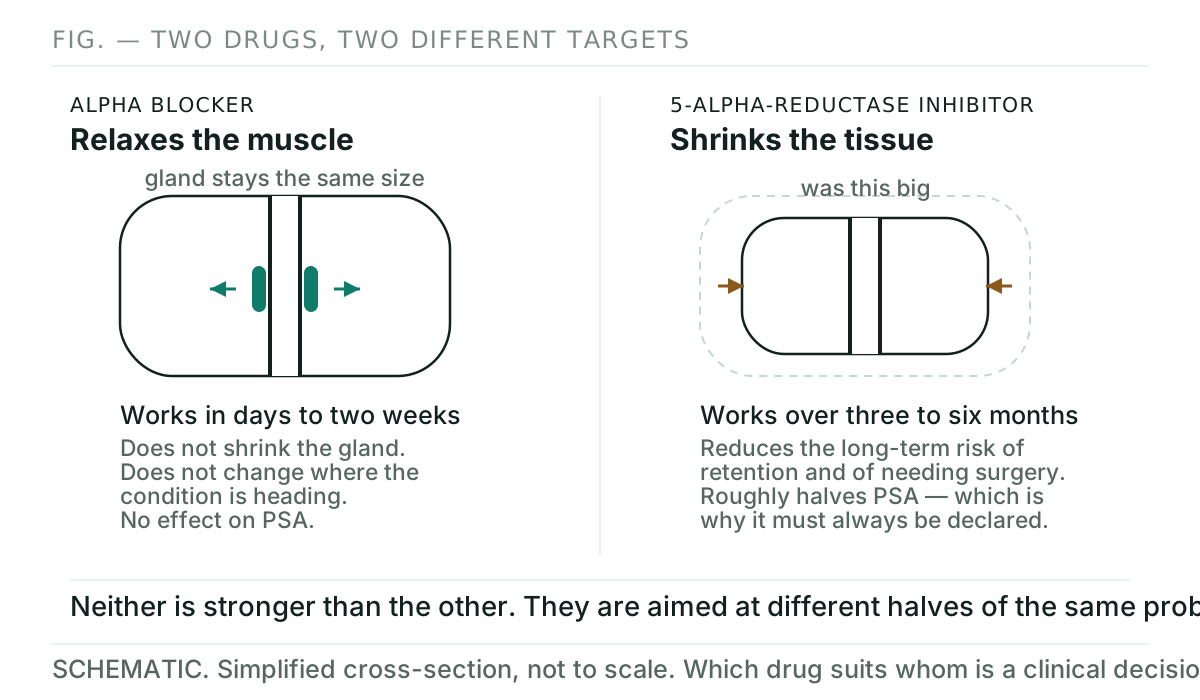
The prostate wraps around the urethra. Symptoms arise partly because the gland has grown and is pressing inward, and partly because the smooth muscle in the prostate and bladder neck is holding that passage tight. One drug family addresses the muscle; the other addresses the tissue.
| Alpha blockers | 5-alpha-reductase inhibitors | |
|---|---|---|
| Common names | Tamsulosin, alfuzosin, silodosin, doxazosin, terazosin | Finasteride, dutasteride |
| What it does | Relaxes smooth muscle at the bladder neck and in the prostate | Blocks the hormone that drives prostate growth, shrinking the gland |
| Speed | Days to two weeks | Three to six months, up to twelve for full effect |
| Shrinks the prostate? | No | Yes, typically by around a fifth to a quarter |
| Changes the long-term course? | No. It manages symptoms while you take it | Yes. Reduces the risk of acute retention and of needing surgery |
| Effect on PSA | None | Roughly halves it |
Reading down that table explains most of what happens in practice. A man who wants relief this month is offered the first column. A man with a large prostate and a long horizon is offered the second, or both.
Alpha blockers: fast, but they change nothing underneath
These relax muscle. They do not touch the size of the gland, which means they treat the experience of the condition rather than the condition. That is not a criticism — the experience is what sent you to the doctor — but it does explain their pattern of use.
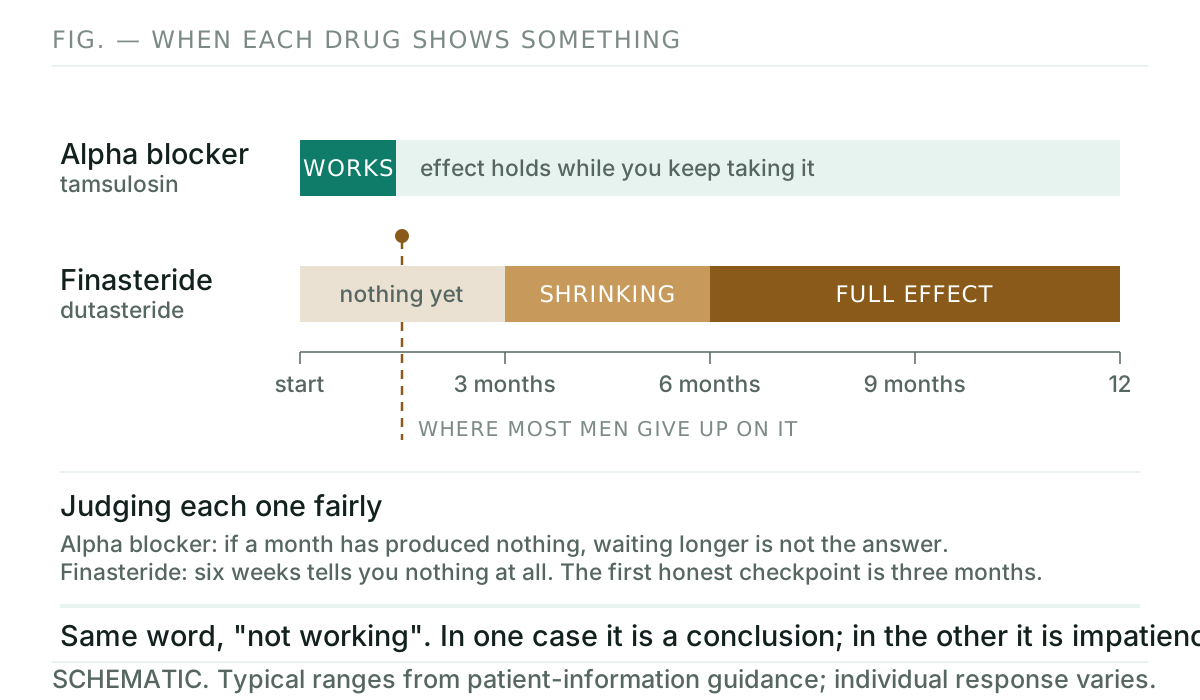
The speed is their strongest feature. Most men notice a difference within a week or two, which also makes them easy to evaluate honestly: if nothing has changed after a month, the answer is not to wait longer.
The side effects worth knowing before you start:
- Retrograde ejaculation. Semen passes backwards into the bladder rather than out. It is harmless, it is common with tamsulosin and silodosin, and it is startling if nobody warned you. It reverses when the drug is stopped.
- Dizziness on standing. More pronounced with the older, less selective drugs such as doxazosin and terazosin, which also lower blood pressure. This is why a first dose is often taken at bedtime.
- Nasal congestion and tiredness. Usually mild and often settles.
Alpha blockers are associated with intraoperative floppy iris syndrome, a complication during cataract surgery. A surgeon who knows in advance manages it routinely; a surgeon who does not is dealing with a surprise mid-operation. This applies even if you stopped the drug some time ago, so it belongs on your medical history permanently rather than on your current medication list.
Finasteride and dutasteride: slow, and the only ones that change the course
These block the conversion of testosterone into dihydrotestosterone, the hormone that drives prostate growth. Deprived of it, the gland gradually shrinks — typically by around a fifth to a quarter over six to twelve months.
The consequence is the one thing an alpha blocker cannot offer. Because the prostate is genuinely smaller, these drugs reduce the risk of acute urinary retention and the likelihood of eventually needing surgery. They alter where the condition is heading rather than only how it feels today.
The price is patience. Nothing meaningful happens in the first month, and a man who judges the drug at six weeks will conclude, wrongly, that it does not work. They are also more useful in men with a genuinely large prostate; in a small gland there is less to shrink.
Which one would you be offered first?
For most men with moderate symptoms and an average-sized prostate, an alpha blocker. It works quickly, the effect is obvious, and if it does not help you have learned something within a fortnight rather than half a year.
A 5-alpha-reductase inhibitor becomes the more logical starting point when the prostate is clearly enlarged on examination or scanning, when the concern is the direction of travel rather than today's discomfort, or when a man has already had an episode of retention.
Neither is a first resort in the sense of being unavoidable. Symptoms that are genuinely mild are often managed without any drug at all, which is covered in my prostate symptoms are mild. The decision depends on your symptom score, your prostate size and what bothers you, which is why the assessment comes before the prescription.
The side effects men actually want to know about
It is worth being direct, because this is the question most men have and the one they are least likely to ask out loud.
With alpha blockers, the common sexual effect is ejaculatory rather than erectile: less semen, or none, because it is going into the bladder. Erections are generally unaffected. It sounds worse than most men find it, and it stops when the drug stops.
With finasteride and dutasteride the picture is different and deserves an honest account. In trials, reduced libido, erectile difficulty and ejaculatory problems each occurred in a single-digit percentage of men, modestly above the rate in the placebo groups. Most men taking these drugs do not experience them. A minority clearly do.
A side effect that affects a small percentage of men affects one hundred percent of the man it happens to. Both of those statements are true and neither cancels the other.
There is also a continuing debate about symptoms that some men report persisting after stopping the drug. It is contested, the evidence is unsettled, and we are not going to tell you it is definitely real or definitely not. What we will say is that it is a reasonable thing to raise with a prescriber, and that a doctor who dismisses the question rather than discussing it is not giving you what you came for.
Breast tenderness or enlargement is an uncommon but recognised effect of the second class, and any new breast lump should be examined rather than watched.
What these drugs do to your PSA
This is the single most practically important interaction on the page, and it is missed constantly.
Finasteride and dutasteride roughly halve PSA after six to twelve months of treatment. A clinician who knows you take one will typically double the measured figure before interpreting it. A clinician who does not know may read a genuinely raised result as a comfortably normal one.
A PSA of 2.0 ng/mL in a man on long-term finasteride corresponds to roughly 4.0 without it. The reading has not become safer; it has become halved.
MedlinePlus and National Cancer Institute PSA guidance — see sources belowThe trap that catches most men is dose. Finasteride is prescribed at 5 mg for the prostate and at 1 mg for hair loss, and the 1 mg version lowers PSA as well. A man who has taken it for years for his hairline may not think of it as a prostate drug at all, and will not mention it. What the number means, and what else moves it, is covered in PSA levels by age.
Taking both together
Combination therapy is common and well studied. The logic is straightforward: the alpha blocker handles the next fortnight while the second drug works on the next year.
In men with larger prostates, the combination outperforms either drug used alone at reducing symptoms and at lowering the risk of the condition progressing. The trade-off is equally straightforward: you accumulate the side effects of both.
Some men on combination treatment eventually stop the alpha blocker once the second drug has had time to shrink the gland. That is a planned step rather than something to try unilaterally.
What else gets prescribed
Two other options come up often enough to be worth recognising.
- Daily low-dose tadalafil. The drug better known for erectile dysfunction is also licensed for the urinary symptoms of an enlarged prostate. It is a sensible option for a man dealing with both, which is a large overlap.
- Bladder-directed drugs. Where the dominant complaint is urgency and frequency rather than a weak stream, medication aimed at the bladder rather than the prostate may be more appropriate. This is the storage-versus-voiding distinction set out in waking up to pee at night.
Beyond medication there are procedures, from established surgery to newer minimally invasive options. They are outside the scope of this page, and they are a specialist conversation rather than a first step.
How to tell whether it is actually working
This is where most drug trials at home go wrong, and it is the same failure this site has described about supplements: judging by impression rather than by measurement.
The fix costs five minutes. Complete the standard seven-question symptom score on the day you start, write the total down with the date, and keep a count of night-time trips for a week. You now have a baseline, and every later judgement has something to be compared against.
Then use the checkpoint that matches the drug rather than the calendar:
- Alpha blocker: four weeks. By then the drug has done whatever it is going to do. Score again. If the number has not moved, it has not worked, and continuing on hope is exactly the mistake the supplement industry relies on.
- Finasteride or dutasteride: three months at the earliest, six for a fair verdict. Anything before three months measures your patience, not the drug.
- Either drug, at any point: a new side effect. That is a reason to go back and discuss, not a reason to stop silently.
There is a second reason to keep the numbers, and it outlasts the prescription. If you eventually see a specialist, two symptom scores taken six months apart tell them something that no amount of describing can. The method is the same one set out in how long prostate supplements take to work — and it is worth more here, because this time there is a real effect to detect.
What happens if you stop
Neither drug cures anything, so symptoms generally return. How fast depends on which one you stopped.
An alpha blocker wears off within days, because the muscle it was relaxing simply stops being relaxed. A 5-alpha-reductase inhibitor unwinds slowly: the prostate regrows over months, and PSA drifts back up as it does, which can look alarming on a result sheet if nobody has explained why.
Deciding a side effect is not worth the benefit is a legitimate conclusion, and it is your call to make. What causes problems is stopping silently, because the next PSA result gets interpreted against the wrong baseline and because nobody knows to offer you an alternative. There is usually more than one option, and stopping quietly guarantees you are offered none of them.
One thing worth carrying away from all of this: unlike the supplements this site has written about at length, these drugs have effects large enough and consistent enough to show up against placebo in large trials. That is the entire difference, and it cuts both ways — it is also why they have side effects worth discussing. Something with no measurable benefit rarely has much of a downside either, which is covered in what the Cochrane review found on saw palmetto.
Key takeaways
- Alpha blockers relax muscle and work in days. They do not shrink the prostate or change where the condition is heading.
- Finasteride and dutasteride shrink the gland over three to six months and are the only option that lowers the long-term risk of retention and surgery.
- The commonest alpha blocker side effect is retrograde ejaculation, which is harmless and reverses on stopping.
- Both of the second class roughly halve PSA — including finasteride at the 1 mg dose taken for hair loss. Always declare it.
- Tell any eye surgeon you have ever taken an alpha blocker, even years afterwards.
Where to go from here
If you are weighing up treatment, these are the pieces that go with this one:
- Enlarged Prostate After 40: Symptoms, Causes and What Actually Helps — the complete guide.
- What Actually Happens at a Prostate Exam — the assessment that comes before any prescription.
- PSA Levels by Age: What Your Number Actually Means — essential if you take finasteride.
- Saw Palmetto for Prostate: What the Cochrane Review Actually Found — why the comparison with supplements is not close.
- Prostate Supplements and Blood Pressure Medication — if you take prescriptions already.
- Prostate Surgery Options: When Medication Is Not Enough — the rung above this one.
- Enlarged Prostate and Sex: What Actually Changes — the question men ask last, answered properly.
Frequently asked questions
What is the difference between tamsulosin and finasteride?
Tamsulosin is an alpha blocker: it relaxes muscle in the prostate and bladder neck so urine passes more easily, and it works within days. Finasteride shrinks the prostate itself by blocking a hormone, takes three to six months, and is the only one of the two that changes the course of the condition.
How long do prostate medications take to work?
Alpha blockers usually produce noticeable change within a few days to two weeks. Finasteride and dutasteride need three to six months before the prostate has shrunk enough to matter, and up to twelve months for the full effect. Judging either one too early is the commonest mistake.
Do prostate medications cause sexual side effects?
Both classes can. Alpha blockers commonly cause retrograde ejaculation, where semen passes into the bladder instead of out. Finasteride and dutasteride are associated with reduced libido and erectile difficulty in a single-digit percentage of men in trials, modestly above placebo.
Does finasteride affect a PSA test?
Yes. Finasteride and dutasteride roughly halve PSA after six to twelve months. Clinicians typically double the measured figure to interpret it, but only if they know you take the drug. Tell whoever orders the test, including if you take low-dose finasteride for hair loss.
Do I have to take prostate medication forever?
Neither drug is a cure, so symptoms generally return if you stop. With an alpha blocker the effect fades within days. With finasteride the prostate gradually regrows over months. Stopping is a legitimate decision to discuss, but it is not something to do without telling anyone.
Should I tell my eye surgeon I take tamsulosin?
Yes, and this matters even if you stopped years ago. Alpha blockers are linked to floppy iris syndrome during cataract surgery, which the surgeon can manage easily when warned in advance and which complicates the operation when they are not.
Sources
- National Institute of Diabetes and Digestive and Kidney Diseases (NIH) — Prostate Enlargement (Benign Prostatic Hyperplasia)
- MedlinePlus (National Library of Medicine) — Tamsulosin: drug information
- MedlinePlus (National Library of Medicine) — Finasteride: drug information
- National Cancer Institute — Prostate-Specific Antigen (PSA) Test
- NHS — Benign prostate enlargement

Male Health Guide Editorial Team
We write about the health problems men over 40 actually search for at 3 a.m. — and we say plainly when the evidence for a popular product is thin. We do not invent credentials and we do not publish sponsored copy as editorial. Read more about how we work.
Medical disclaimer: This article is general information, not medical advice. We are not doctors, and nothing here diagnoses, treats or cures any condition. Do not start, stop or change any prescribed medication based on what you read here. Prescribing decisions depend on your own history, your other medication and your examination findings, and belong with a qualified healthcare professional.