Enlarged Prostate and Sex: What Actually Changes
Short answer
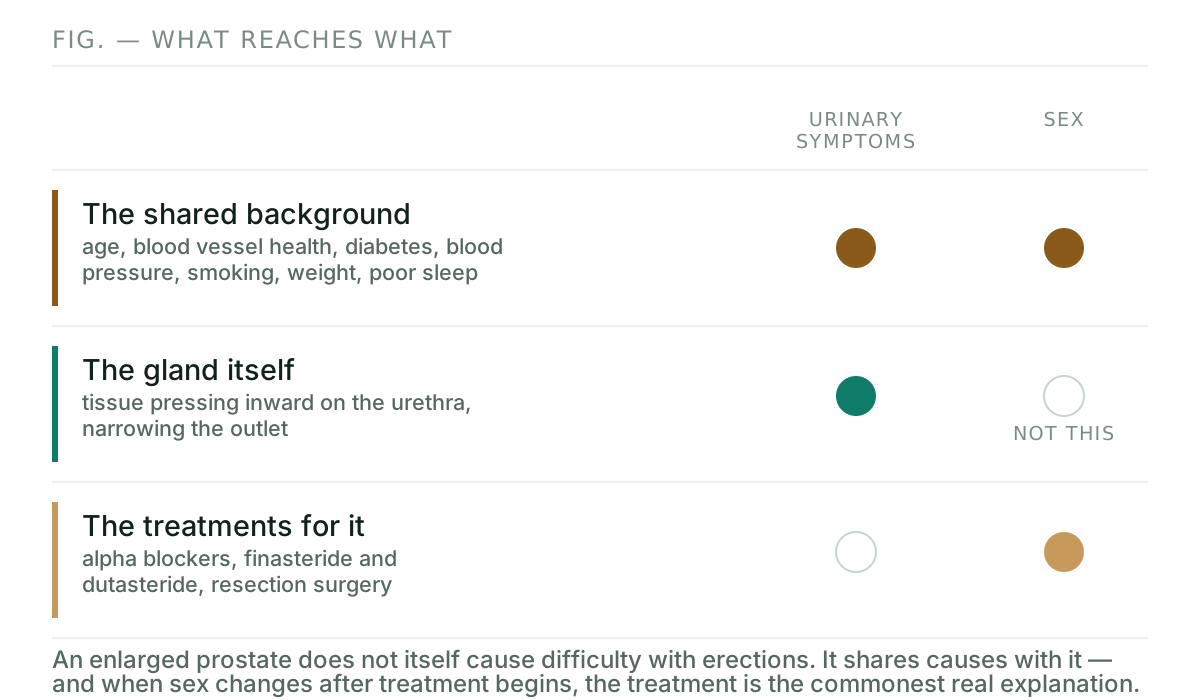
An enlarged prostate does not directly cause erection problems. It presses on the urethra, which is a plumbing problem, not a circulation one. The two travel together because they share causes — age, blood vessels, diabetes, sleep. What genuinely does change sex is the treatment, and which part changes depends on which treatment.
This is the question men ask last, or never. It gets three minutes at the end of an appointment, if it comes up at all, and the answer is usually a reassurance rather than an explanation.
The subject deserves better, because the honest version is more useful than the reassuring one. Some of what men fear here is not true. Some of what they are not warned about is.
This page is part of our complete guide to an enlarged prostate after 40.
Does the gland itself cause erection problems?
No, and the reason is worth understanding rather than just accepting.
Benign enlargement is a mechanical problem. Tissue grows in the middle of the gland, the gland wraps around the urethra, and the channel narrows. Everything that follows from that — the weak stream, the waiting, the getting up at night — is downstream of a narrowed pipe.
An erection is a circulatory event. It depends on blood arriving, on the vessels relaxing to let it in, and on the nerves that trigger that. None of that machinery passes through the part of the prostate that has enlarged. Squeezing the urethra does not squeeze the blood supply to the penis.
So why do the two arrive together so reliably that men assume one causes the other?
What they actually share
They share a list of causes, and it is a long one: age itself, the health of small blood vessels, diabetes, blood pressure, smoking, weight, and sleep that has been broken for years.
Two conditions with the same risk factors will show up in the same men at the same stage of life without either causing the other. That is what is happening here. The correlation is real and the causation is not.
This matters practically, and not as a debating point. A man who believes his prostate is the cause will chase prostate treatment and be disappointed. A man who understands the shared list has somewhere useful to look — because several items on that list are things medicine can genuinely do something about, and erectile difficulty is sometimes the first visible sign of a vascular problem that has not yet announced itself anywhere else.
That last point is the one urologists most want men to take seriously. It is a reason to mention it, not a reason to worry quietly.
Sex is four things, not one
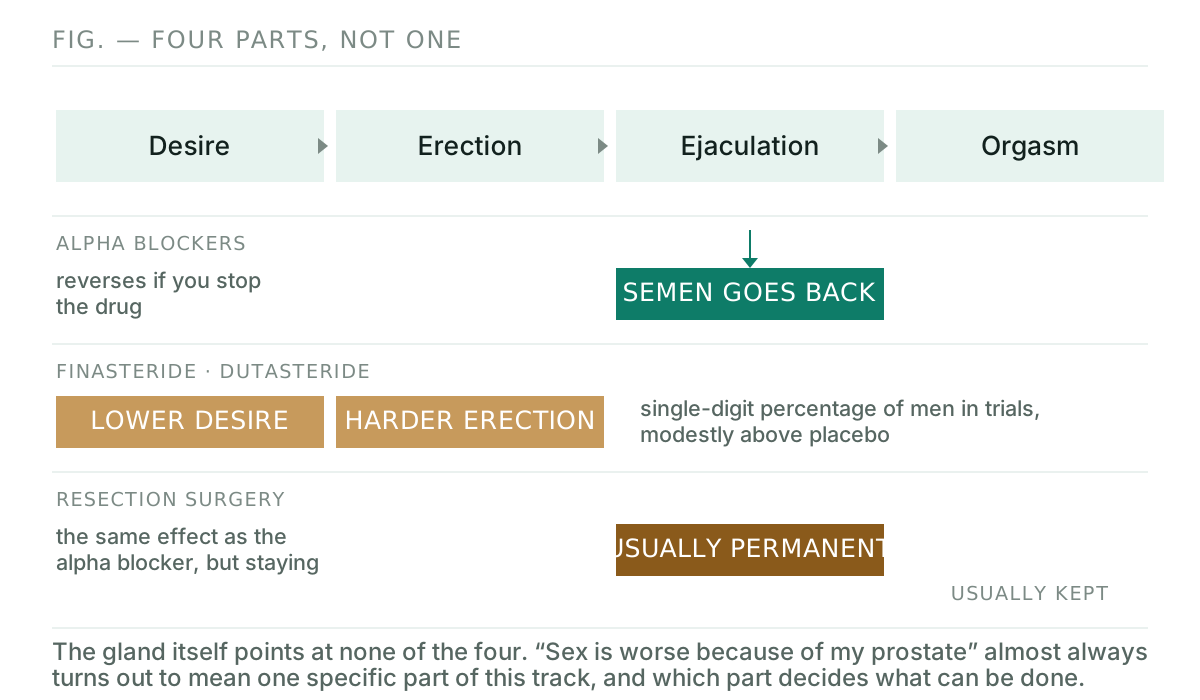
Most of the confusion in this subject comes from treating “sex” as a single item that is either working or not. It is at least four separate parts, and the treatments for an enlarged prostate hit different ones.
Desire, erection, ejaculation and orgasm are produced by different machinery. A man can lose one and keep the other three. When someone says sex has got worse since starting a prostate treatment, the useful next question is always: which part?
Alpha blockers: the one men are least warned about
Alpha blockers rarely affect erections. What they commonly do is redirect ejaculation backwards into the bladder, which is called retrograde ejaculation. The orgasm still happens. Little or nothing comes out.
It is harmless. It does not damage anything, does not reduce sensation, and the semen leaves at the next visit to the toilet. It does affect fertility, which matters to a minority of men taking these drugs and matters completely to them.
The reason it deserves its own section is not danger. It is that men are frequently not told, discover it alone, and reasonably conclude that something has gone badly wrong. The full picture on these drugs is in what each prostate medication actually does.
The important half of the sentence is that it reverses. Stop the drug and it returns. That single fact separates it from the same effect after surgery.
Finasteride and dutasteride: the ones that reach desire
These are the drugs with a genuine association with reduced libido and erectile difficulty. In trials it affects a single-digit percentage of men, modestly above placebo. That is a real effect and a minority effect, and both halves of that sentence matter.
Two things are worth knowing before starting. The first is that the effects usually resolve after stopping, though a small number of men report symptoms persisting, and that remains genuinely debated rather than settled. We are not going to pretend it is resolved in either direction.
The second is that this applies to the low dose taken for hair loss as well. A man on 1 mg finasteride is taking the same drug at a quarter of the strength, and he has usually not connected it to anything prostate-related at all.
After surgery: the same effect, but staying
Resection and laser enucleation commonly end outward ejaculation, and this time it is usually permanent. Erections are generally preserved — the surgery works inside the channel, not on the nerves and vessels that produce an erection.
For a man who has finished his family and is exhausted by getting up four times a night, this is often a shrug. For a man who has not, it can be the whole decision, and the gentler procedures exist partly for exactly this reason. That trade-off is laid out in prostate surgery options.
The one way treatment can genuinely help
There is a real improvement available here, and it does not come from the gland.
Men who stop waking four times a night sleep properly for the first time in years. Men who stop planning every outing around toilets stop declining invitations. Broken sleep flattens desire, and the anxiety of anticipating a problem is itself one of the more reliable ways to produce one.
So treatment can improve a man's sex life substantially while doing nothing to his erections directly. It is worth naming that honestly rather than dressing it up as a prostate benefit, because a man who is told to expect a direct effect and does not get one concludes the treatment failed.
Taking erection medication alongside prostate medication
This comes up constantly and the honest answer is that it is often fine, and is not a decision to make alone.
One drug in the erection family is licensed for both conditions and is sometimes prescribed deliberately to do two jobs. But combining these drugs with an alpha blocker can drop blood pressure sharply, particularly when either is being started or increased.
The practical rule is the same one we keep repeating on this site: whoever writes either prescription needs to know about the other. That includes anything bought online without a conversation, which is a large share of how these drugs actually reach men. The related interaction with blood pressure treatment is covered in prostate supplements and blood pressure medication.
Do supplements help with this?
Prostate supplements are not sold as sexual products, but the marketing sits close enough to the subject that men reasonably wonder.
There is no good evidence that a saw palmetto product improves erections, desire or ejaculation. The evidence on what it does for urinary symptoms is set out in what the Cochrane review actually found, and it is not encouraging on the main question, let alone this one.
There is a specific trap worth naming. Products marketed for male performance are among the most commonly adulterated supplements on the market, sometimes containing undeclared prescription erection drugs. For a man already on an alpha blocker or a blood pressure tablet, an undeclared dose of that kind is genuinely dangerous rather than merely useless.
When sex hurts, this is not the article
Pain does not belong to benign enlargement. Painful ejaculation, pain in the perineum or testicles, or blood in the semen are not features of a gland that has simply grown.
Those point elsewhere, most often to prostatitis, which produces an almost identical urinary symptom list and is separated from enlargement mainly by pain. We wrote that comparison out in prostatitis or enlarged prostate.
How to raise it in an appointment
Men do not raise this, and the appointment is short enough that nobody else will either. Three sentences are enough, and being specific is what makes it useful:
- Name the part. Desire, erection, ejaculation or orgasm — not “things aren't right”.
- Give the timing. Did it start before the treatment, or after? That single fact changes the answer completely.
- Say what you would trade. Some men will accept a change for relief; others will not. The clinician cannot guess which you are.
A man who says “ejaculation changed about a fortnight after I started the tablet” has given more information in one sentence than most consultations on this subject ever contain.
Key takeaways
- The enlarged gland does not cause erection problems. It is a narrowed pipe, not a circulation problem.
- They appear together because they share causes: age, blood vessels, diabetes, blood pressure, smoking, weight, broken sleep.
- Sex is four separate parts. Which one changed decides whether it is reversible, permanent or unrelated.
- Alpha blockers redirect ejaculation and it reverses on stopping. After resection surgery the same effect is usually permanent.
- Finasteride and dutasteride are the ones that reach desire and erection, in a minority of men — including at the hair-loss dose.
- Erection medication with an alpha blocker can drop blood pressure sharply. Whoever prescribes either must know about the other.
- Pain, or blood in the semen, is not benign enlargement and belongs in a different conversation.
Where to go from here
If this is the part you have been putting off asking about, these go with it:
- Enlarged Prostate After 40: Symptoms, Causes and What Actually Helps — the complete guide.
- Prostate Medications: What Each One Actually Does — both drug families in full.
- Prostate Surgery Options — where the permanent version of this trade-off lives.
- Prostatitis or Enlarged Prostate? — if any of it hurts.
- Why You Wake Up to Pee at Night — the sleep half of the problem.
Frequently asked questions
Does an enlarged prostate cause erectile dysfunction?
Not directly. The enlarged gland presses on the urethra, which is a urinary problem, not a circulatory one. The two appear together because they share causes: age, blood vessel health, diabetes, blood pressure and sleep. The treatments for enlargement, however, genuinely can affect sex.
Which prostate treatments affect erections?
Finasteride and dutasteride are the ones associated with reduced desire and erectile difficulty, in a single-digit percentage of men in trials. Alpha blockers rarely affect erections but commonly redirect ejaculation into the bladder. Resection surgery usually ends outward ejaculation permanently.
Is retrograde ejaculation harmful?
No. Semen passes into the bladder and leaves harmlessly at the next visit to the toilet. It does not damage anything, does not affect erections and does not affect sensation. It does affect fertility, and after surgery it is usually permanent, whereas from an alpha blocker it reverses on stopping.
Will treating my enlarged prostate improve my sex life?
Sometimes, indirectly. Men who stop waking four times a night and stop planning around toilets often report better desire and less avoidance. That is the sleep and the anxiety improving, not the gland. Direct sexual benefit from prostate treatment is not something to expect.
Can I take erectile dysfunction medication with prostate medication?
Often yes, and one drug is licensed for both conditions, but the combination with alpha blockers can drop blood pressure sharply. This is a question for the prescriber rather than the internet, and it is the reason both drugs must be declared to whoever writes either one.
Does finasteride cause permanent sexual side effects?
For most men the effects resolve after stopping. A small number report symptoms persisting, which remains genuinely debated rather than settled. Anyone worried about it should raise it before starting rather than discover it afterwards, and should know it applies to the hair-loss dose too.
Sources
- National Institute of Diabetes and Digestive and Kidney Diseases (NIH) — Erectile Dysfunction (ED)
- National Institute of Diabetes and Digestive and Kidney Diseases (NIH) — Enlarged Prostate (Benign Prostatic Hyperplasia)
- MedlinePlus (National Library of Medicine) — Erectile Dysfunction
- MedlinePlus (National Library of Medicine) — Finasteride: drug information
- National Institute on Aging (NIH) — Sexuality and Intimacy in Older Adults
- NHS — Benign prostate enlargement: treatment

Male Health Guide Editorial Team
We write about the health problems men over 40 actually search for at 3 a.m. — and we say plainly when the evidence for a popular product is thin. We do not invent credentials and we do not publish sponsored copy as editorial. Read more about how we work.
Medical disclaimer: This article is general information, not medical advice. We are not doctors, and nothing here diagnoses, treats or cures any condition. Do not start, stop or combine any medication based on what you read here, and in particular do not combine erection medication with an alpha blocker without the prescriber knowing. New erectile difficulty can be an early sign of a treatable circulatory condition and is worth a proper assessment rather than a purchase.