Prostate Surgery Options: When Medication Is Not Enough
Short answer
Surgery for an enlarged prostate is not one operation. Resection and laser enucleation remove the obstructing tissue and give the widest, most durable opening, at the cost of a real recovery and usually the end of outward ejaculation. The urethral lift and steam treatments remove nothing, recover faster and usually preserve ejaculation, but open less and last less long.
Yesterday we wrote about the two families of drug prescribed for an enlarged prostate. The obvious next question is the one that follows a few years later for some men, and within months for a few others: what happens when the tablets stop being enough?
The word men hear is “surgery”, and the picture it produces is usually worse than the reality. Almost nothing in this category involves an external cut. Most of it happens through the urethra with a telescope. Some of it is a day case. But the choices are genuinely different from one another, and the differences are the sort a man is entitled to understand before he is asked to pick.
This page is part of our complete guide to an enlarged prostate after 40. It is a description of what exists, not a recommendation. The decision belongs to you and a urologist who has examined you.
When does surgery actually come up?
There are two entirely separate routes to this conversation, and confusing them causes a lot of unnecessary fear.
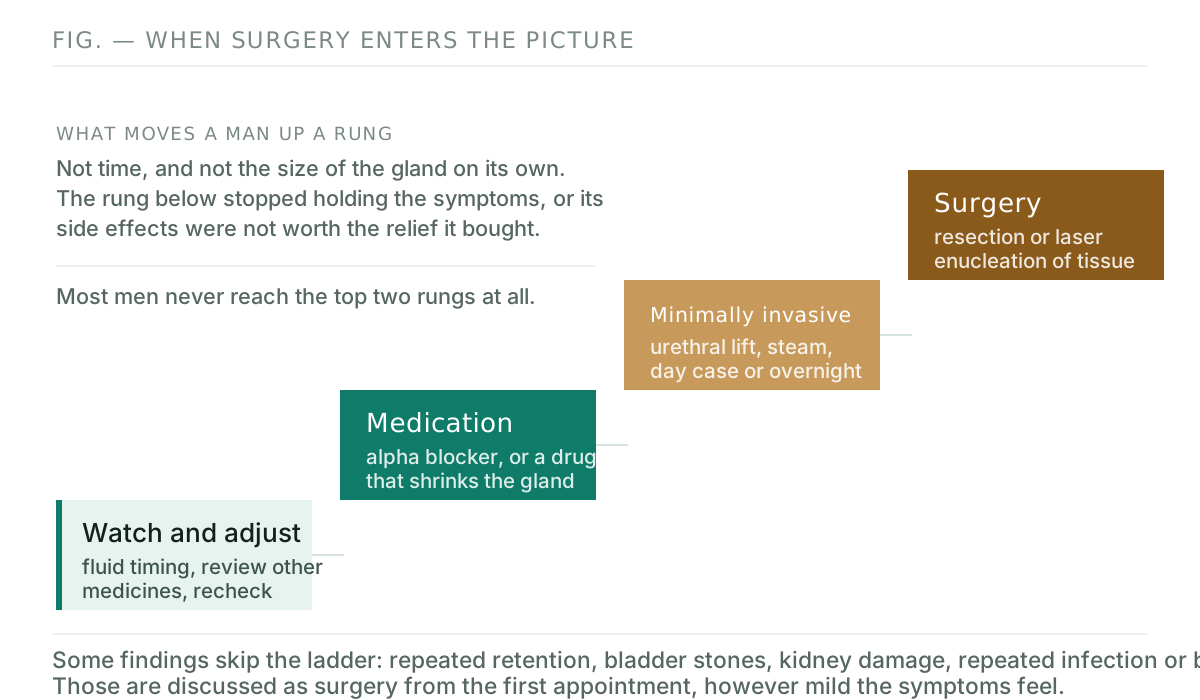
The first route is quality of life. The symptoms are not dangerous, the bladder still empties, but the tablets have stopped holding the line, or their side effects were not worth the relief they bought. Here surgery is a choice. A man can decline it, continue as he is, and come back in two years. Nothing is being risked by waiting except more of the same.
The second route is different. Certain findings mean the bladder is no longer coping, and the pressure is starting to travel backwards towards the kidneys. Those findings are worth knowing by name:
- Repeated acute retention — being unable to pass urine at all, more than once.
- Bladder stones, which form in urine that never fully drains.
- Repeated urinary infection, for the same reason.
- Repeated visible blood in the urine traced to the prostate.
- Kidney impairment from back pressure, usually found on a blood test rather than felt.
On this second route the symptoms may feel no worse than the man next to him in the waiting room. That is exactly the trap. The point of the appointment is that some of what matters here cannot be felt, which is one of the reasons we wrote separately about the feeling that the bladder has not emptied and how badly it correlates with what is actually left behind.
What gets tried first
Nobody arrives at surgery from a standing start. The sequence is broadly: watch and adjust, then medication, then a minimally invasive procedure, then an operation. Most men never reach the top two rungs at all.
What moves a man up is not time and not the measured size of the gland. Large prostates can cause few symptoms and modest ones can cause many, because the geometry of where the tissue grows matters more than the total volume.
Resection: the operation everything else is compared against
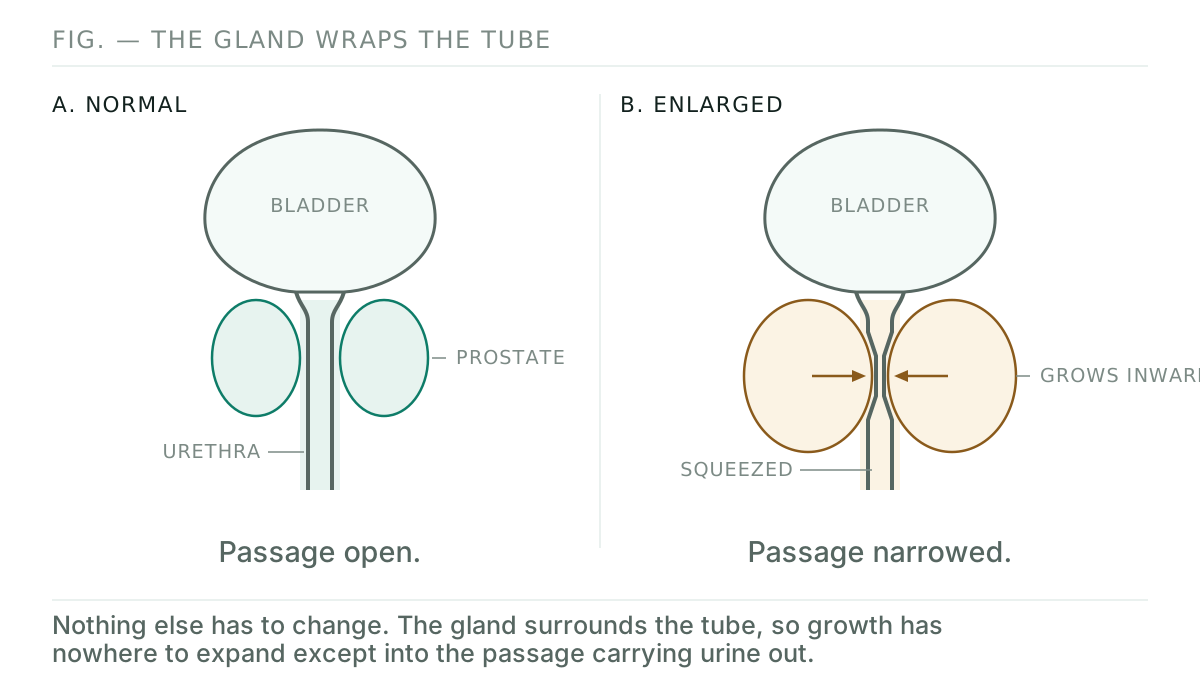
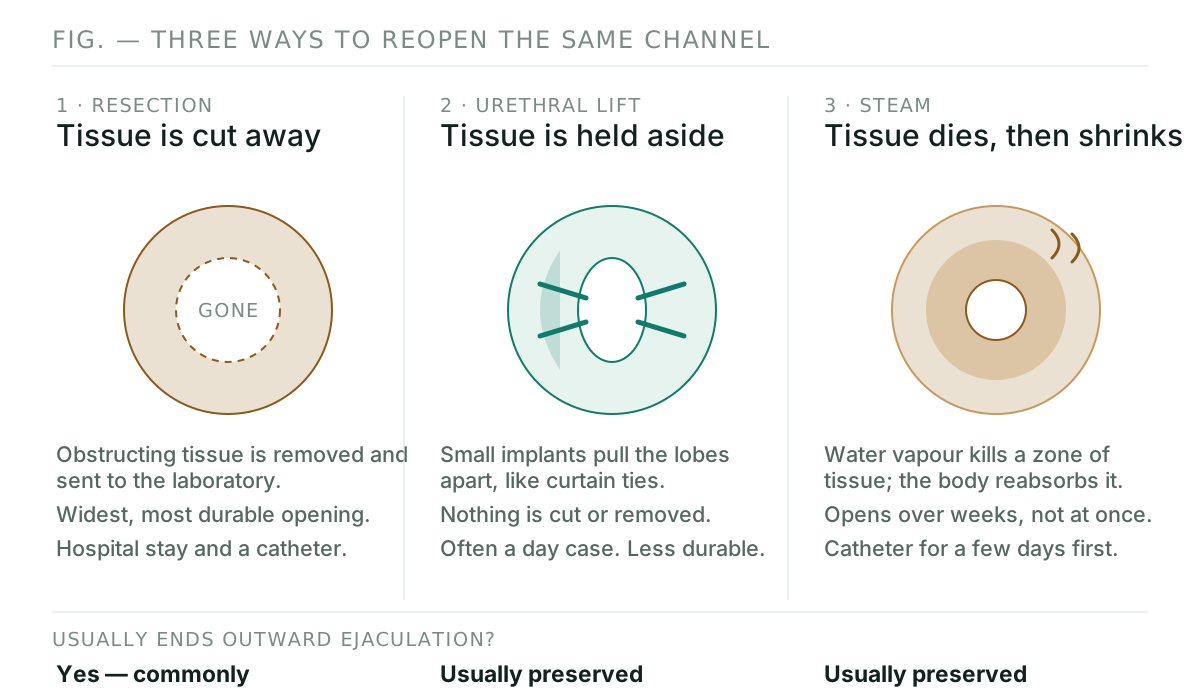
Transurethral resection of the prostate — TURP — has been the reference procedure for decades. A telescope passes along the urethra and the obstructing tissue is cut away from the inside and removed. There is no incision anywhere on the body. The tissue that comes out is sent to a laboratory, which occasionally finds a cancer nobody suspected.
It is the benchmark because it produces the widest opening and the most durable result. When a study describes a newer treatment as “non-inferior”, this is what it is being measured against.
The cost is a real recovery. Expect a night or two in hospital, a catheter for a day to three, blood in the urine that comes and goes for a few weeks, and a period where urgency is briefly worse before it is better. Most men are doing light activity within a fortnight and are through it by six weeks. Heavy lifting waits.
Laser enucleation, and the men it suits
Laser techniques do the same job by a different means. In enucleation the lobes are shelled out from the capsule almost whole and then broken up for removal, which suits very large glands that would otherwise need an open operation. Vaporisation techniques burn the tissue away instead, and because they seal as they go they are often chosen for men who cannot safely stop blood-thinning medication.
Practically, laser approaches tend to mean less bleeding and a shorter catheter than a classical resection. Their availability depends heavily on whether your hospital has both the equipment and a surgeon who does enough of them, which is a fair and quite normal question to ask out loud.
The middle ground: lift and steam
Between tablets and an operation sits a group of treatments designed around a single priority: get relief without the recovery and without losing ejaculation.
The urethral lift removes nothing at all. Small permanent implants are placed to hold the prostate lobes apart, like curtain ties. It is often a day case, the recovery is short, and outward ejaculation is usually preserved. The opening it creates is smaller than a resection would give, and it is less durable.
Steam treatment injects water vapour into the tissue, which kills a zone of it. The body then reabsorbs that tissue over the following weeks. The important consequence is that it does not work immediately — there is usually a catheter for several days and a wait of a month or more before the benefit appears, which men are not always warned about clearly enough.
| Resection or enucleation | Urethral lift | Steam | |
|---|---|---|---|
| Tissue removed | Yes, and sent to the lab | None | None at the time; reabsorbed later |
| How soon it works | Once healing settles, weeks | Quickly | A month or more |
| Typical stay | One or two nights | Often a day case | Day case, catheter for days |
| Outward ejaculation | Commonly lost | Usually preserved | Usually preserved |
| Durability | Longest | Shorter; may need repeating | Shorter; may need repeating |
The side effect that decides it for many men
Resection and enucleation commonly end outward ejaculation. Semen passes backwards into the bladder instead and leaves harmlessly at the next visit to the toilet. It does not affect erections, it does not affect sensation, and it is not dangerous. It does affect fertility, and it is usually permanent.
We say “usually permanent” deliberately, because the same effect from an alpha blocker is not: stop the drug and it reverses. That distinction is worth holding onto when comparing the two, and it is covered alongside the rest in what each prostate medication actually does.
For a man who has finished his family and is exhausted by getting up four times a night, this is often a shrug. For a man who has not, it can be the whole decision. Both reactions are legitimate, and a surgeon who treats it as trivial is not listening properly.
Tell them what you are taking — all of it
This is the practical instruction we would most like men to take from this page, because it costs nothing and gets forgotten constantly.
Several popular supplements affect bleeding. Saw palmetto, fish oil, vitamin E and ginkgo all appear on pre-operative stop lists, and surgical teams commonly ask for supplements to be stopped one to two weeks beforehand. Men frequently do not mention them, because a capsule bought in a supermarket does not feel like medication.
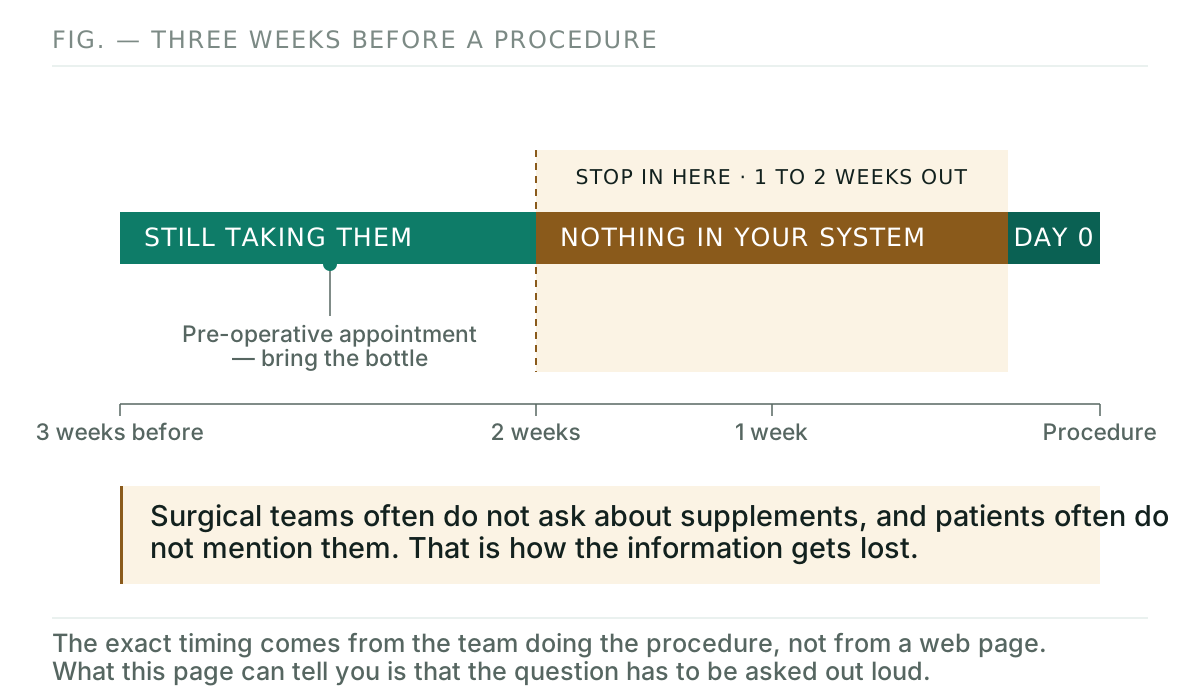
The same conversation should cover blood thinners, which are not something to stop on your own initiative, and any blood pressure medication — a combination we looked at in prostate supplements and blood pressure medication.
What happens to PSA afterwards
Removing prostate tissue lowers PSA, because there is less tissue producing it. A reading taken after a resection is not comparable with one taken before, and a new baseline has to be established.
None of these procedures is cancer treatment, and none of them removes the outer zone of the gland where most cancers arise. A man who has had a resection still has a prostate and still needs whatever monitoring he needed before. If that is unfamiliar territory, PSA levels by age sets out what the number does and does not mean.
Is it permanent?
Mostly, but not guaranteed. Prostate tissue can regrow, and a proportion of men need a second procedure years later. Resection and enucleation last longest. The lift and steam treatments are more often repeated, or followed later by a fuller operation, which is part of the bargain a man makes when he chooses a gentler option first.
This is not a reason to avoid the gentler options. It is a reason to hear them described accurately, rather than as a permanent fix that happens to be easier.
What to ask before agreeing
A urology clinic is a rushed place, and the questions that matter are easy to lose. These five are worth writing down and taking in:
- Which route am I on — is this about how I feel, or about protecting my bladder and kidneys?
- How many of these do you do a year?
- What is the realistic chance this ends outward ejaculation?
- How long will I have a catheter, and how long before I notice the benefit?
- If this needs repeating in five years, what would the next step be?
The last question is the one most often skipped, and it is the one that reveals whether a procedure is being offered as the answer or as the first of several.
Reaching this point is not a failure
Men frequently arrive at this conversation feeling they should have prevented it — that if they had taken something earlier, or eaten differently, they would not be here.
Benign enlargement is age and hormones acting on tissue, and it progresses in some men regardless of what they do. No supplement in this category has ever been shown to prevent that progression, which is why we went through the evidence in what the Cochrane review actually found on saw palmetto. Needing a procedure is not a verdict on how well you looked after yourself.
Key takeaways
- There are two routes to surgery: one is about quality of life and is a free choice; the other — retention, stones, infection, bleeding, kidney effects — is not.
- Resection and laser enucleation remove tissue and last longest, but commonly end outward ejaculation.
- The urethral lift and steam treatments remove nothing, recover faster and usually preserve ejaculation, but open less and may need repeating.
- Steam treatment does not work straight away. Expect a catheter for days and a wait of a month or more.
- Declare every supplement at the pre-operative appointment. Saw palmetto, fish oil, vitamin E and ginkgo all affect bleeding.
- None of this is cancer surgery, and none of it removes the need for whatever monitoring you already had.
Where to go from here
If surgery has been mentioned, or you are trying to work out whether it will be, these are the pieces that go with this one:
- Enlarged Prostate After 40: Symptoms, Causes and What Actually Helps — the complete guide.
- Prostate Medications: What Each One Actually Does — the rung below this one.
- What Actually Happens at a Prostate Exam — the assessment that comes first.
- Why Your Bladder Still Feels Full — on the symptom that matters most here.
- PSA Levels by Age — why the number changes after a procedure.
- Enlarged Prostate and Sex: What Actually Changes — the question men ask last, answered properly.
Frequently asked questions
When is prostate surgery necessary for an enlarged prostate?
Surgery becomes necessary when the bladder can no longer empty safely: repeated episodes of retention, bladder stones, repeated urinary infection, repeated bleeding, or a back-pressure effect on the kidneys. Short of those findings, surgery is a choice about quality of life rather than a medical requirement.
What is a TURP and how long is the recovery?
A TURP is a transurethral resection of the prostate: obstructing tissue is cut away from inside the urethra, with no external cut. It usually means one or two nights in hospital and a catheter for a day or three. Most men are back to light activity within a fortnight and fully recovered by six weeks.
Does prostate surgery affect ejaculation?
Resection and laser enucleation commonly cause retrograde ejaculation, where semen passes into the bladder rather than outward. It is harmless but usually permanent. The urethral lift and steam treatments are chosen partly because they usually preserve outward ejaculation.
What is the difference between UroLift and TURP?
A urethral lift removes nothing: small implants hold the prostate lobes apart. It is quicker, gentler and usually preserves ejaculation, but the opening it creates is smaller and less durable. A TURP removes the tissue, giving the widest and longest-lasting result at the cost of a bigger recovery.
Do I need to stop supplements before prostate surgery?
Yes. Tell the surgical team everything you take, including saw palmetto, fish oil, vitamin E and ginkgo, all of which can affect bleeding. Teams commonly ask for supplements to stop one to two weeks beforehand. This is the single most useful thing to volunteer at the pre-operative appointment.
Will I need prostate surgery again later?
Sometimes. Prostate tissue can regrow, so a proportion of men need a second procedure years later. Resection and enucleation last longest; the urethral lift and steam treatments are more often repeated or followed by a fuller operation. Nothing in this category is guaranteed to be the last one.
Sources
- National Institute of Diabetes and Digestive and Kidney Diseases (NIH) — Enlarged Prostate (Benign Prostatic Hyperplasia)
- MedlinePlus (National Library of Medicine) — Transurethral resection of the prostate
- MedlinePlus (National Library of Medicine) — Prostate resection — minimally invasive
- NHS — Benign prostate enlargement: treatment
- MedlinePlus (National Library of Medicine) — Benign prostate hyperplasia: resources

Male Health Guide Editorial Team
We write about the health problems men over 40 actually search for at 3 a.m. — and we say plainly when the evidence for a popular product is thin. We do not invent credentials and we do not publish sponsored copy as editorial. Read more about how we work.
Medical disclaimer: This article is general information, not medical advice. We are not doctors, and nothing here diagnoses, treats or cures any condition. Which procedure suits a particular man depends on his examination findings, the shape and size of his prostate, his other medication and his own priorities. That decision belongs with a qualified urologist. Do not stop any prescribed medication before an operation without being told to.