Prostatitis or Enlarged Prostate? How to Tell
Short answer
An enlarged prostate is growth pressing on the urethra: gradual, mostly after 50, and usually painless. Prostatitis is inflammation of the gland: it can start at any age, often arrives quickly, and causes pain in the perineum, testicles or on ejaculation. Pain is the clearest dividing line.
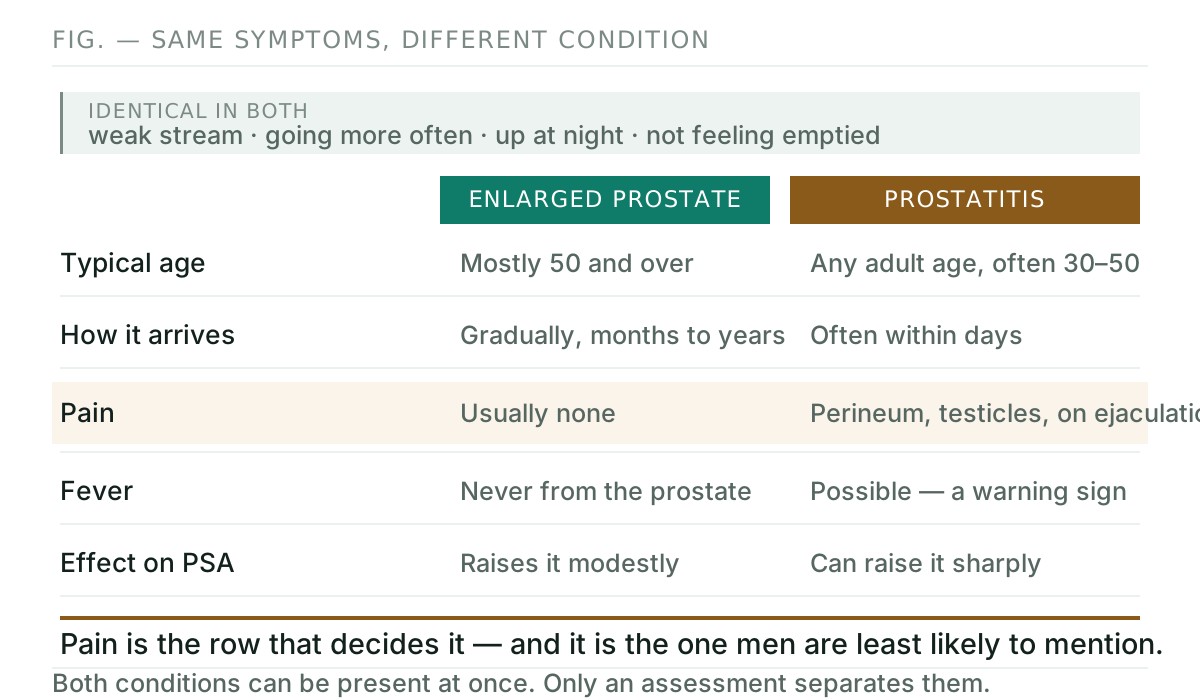
A weak stream, going more often, getting up at night, a feeling of not being finished. Two completely different conditions produce that same list, and the treatments for them have almost nothing in common.
This site has covered at length why symptoms cannot distinguish benign enlargement from prostate cancer. There is a second confusion, less discussed and much more common in practice, and it catches younger men in particular: a man of 44 who assumes his prostate has started to enlarge, when what he has is inflammation.
This page is about telling those two apart. It is part of our complete guide to an enlarged prostate after 40.
What is the actual difference?
One is a size problem. The other is an inflammation problem.
In benign prostatic hyperplasia the gland grows, and because it wraps around the urethra that growth narrows the passage. Nothing is inflamed, nothing is infected, and there is usually nothing to feel except the consequences downstream.
In prostatitis the gland is inflamed. Sometimes bacteria are responsible and sometimes no organism is ever found. Inflamed tissue swells, and swollen tissue in a fixed space presses on the same urethra — which is why the urinary symptoms look so similar. But inflamed tissue also hurts, and that is the difference you can actually notice.
| Enlarged prostate (BPH) | Prostatitis | |
|---|---|---|
| What it is | Growth of the gland | Inflammation of the gland |
| Typical age | Mostly 50 and over, rising with each decade | Any adult age, commonly 30 to 50 |
| Onset | Gradual, over months or years | Often rapid, over hours or days |
| Pain | Usually none | Perineum, testicles, tip of penis, lower back, on ejaculation |
| Fever | Never from the prostate itself | Possible, and a warning sign when present |
| Effect on PSA | Raises it modestly | Can raise it sharply |
| First-line treatment | Watchful waiting, or drugs that relax or shrink the gland | Antibiotics if bacterial; otherwise pain and pelvic floor management |
Pain is the dividing line
If you take one thing from this page, take this: benign enlargement is not usually painful. It is obstructive, inconvenient, sleep-destroying and demoralising, and it does not typically hurt.
Prostatitis hurts, and it hurts in places men do not immediately associate with the prostate:
- The perineum — between the scrotum and the anus. Often described as sitting on a golf ball.
- The testicles or the tip of the penis, which is referred pain rather than a problem in either place.
- The lower back or lower abdomen.
- On ejaculation, or in the hour afterwards. This is a strong pointer and men rarely volunteer it.
- Burning when passing urine, which suggests inflammation or infection rather than obstruction.
A man with a weak stream and no pain anywhere is describing something that fits enlargement. The same weak stream with an ache in the perineum and discomfort after sex is describing something else, and it will not respond to the same treatment.
Age changes the odds before anyone examines you
Benign enlargement is strongly age-related. It is uncommon before 40, present in a substantial minority of men in their fifties, and in the majority by the seventies. That gradient is one of the most reliable things about it.
Prostatitis has no such pattern. It is one of the commonest reasons a man under 50 sees a doctor about his prostate at all, and it is the diagnosis that a middle-aged man with new urinary symptoms is statistically more likely to have than enlargement.
A man of 62 with a stream that has weakened over three years is describing a different problem from a man of 41 whose symptoms arrived over a fortnight, even though they use the same words.
This matters because of what men do with the assumption. The 41-year-old who decides his prostate is enlarging goes and buys the supplements this site has written about, and treats an inflammatory condition with capsules aimed at a mechanical one.
The four types, and why the labels matter
Prostatitis is not one condition. It is a category containing four, and they are as different from each other as any of them is from enlargement.
- Acute bacterial prostatitis. Sudden, severe, with fever and often difficulty passing urine. Uncommon, unmistakable, and urgent.
- Chronic bacterial prostatitis. A persistent or recurring bacterial infection, often showing up as repeated urinary infections with the same organism. Treatable, but courses of antibiotics are long.
- Chronic prostatitis and chronic pelvic pain syndrome. By far the most common form. Pelvic pain lasting months, with urinary symptoms, and typically no infection found despite looking. This is the one most men labelled with prostatitis actually have.
- Asymptomatic inflammatory prostatitis. Inflammation found incidentally, usually when investigating something else. No symptoms and generally no treatment.
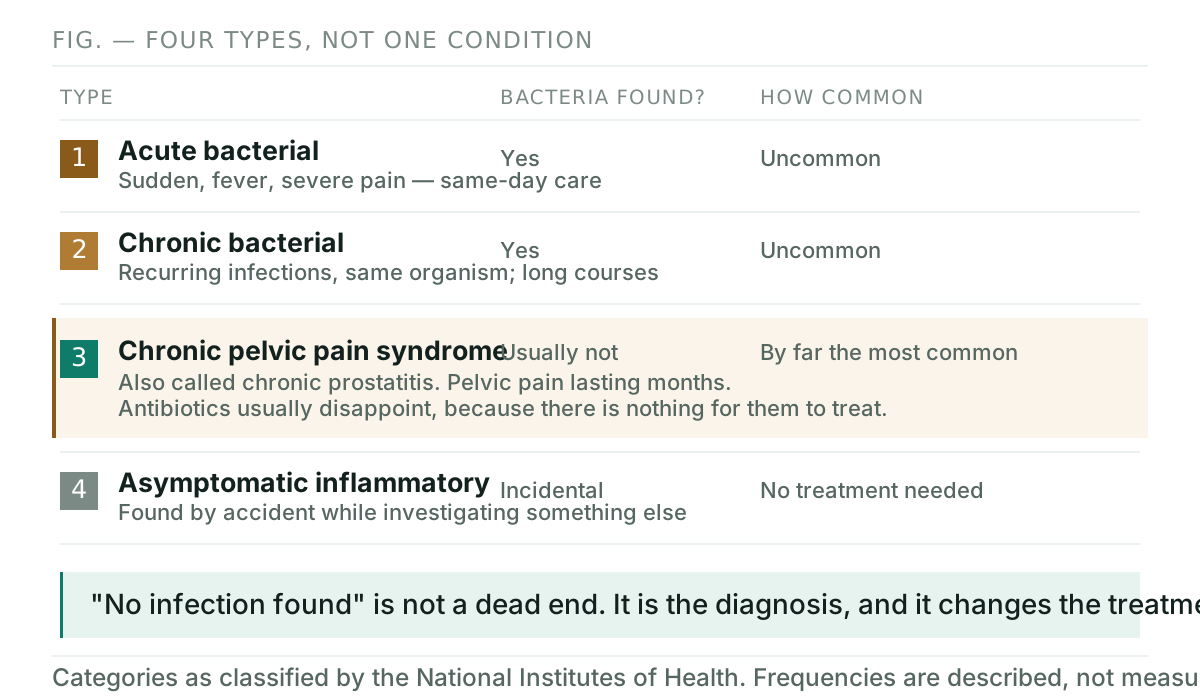
The distinction between the third category and the others is the reason so many men have a frustrating experience. Repeated antibiotic courses for a condition in which no bacteria are present is a common story, and it is a mismatch between the treatment and the type rather than a sign that nothing works.
When it is an emergency
Fever and chills alongside urinary symptoms, severe pain low down or in the perineum, feeling genuinely unwell, and difficulty or inability to pass urine. This combination is not something to research further or sleep on. It is treated straightforwardly when seen early, and it can become serious when it is not.
Being completely unable to pass urine is an emergency whatever the underlying cause, and that applies equally to a man whose prostate has enlarged. The other warning signs that override any waiting plan are set out in what actually happens at a prostate exam.
What each does to a PSA reading
Both raise it, and the difference in degree is clinically important.
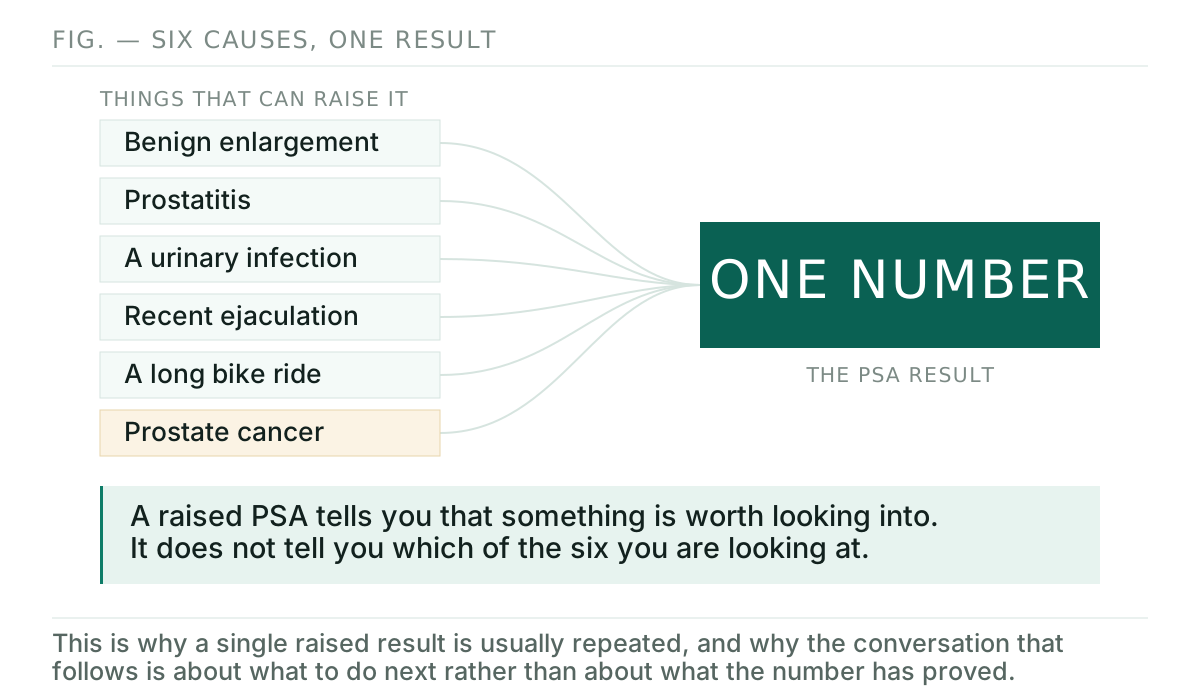
Benign enlargement raises PSA modestly and predictably — more tissue makes more of the protein. Prostatitis can raise it sharply, sometimes to levels that would be alarming if nobody knew there was inflammation present.
The practical consequence is a rule worth remembering: do not have a PSA test during a urinary infection or a flare of prostatitis. Wait until it has settled, then test. A result taken during inflammation can trigger a chain of investigation aimed at the wrong thing, and several weeks of avoidable worry. What the figure means in normal circumstances is covered in PSA levels by age.
How a clinician tells them apart
Largely by asking, which is worth knowing because it means the useful information is already in your possession.
- Your age and how fast it started. Gradual over years points one way; days or weeks points the other.
- Whether anything hurts, and where. This is the question most likely to change the answer, and the one men most often leave out.
- A urine test. Looking for infection, which if present settles a great deal at once.
- Examination. An inflamed prostate is characteristically tender to touch; an enlarged one is typically smooth, firm and not painful.
- A blood test, in context. Interpreted knowing whether inflammation is present.
Notice that four of those five are conversation. The single most useful thing you can do before the appointment is decide, honestly, whether anything hurts and where — because it is embarrassing to volunteer and it is the fact that most changes the diagnosis.
Why the treatments are not interchangeable
This is where the distinction stops being academic.
Benign enlargement is treated by relaxing the muscle around the outlet or shrinking the gland, using the two drug classes set out in prostate medications explained. Neither does anything about inflammation.
Bacterial prostatitis is treated with antibiotics, and the courses are longer than for an ordinary urinary infection because the prostate is difficult for drugs to penetrate. Antibiotics do nothing whatsoever for an enlarged prostate.
Chronic pelvic pain syndrome — the common form — is managed rather than cured, and pelvic floor physiotherapy, pain management and sometimes an alpha blocker all feature. It is the form where expectations need to be realistic and where a single prescription is unlikely to be the whole answer.
Alpha blockers appear in the treatment of both conditions, which confuses men who compare notes. In enlargement they relieve obstruction; in prostatitis they are used to ease urinary symptoms and pelvic discomfort. Being offered the same drug does not mean you have been given the same diagnosis.
Why prostate supplements fit this badly
Almost every prostate supplement on the market is sold against benign enlargement. The ingredients, the marketing and the few trials that exist are all aimed at a gland that has grown, in a man over fifty.
A man of 43 with pelvic pain and a weak stream is not that man. He has been sorted into the wrong category by an advertisement, and he buys a product that was never intended for his condition and has never been tested against it.
Even taken on its own terms the evidence is poor: the main ingredient in the category performed no better than placebo in the largest independent trials, which is set out in what the Cochrane review found. Buying it for a condition it was not aimed at compounds a weak bet with a wrong one.
The cost is rarely the money. It is the months spent on a capsule while an inflammatory condition goes unassessed, and while pelvic floor work that might actually have helped never gets started.
What helps that is not a prescription
For chronic pelvic pain syndrome in particular, some of the most useful measures are not drugs at all. None of these is a cure and none replaces assessment, but they cost nothing and they are frequently the part nobody mentions.
- Pelvic floor physiotherapy. The single most underused option. Chronically tense pelvic floor muscles are a recognised contributor, and a physiotherapist trained in this can address something a tablet cannot.
- Warmth. A warm bath is a genuinely effective short-term measure for perineal pain, and it is the oldest advice in this field for a reason.
- Breaking up long periods of sitting. Sustained pressure on the perineum aggravates symptoms. So does a long cycle ride, which is also worth avoiding before a PSA test.
- Reducing what irritates the bladder. Caffeine and alcohol worsen urinary symptoms whichever condition is causing them, and cutting back is a fair test you can run in a fortnight.
- Managing stress deliberately. This one gets dismissed as a euphemism for imagining it. It is not: stress measurably worsens pelvic pain in this syndrome, which is a statement about muscle and nerves rather than about character.
When no infection is found
A large proportion of men who arrive with prostatitis symptoms are told, after testing, that nothing has grown. That news lands badly, and it is usually delivered too quickly to be understood properly.
It does not mean the pain is imagined. It means the label is chronic pelvic pain syndrome rather than an infection, that the mechanism involves muscle, nerves and inflammation rather than bacteria, and that antibiotics are unlikely to be the answer however many courses are tried.
It also means a different set of things are worth trying — pelvic floor work in particular, which is often the most effective and least prescribed. A man who spends two years cycling through antibiotics for a condition without bacteria has lost the time, not because nothing works, but because the treatment never matched the type.
Which brings this back to the theme of everything else on this site. The symptom is the starting point, not the answer. Two conditions with one symptom list need something other than the symptom list to tell them apart, and that something is an assessment rather than a guess — or a supplement bought on the strength of the guess.
Key takeaways
- Enlargement is growth and is usually painless. Prostatitis is inflammation and typically hurts.
- Pain in the perineum, testicles, tip of the penis or on ejaculation points to prostatitis, not enlargement.
- Age shifts the odds: enlargement is mostly a condition of men over 50, prostatitis affects any adult age.
- Most men diagnosed with prostatitis have the form where no infection is found, which changes what treatment can achieve.
- Prostatitis can raise PSA sharply. Do not have the test during a flare or an infection — wait until it settles.
Where to go from here
If you are trying to work out which one you are dealing with, these follow on:
- What Actually Happens at a Prostate Exam — the assessment that separates them, described plainly.
- Prostate Medications: What Each One Actually Does — why the treatments are not interchangeable.
- BPH vs Prostate Cancer: How to Tell the Difference — the other comparison symptoms cannot settle.
- PSA Levels by Age: What Your Number Actually Means — including why inflammation ruins a reading.
- Enlarged Prostate After 40: Symptoms, Causes and What Actually Helps — the complete guide.
- Pelvic Floor Exercises for Men: Doing Them Right — the pelvic floor work named above, done properly.
Frequently asked questions
What is the difference between prostatitis and an enlarged prostate?
An enlarged prostate is growth: the gland gets bigger and presses on the urethra, gradually, mostly after 50. Prostatitis is inflammation of the gland, it can arrive at any age including the thirties, and its defining feature is pain that benign enlargement does not cause.
Does an enlarged prostate hurt?
Not usually. Benign enlargement is a mechanical problem and it is typically painless, however annoying the symptoms are. Pain in the perineum, testicles, tip of the penis, lower back or on ejaculation points away from simple enlargement and towards prostatitis.
Can prostatitis raise your PSA?
Yes, and sometimes sharply, well above the level a benign enlargement would produce. This is why a PSA test should be postponed during a urinary infection or an episode of prostatitis, and repeated once the inflammation has settled rather than acted on during it.
How does a doctor tell prostatitis from an enlarged prostate?
Mostly from the history: your age, how quickly symptoms arrived, and whether there is pain or fever. A urine test looks for infection. On examination an inflamed prostate is typically tender, while an enlarged one is usually smooth, firm and painless to touch.
Is prostatitis an emergency?
One form is. Acute bacterial prostatitis arrives suddenly with fever, chills, severe pain and difficulty passing urine, and needs same-day medical care. The chronic forms are not emergencies, although being unable to pass urine at all is, whatever the cause.
Can you have prostatitis and an enlarged prostate at the same time?
Yes. They are separate conditions and nothing prevents a man from having both, which is one reason symptoms alone rarely settle the question. It also explains why treating one and finding some symptoms remain is a common and unsurprising outcome.
Sources
- National Institute of Diabetes and Digestive and Kidney Diseases (NIH) — Prostatitis: Inflammation of the Prostate
- National Institute of Diabetes and Digestive and Kidney Diseases (NIH) — Prostate Enlargement (Benign Prostatic Hyperplasia)
- NHS — Prostatitis
- NHS — Benign prostate enlargement
- National Cancer Institute — Prostate-Specific Antigen (PSA) Test

Male Health Guide Editorial Team
We write about the health problems men over 40 actually search for at 3 a.m. — and we say plainly when the evidence for a popular product is thin. We do not invent credentials and we do not publish sponsored copy as editorial. Read more about how we work.
Medical disclaimer: This article is general information, not medical advice. We are not doctors, and nothing here diagnoses, treats or cures any condition. Prostatitis and benign enlargement can occur together and can only be distinguished by assessment. Fever with urinary symptoms, or inability to pass urine, needs same-day medical care. Please speak to a qualified healthcare professional about your own situation.