Pelvic Floor Exercises for Men: Doing Them Right
Short answer
Pelvic floor exercises do not shrink the prostate. What they improve is the control around it: dribbling, urgency and leaking. They work only if you find the right muscle, which is the one that stops wind, not the buttocks or the stomach — and only after two to three months of daily practice.
When we wrote about prostatitis and enlarged prostate, we said that pelvic floor physiotherapy is among the most effective and least prescribed options in this whole subject. That sentence deserved its own page rather than a passing mention.
This is that page. It is deliberately practical, because the failure here is almost never motivation. It is that men do the wrong thing carefully for three weeks, conclude it does not work, and stop.
It is part of our complete guide to an enlarged prostate after 40.
What these exercises can and cannot do
Start with the honest boundary, because it is the thing most pages skip.
A pelvic floor exercise does not shrink the prostate, does not widen the urethra and does not change the obstruction. If your complaint is a weak stream caused by a narrowed channel, this will not fix that, and no amount of practice will.
What it strengthens is the muscular sling underneath the bladder that gives you control: holding on when the urge arrives, closing off properly at the end, and stopping the small leak on a cough. That is a different job from the obstruction, and for a great many men it is the part that actually spoils the day.
Two specific problems respond particularly well, and they are the two men are most embarrassed by: the dribble that appears after you have zipped up, and the urgency that turns a walk from the car into a calculation.
Finding the right muscle
This is the whole thing. Get it wrong and every minute afterwards is wasted.
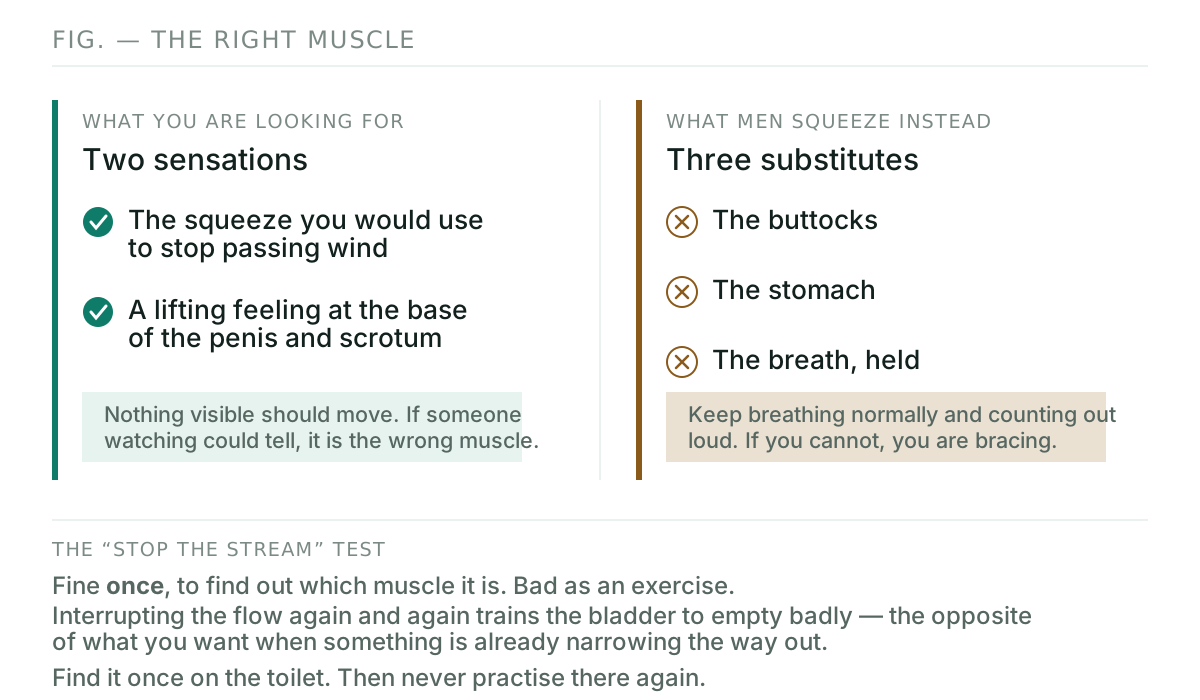
You are looking for two sensations at once. The first is the squeeze you would use to stop yourself passing wind in company. The second is a lifting feeling at the base of the penis and scrotum — a slight drawing up and in.
The test for whether you have it is simple: nothing visible should move. No clenching that someone across the room could notice. If you can see it happening, you are using the wrong muscle.
The three wrong ones are consistent. Men squeeze the buttocks, tighten the stomach, or hold the breath — often all three at once, which feels like effort and achieves nothing. Keep breathing normally, and count out loud while you hold. If you cannot talk, you are bracing rather than lifting.
The stop-the-stream test, and why it is a trap
Almost every set of instructions tells men to stop their urine mid-flow to identify the muscle. That advice is half right, and the missing half causes harm.
As a one-off identification, it is reasonable. Stop the stream once, notice which muscle did it, and you have found what you are looking for.
As an exercise, repeated daily, it is a bad idea. Interrupting the flow again and again trains the bladder to empty badly and can leave more urine behind — the opposite of what you want when something is already narrowing the way out. If the sensation of not emptying is familiar, we wrote about it in why your bladder still feels full.
Find it once on the toilet. Then never practise there again.
A routine that is actually sustainable
Programmes vary, and the differences between them matter far less than doing something every day. A reasonable shape:
- Slow holds. Squeeze and hold for a count of three to five, then relax fully for the same. The relaxing matters as much as the squeezing.
- Quick squeezes. A short, sharp lift and release, several in a row. This is the one that catches a cough or a sneeze.
- Three sets a day, roughly ten of each. Little and often beats one long session.
Start lying down, where it is easiest. Progress to sitting, then to standing, which is harder and is also the position you actually need it in.
Attach it to something you already do every day without deciding — the kettle, the commute, the news. A routine that depends on remembering will not survive the second week.
How long before anything changes
Two to three months of daily practice before judging it, with little to show in the first few weeks. That is the honest number and it is longer than most men expect.
This is muscle training. Nobody expects a visible difference three weeks into going to a gym, but the same man will abandon pelvic floor work at three weeks because nothing has happened. Nothing was going to have happened.
The same discipline we recommend for judging a supplement applies here, and for the same reason: without a written record, you are comparing today against a memory of how bad it used to be, which is not a comparison at all. The method is in how long prostate supplements take to work.
The after-dribble, and what actually stops it
This one deserves its own section because the fix is mechanical, immediate, and almost nobody is told it.
The dribble that appears after you have finished is urine trapped in the stretch of urethra below the prostate. Shaking does not move it, and waiting does not either. It arrives when you move.
What empties it is gentle upward pressure behind the scrotum, just in front of the anus, drawn slowly forwards along the underside — milking that section before you dress. A firm pelvic floor squeeze at the end helps, and gets easier as the muscle strengthens.
Men often assume this is a sign of getting worse. It is common, it is mechanical, and it responds to technique rather than treatment.
Bladder training: the other half
Pelvic floor work strengthens the muscle. Bladder training changes the habit, and for urgency the two together do more than either alone.
A bladder that has been rushed to the toilet at the first hint of a signal for years learns to send that signal earlier and earlier. Bladder training walks it back by gradually extending the gap between trips.
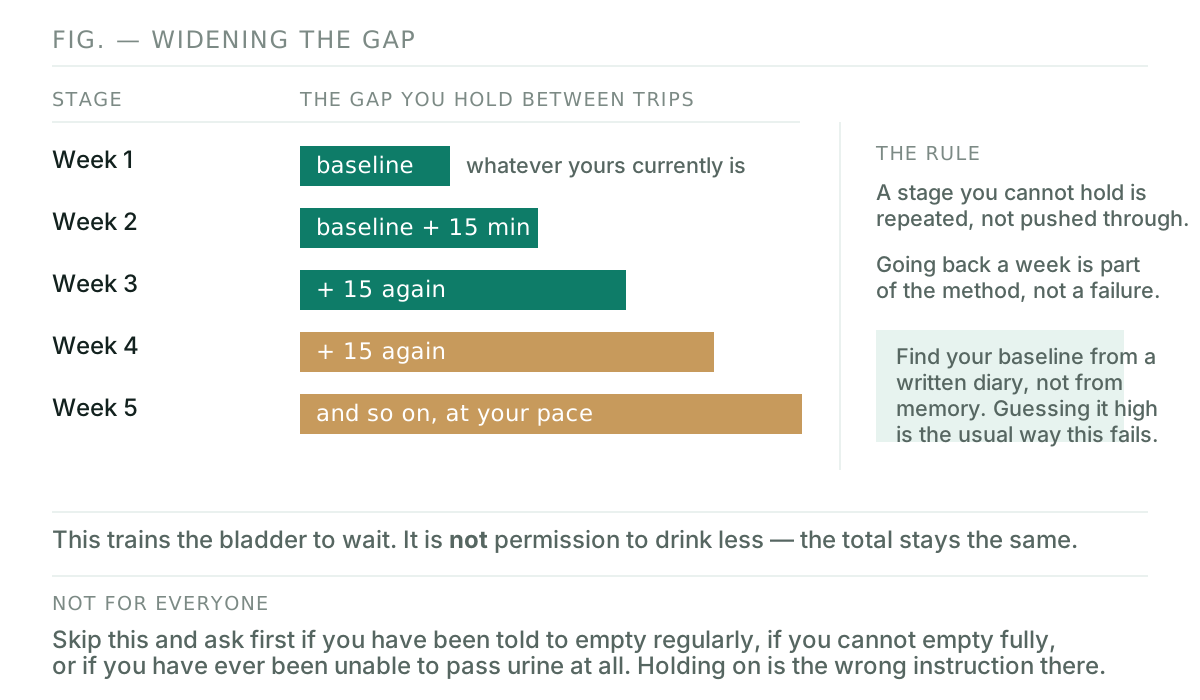
The rule that matters: a stage you cannot hold is repeated, not pushed through. Going backwards for a week is part of the method, not a failure.
And this is emphatically not permission to drink less. The total stays the same — concentrated urine irritates the bladder more, which is exactly the wrong direction. That argument is set out in foods and drinks that make prostate symptoms worse.
Start with a diary, not with the exercises
Both halves of this need a baseline, and neither works well without one.
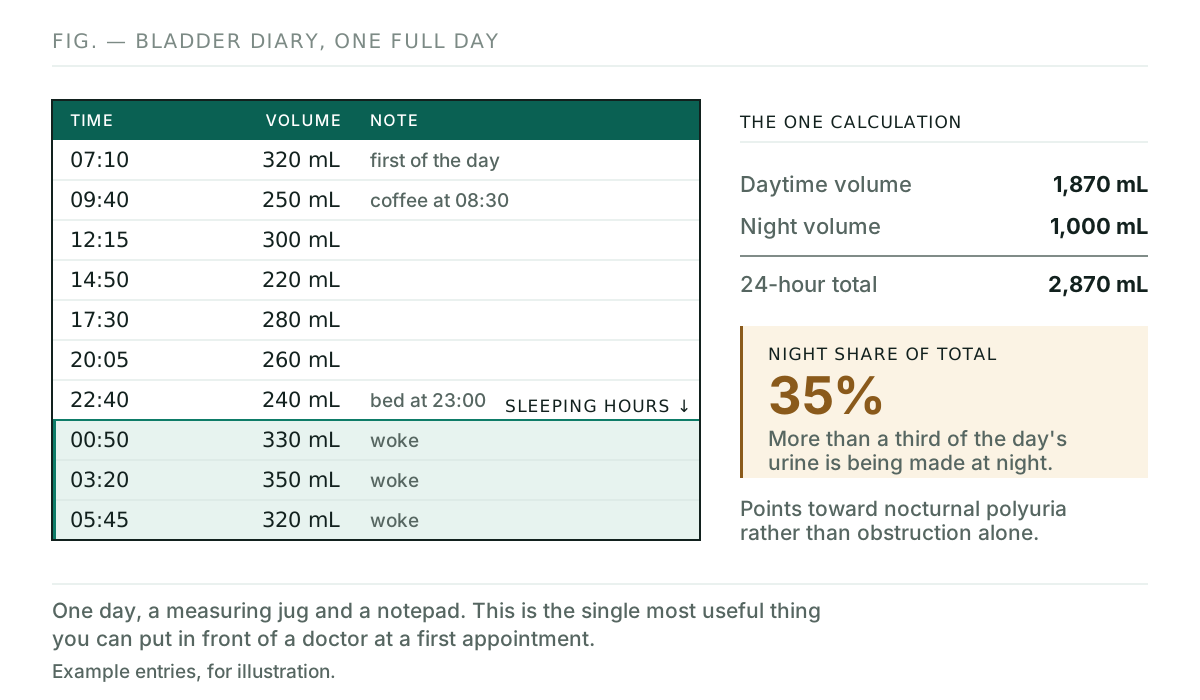
Three days of recording when you go, roughly how much, and what you had drunk beforehand will tell you your actual shortest comfortable gap. It also produces the single most useful document you can take to an appointment.
When holding on is the wrong instruction
Bladder training is not for everybody, and this is the part that gets left off the leaflet.
Do not start it, and ask first, if you have been told to empty regularly, if you know you do not empty fully, or if you have ever been unable to pass urine at all. In those situations deliberately holding on is the opposite of what you need.
Pelvic floor exercises themselves are safe in almost all circumstances. It is the holding-on half that needs the check.
When to stop doing this alone
If three months of honest daily practice has changed nothing, the answer is usually not more of the same. It is that the technique is wrong, and that is very hard to detect from the inside.
A specialist physiotherapist can confirm in one appointment whether you are contracting the right muscle, which is the single most common reason this fails. Ask for the referral by name — it is under-prescribed rather than unavailable, and men who do not ask are rarely offered it.
Worsening symptoms, pain, blood in the urine, or being unable to pass urine at all are not things to train through. Those belong in an appointment, promptly.
Key takeaways
- These exercises do not shrink the prostate or widen the outlet. They improve control: dribbling, urgency and leaking.
- The right muscle is the one that stops wind, plus a lifting feeling at the base. Nothing visible should move.
- The three wrong substitutes are the buttocks, the stomach and a held breath. Count out loud to check.
- Stop the stream once to find the muscle. Never as an exercise — it trains the bladder to empty badly.
- Give it two to three months of daily practice before judging. Three weeks proves nothing.
- The after-dribble is trapped urine and responds to technique, not treatment.
- Bladder training extends the gap from your own measured baseline, and is not for anyone told to empty regularly.
Where to go from here
If you are trying to improve this without a prescription, these go with it:
- Enlarged Prostate After 40: Symptoms, Causes and What Actually Helps — the complete guide.
- Foods and Drinks That Make Prostate Symptoms Worse — the other free change worth making.
- What to Do While Symptoms Are Still Mild — where this belongs in the sequence.
- Why Your Bladder Still Feels Full — before you start any holding-on routine.
- Prostatitis or Enlarged Prostate? — where pelvic floor physiotherapy matters most.
Frequently asked questions
How do I find my pelvic floor muscles?
Use the squeeze you would use to stop yourself passing wind, together with a lifting feeling at the base of the penis and scrotum. Nothing visible should move. If someone watching could tell you were doing it, you are squeezing your buttocks or stomach instead.
Should I stop my urine stream to exercise my pelvic floor?
Only once, to identify the muscle. Repeatedly interrupting the flow as an exercise trains the bladder to empty poorly, which is the opposite of what you want when something already narrows the outlet. Find it once on the toilet, then never practise there again.
How long do pelvic floor exercises take to work?
Expect two to three months of daily practice before judging them, and little in the first few weeks. This is muscle training, not a tablet. Men who stop at three weeks because nothing happened stopped before anything was ever going to happen.
Do pelvic floor exercises help an enlarged prostate?
They do not shrink the prostate or widen the outlet. What they help is the control around it: post-void dribbling, urgency and leaking. That is a genuine improvement in daily life without touching the obstruction itself.
What is bladder training and how does it work?
Bladder training gradually extends the gap between trips to the toilet, starting from your own measured baseline and adding roughly fifteen minutes at a time, holding each stage about a week. It retrains a bladder that has learned to signal early. It is not permission to drink less.
How do I stop dribbling after urinating?
The trapped urine sits in the urethra below the prostate. Pressing gently upward behind the scrotum and drawing forward empties it before you dress, and a pelvic floor squeeze at the end helps. Shaking and waiting does not, which is why the problem persists.
Sources
- MedlinePlus (National Library of Medicine) — Kegel exercises — self-care
- NHS — Urinary incontinence: treatment, including pelvic floor training and bladder training
- National Institute of Diabetes and Digestive and Kidney Diseases (NIH) — Bladder Control Problems (Urinary Incontinence)
- National Institute of Diabetes and Digestive and Kidney Diseases (NIH) — Enlarged Prostate (Benign Prostatic Hyperplasia)
- MedlinePlus (National Library of Medicine) — Urinary Incontinence

Male Health Guide Editorial Team
We write about the health problems men over 40 actually search for at 3 a.m. — and we say plainly when the evidence for a popular product is thin. We do not invent credentials and we do not publish sponsored copy as editorial. Read more about how we work.
Medical disclaimer: This article is general information, not medical advice. We are not doctors, and nothing here diagnoses, treats or cures any condition. Bladder training in particular is not appropriate for everyone: do not begin deliberately holding on if you have been advised to empty regularly, if you do not empty fully, or if you have ever been in urinary retention. Persistent or worsening symptoms belong with a qualified healthcare professional.