Foods and Drinks That Make Prostate Symptoms Worse
Short answer
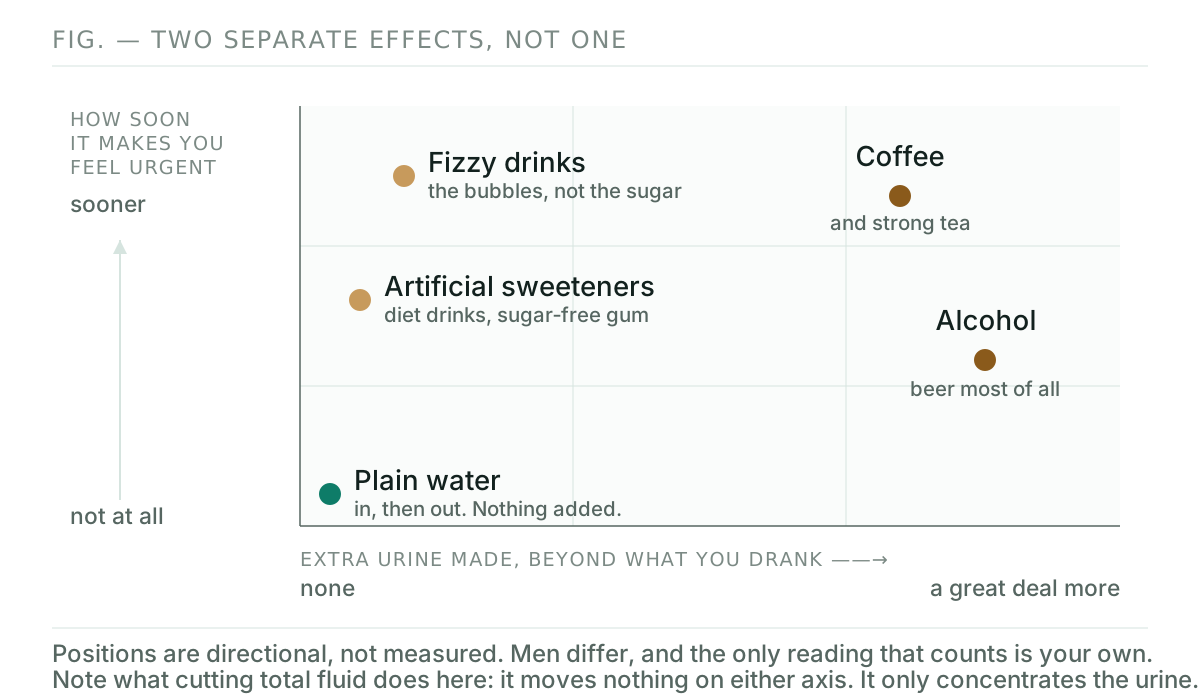
The offenders are drinks, not foods. Caffeine and alcohol make the kidneys produce extra urine; fizzy drinks and artificial sweeteners irritate the bladder so urgency arrives sooner. None of them changes the size of the prostate. Shifting the same daily fluid earlier is the change that costs nothing and helps most.
Search for prostate and diet and you will find long lists of foods to avoid, usually without any explanation of why they are on the list. Some of it is reasonable. A good deal of it is invented, and a fair amount of it exists to make a supplement sound necessary.
This page takes a narrower and more useful line. It separates what changes the prostate from what changes the symptoms, because those are not the same question and confusing them is why so much dietary advice in this area disappoints.
It is part of our complete guide to an enlarged prostate after 40.
Can diet shrink an enlarged prostate?
No. Nothing you eat or drink has been shown to reduce the size of an enlarged prostate. Benign enlargement is age and hormones acting on glandular tissue, and a plate of food does not reverse it.
That sounds like the end of the discussion, and it is not, because the prostate is only half of the machine. The other half is the bladder, and the bladder is very responsive to what arrives in it. Two men with identical prostates can have quite different lives depending on how much urine reaches that bladder, how fast, and how irritable it is when it gets there.
So the honest framing is this: diet will not fix the obstruction, but it can meaningfully change how much that obstruction costs you in a day. That is worth having, and it is free.
The two things a drink can do
Almost every genuine offender works through one of two mechanisms, and telling them apart makes the whole subject easier to reason about.
The first is diuresis: the drink makes the kidneys produce more urine than the volume you actually swallowed. Caffeine does this mildly. Alcohol does it strongly, by suppressing the hormone that normally tells the kidneys to concentrate urine overnight.
The second is irritation: the drink does not increase the volume, but it makes the bladder lining twitchier, so the urge to go arrives at a smaller volume than it otherwise would. Carbonation and artificial sweeteners are the usual suspects here.
Coffee is unusual in doing both, which is why it comes up so consistently in men's accounts of what makes their day worse.
Caffeine: the biggest lever most men have
If you are going to test one thing, test this one. Caffeine does not touch the prostate, but it worsens the symptoms of an obstructed prostate more reliably than anything else in a normal diet.
Two practical points are usually missed. First, the dose that matters is the total across the day, not the cup you happen to notice — tea, cola and energy drinks all count. Second, the last one matters more than the rest, because caffeine has a long half-life and an afternoon coffee is still working at bedtime.
Cutting it entirely is rarely necessary and usually does not last. Moving the last one to before midday, and dropping the total by a cup or two, is a change men actually keep.
Alcohol, and why one drink costs two trips
Alcohol works against you three times over on the same evening.
It suppresses the hormone that concentrates urine overnight, so more is produced while you sleep. It relaxes you into a deeper early sleep, so the first signal to wake is missed and the bladder is fuller when you finally do. And beer in particular delivers a large volume of liquid on top of both effects.
The result is familiar to anyone who has tracked it: the night after a couple of drinks looks worse than the arithmetic of the liquid alone would suggest. If night-time trips are your main complaint, we went into the mechanism in detail in why you wake up to pee at night.
There is a fourth effect that has nothing to do with the bladder, and it is the reason a drink can wreck a night even when your trips are unchanged: alcohol makes the second half of the night worse in its own right. That mechanism, and why drinking earlier helps less than everyone assumes, is covered separately in what a nightcap really costs you.
Fizzy drinks and artificial sweeteners
These belong in the second category. They do not flood you with extra urine; they make the bladder complain sooner about the urine that is there.
Carbonation appears to be the relevant part of a fizzy drink rather than the sugar, which is why switching to a diet version often changes nothing — and can make things slightly worse, since artificial sweeteners are themselves associated with urgency in men who are sensitive to them.
Sensitivity here is genuinely individual. Some men notice nothing at all. That is precisely why the test at the end of this page matters more than any list.
Timing beats restriction, every time
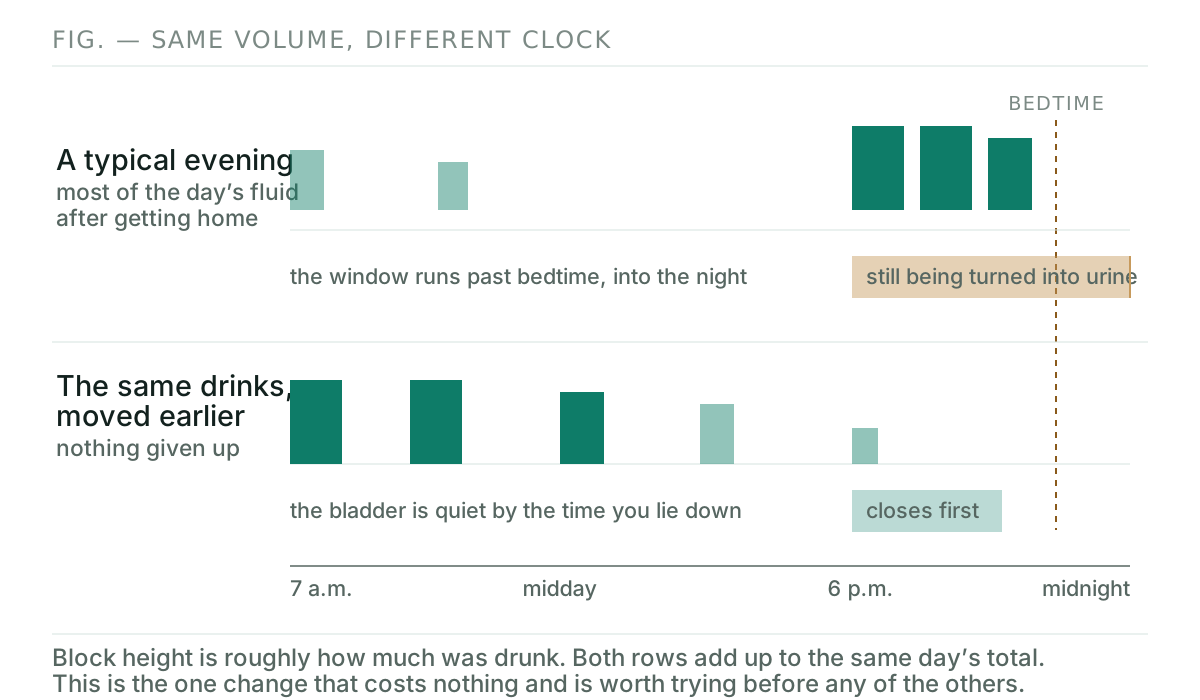
This is the most useful idea on the page, and it is the opposite of what most men try first.
Faced with night-time trips, the instinct is to drink less. It rarely works and it carries a cost. Concentrated urine is more irritating to the bladder, not less, so urgency during the day often gets worse. Persistent dehydration also raises the risk of urinary infection and of stones — and both of those, as we set out in the article on surgical options, are among the findings that push a man towards an operation.
The version that works is to keep the same daily total and move it earlier. Drink normally through the morning and afternoon, taper from early evening, and stop the last substantial drink two to three hours before bed. Nothing is given up. The kidneys simply finish the job before you lie down.
What is worth adding, not just removing
Two things belong here, and neither of them comes in a bottle marked prostate support.
Fibre and enough fluid to use it. Constipation genuinely worsens urinary symptoms — a loaded rectum sits directly behind the bladder and reduces the room it has. Men treating a urinary problem rarely think about their bowels, and it is one of the quieter wins available.
A generally sensible diet. Population studies associate diets heavy in vegetables and lighter in red and processed meat with fewer urinary symptoms. That is association rather than proof, and we are not going to dress it up as more. It is a reasonable thing to do anyway, for reasons that have nothing to do with the prostate.
What is not worth adding is a supplement chosen on the strength of a food list. The evidence for the leading ingredient in that category is set out in what the Cochrane review actually found on saw palmetto, and it is not encouraging.
The pharmacy shelf matters more than the fridge
One aside that belongs on any page about what men put into themselves. Over-the-counter decongestants and older antihistamines can worsen an obstructed stream sharply, and in some men trigger an inability to pass urine at all.
A cold remedy is a far bigger risk than a cup of coffee, and it is bought without a conversation. We covered what to look for in what a weak urine stream is telling you.
How to test this on yourself in two weeks
Lists are useless without a way to find out which items apply to you. This is the method, and it works because it produces a number rather than an impression.
- Days 1 to 3: change nothing. Record night-time trips, and roughly what you drank and when.
- Days 4 to 10: change one thing only. Move the last drink earlier, or cut the afternoon coffee — not both.
- Days 11 to 14: compare the counts against the first three days.
Changing several things at once is the commonest reason men end up concluding that nothing helped. If three things change and the result improves slightly, you have learned nothing you can keep.
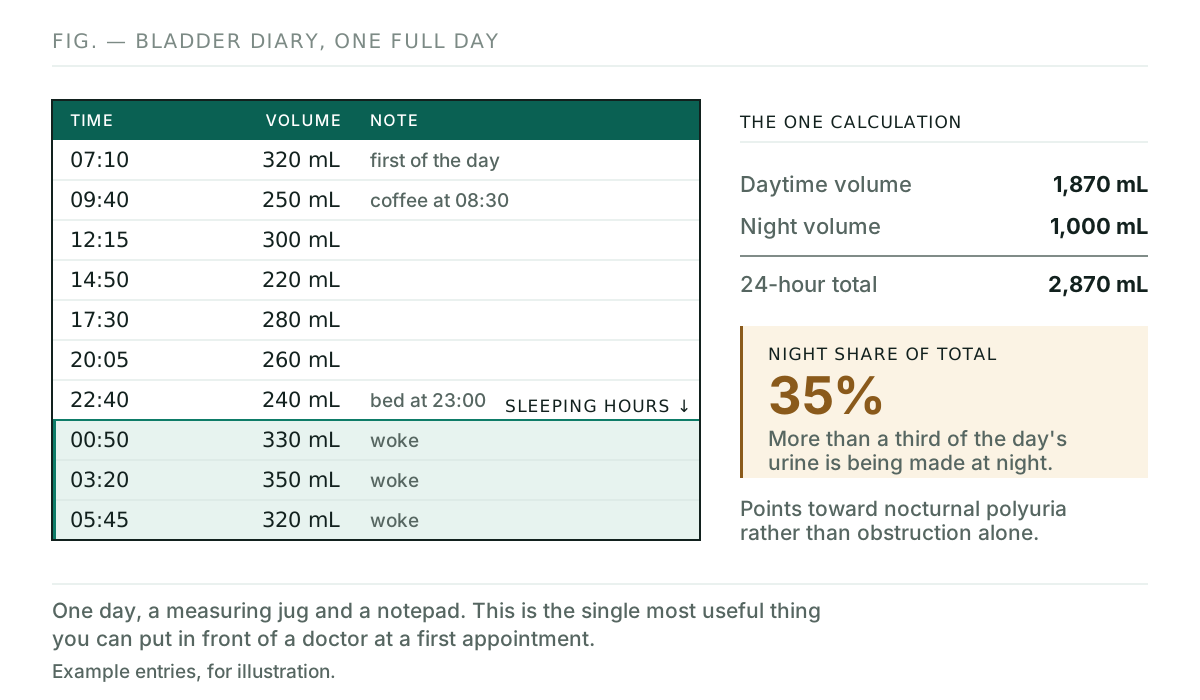
Keep the record. If you do eventually see someone about this, a written diary is genuinely useful to them, and it is the sort of thing that gets asked for at a first prostate appointment.
What a realistic result looks like
Honesty matters more here than encouragement. Drink changes produce a modest improvement in symptoms for many men and a substantial one for a few. They do not produce a normal stream in a man with a significant obstruction, and they will not stop the condition progressing.
If the symptoms are mild and stable, this is a sensible place to start and may be all you need for years — the ground covered in what to do while symptoms are still mild.
If they are not improving, or if you are getting up three or more times a night, dietary adjustment is not the answer you are looking for and continuing to fiddle with it delays the conversation that would actually change something.
When this is not a food problem at all
Nothing on this page applies to the following, and none of it should be managed by changing what you drink. Blood in the urine. Pain on passing urine. Fever with urinary symptoms. Being unable to pass urine at all — which is an emergency the same day, not the same week.
Symptoms that arrived suddenly, rather than creeping in over years, also do not fit the pattern of benign enlargement and deserve to be looked at rather than adjusted around.
Key takeaways
- No food or drink shrinks an enlarged prostate. What they change is how much urine arrives and how easily the bladder is provoked.
- Caffeine and alcohol produce extra urine; carbonation and artificial sweeteners irritate the bladder. Coffee does both.
- Do not cut total fluid. Concentrated urine irritates more, and dehydration raises the risk of infection and stones.
- Move the same daily volume earlier and stop substantial drinks two to three hours before bed. This costs nothing.
- Constipation worsens urinary symptoms, and almost nobody thinks to look there.
- Change one thing at a time and count night-time trips for two weeks. Several changes at once teaches you nothing.
Where to go from here
If you are trying to get on top of this without a prescription, these are the pieces that go with this one:
- Enlarged Prostate After 40: Symptoms, Causes and What Actually Helps — the complete guide.
- Why You Wake Up to Pee at Night — the mechanism behind the alcohol effect.
- What to Do While Symptoms Are Still Mild — where drink changes belong.
- What a Weak Urine Stream Is Telling You — including the pharmacy aisle problem.
- Saw Palmetto for Prostate: What Cochrane Actually Found — before you buy anything.
- Pelvic Floor Exercises for Men: Doing Them Right — the free option that fails when the wrong muscle is used.
Frequently asked questions
What foods and drinks make prostate symptoms worse?
The consistent offenders are drinks rather than foods: caffeine, alcohol, fizzy drinks and artificial sweeteners. Caffeine and alcohol make the kidneys produce extra urine; fizzy drinks and sweeteners irritate the bladder lining so urgency arrives sooner. Solid food has far less effect than most men expect.
Does caffeine make an enlarged prostate worse?
Caffeine does not change the size of the prostate, but it reliably worsens the symptoms. It acts as a mild diuretic and irritates the bladder, so the same obstruction produces more urgency and more trips. For most men it is the single largest lever available without a prescription.
Should I drink less water if I have prostate symptoms?
No. Cutting total fluid concentrates the urine, which irritates the bladder further and raises the risk of infection and stones. What helps is shifting the same volume earlier in the day, so the kidneys have finished processing it before you go to bed.
Does alcohol affect urination at night?
Yes, on two counts. Alcohol suppresses the hormone that normally concentrates urine overnight, so more is produced while you sleep, and it dulls the arousal that would otherwise wake you early. Beer adds a large fluid volume on top of both effects.
How long does it take to notice a difference after changing what I drink?
Two weeks is usually enough. Change one thing at a time, keep everything else the same, and count night-time trips rather than relying on impression. Testing several changes at once is the commonest reason men conclude that nothing helped.
Can diet shrink an enlarged prostate?
No. No food or drink has been shown to reduce the size of an enlarged prostate. What diet changes is how much urine reaches the bladder and how easily the bladder is provoked, which is why symptoms can improve substantially while the gland itself is unchanged.
Sources
- National Institute of Diabetes and Digestive and Kidney Diseases (NIH) — Enlarged Prostate (Benign Prostatic Hyperplasia)
- National Institute of Diabetes and Digestive and Kidney Diseases (NIH) — Bladder Control Problems (Urinary Incontinence)
- NHS — Benign prostate enlargement: treatment
- MedlinePlus (National Library of Medicine) — Urination — difficulty with flow
- MedlinePlus (National Library of Medicine) — High-fiber foods

Male Health Guide Editorial Team
We write about the health problems men over 40 actually search for at 3 a.m. — and we say plainly when the evidence for a popular product is thin. We do not invent credentials and we do not publish sponsored copy as editorial. Read more about how we work.
Medical disclaimer: This article is general information, not medical advice. We are not doctors, and nothing here diagnoses, treats or cures any condition. Do not restrict fluid on medical advice you have not been given, particularly if you take a diuretic or have heart or kidney disease, where fluid intake is a clinical decision rather than a lifestyle one. Persistent or worsening urinary symptoms belong with a qualified healthcare professional.