Cardiomyopathy: Heart Muscle Disease and the Alcohol Link
Short answer
Cardiomyopathy is disease of the heart muscle itself: it weakens the muscle and makes it harder to pump blood. Some types are inherited; others are acquired. NHLBI links heavy drinking, which it defines for men as more than 14 drinks a week, to cardiomyopathy, and advises avoiding anabolic steroids unless prescribed.
Most heart conditions men hear about start somewhere else: in the arteries, in the valves, in the electrical wiring. Cardiomyopathy is different. The problem is the muscle that does the pumping. It can be passed down in a family, it can follow another illness, and in some cases it is linked to habits a man controls — which is where this article spends some extra time.
This article covers what cardiomyopathy is, the main types, the alcohol and substance link, who is at risk, the symptoms, how it is diagnosed, the treatment, why family members may need testing, the complications, and what living with it involves. Its closest relative on this site is the heart failure article, because the two often travel together.
What cardiomyopathy is
The National Heart, Lung, and Blood Institute (NHLBI) describes cardiomyopathy as a disease that weakens the heart muscle, making it harder for your heart to pump blood. The word itself means "heart muscle disease." Depending on the type, NHLBI says, the heart muscle may become thicker, stiffer or larger than normal, and these changes weaken the heart and may cause an irregular heartbeat, heart failure, or a life-threatening event such as cardiac arrest or cardiogenic shock.
MedlinePlus calls it a group of conditions in which the heart muscle becomes weakened, stretched, thickened or has another structural or functional problem, and says it often contributes to the heart's inability to pump or function well. It adds that many people with cardiomyopathy have heart failure. NHLBI notes that cardiomyopathy can affect people of any sex, race or age, and that many times its cause is not known.
The main types
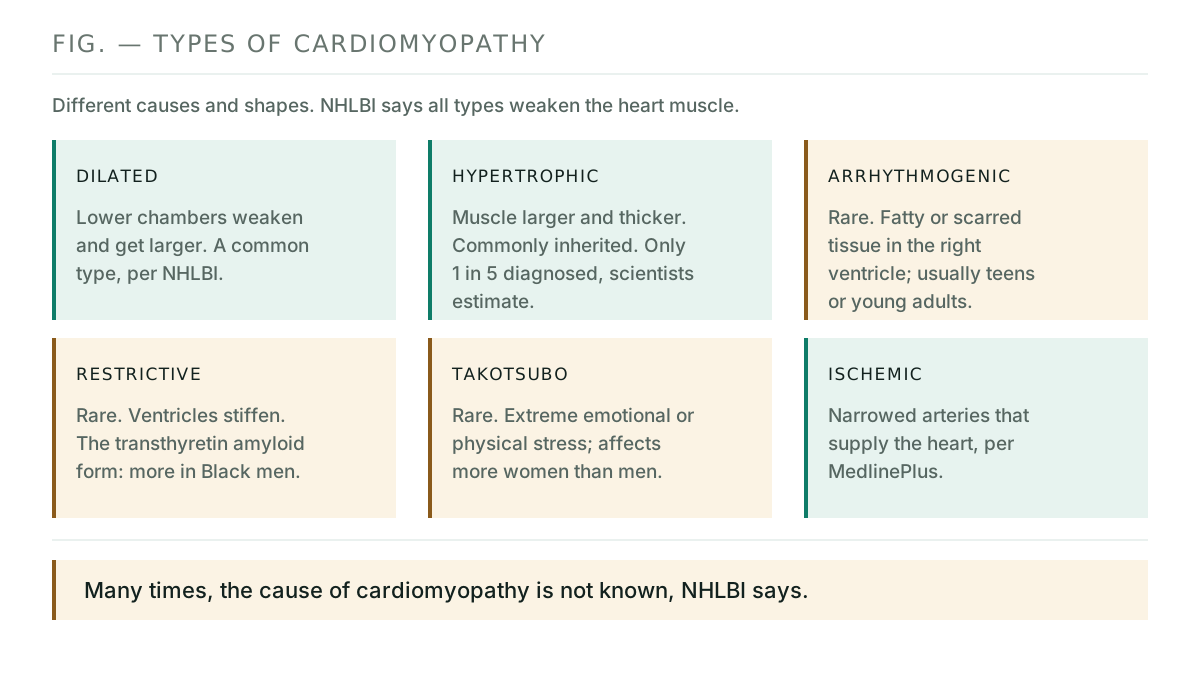
NHLBI describes several types, which differ by cause and by how they affect the heart's structure and function, and it says all of them weaken the heart muscle. Dilated cardiomyopathy is a common type, in which the lower chambers (the ventricles) weaken and get larger. Hypertrophic cardiomyopathy happens when the heart muscle becomes larger and thicker than normal; NHLBI says it is commonly inherited and that first-degree relatives should be alerted and screened.
One line about hypertrophic cardiomyopathy stands out. NHLBI says scientists estimate that only 1 in 5 people who have it get diagnosed, mainly because they don't have symptoms even though the heart muscle has thickened. It notes that the thickening is sometimes found when people have imaging tests for other reasons.
The other types NHLBI describes include arrhythmogenic cardiomyopathy, which it calls rare, in which fatty or scarred tissue replaces normal muscle in the right ventricle, which usually affects teens or young adults and increases the risk of cardiac arrest; restrictive cardiomyopathy, also rare, in which the ventricles stiffen and can't fill with enough blood, with a transthyretin amyloid form that it says is more common in Black men; left ventricular noncompaction, another rare type; septic cardiomyopathy, which NHLBI says develops in between 1 and 7 of every 10 people who get sepsis; and takotsubo cardiomyopathy, or broken heart syndrome, a rare condition triggered by extreme emotional or physical stress, which affects more women than men. MedlinePlus also describes ischemic cardiomyopathy, caused by narrowing of the arteries that supply the heart — the territory of this site's coronary artery disease article.
Alcohol, steroids, and other substances
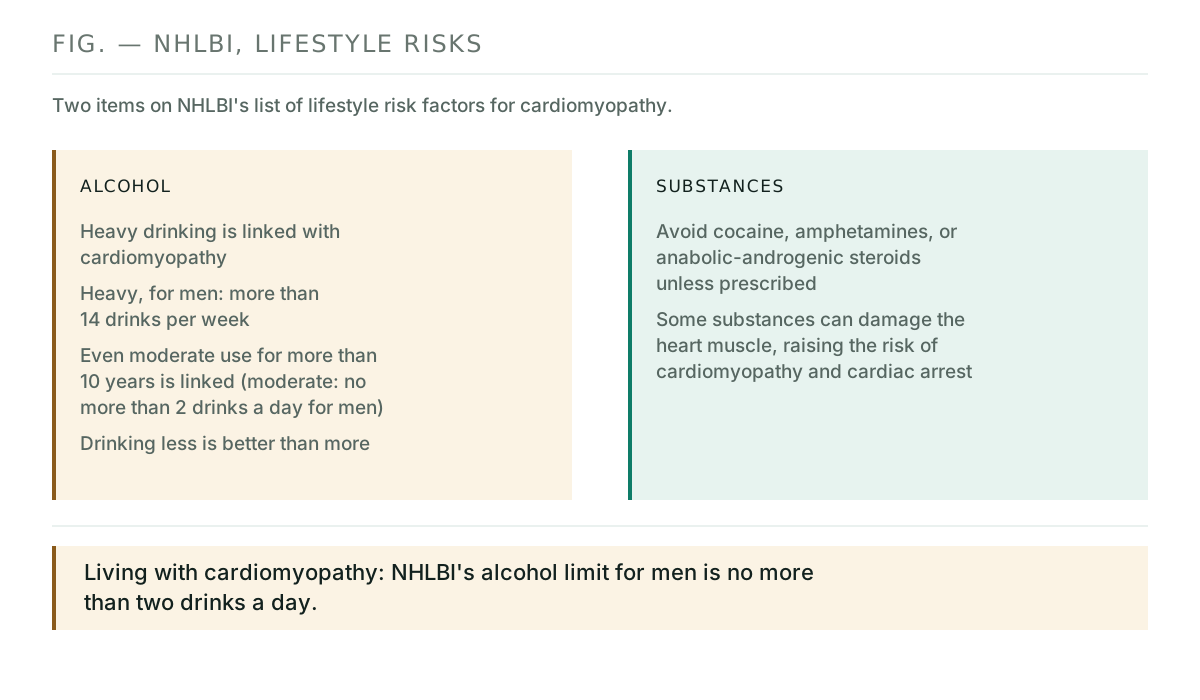
NHLBI's list of lifestyle risk factors opens with alcohol, and it is specific. "Heavy drinking is linked with cardiomyopathy." For men, it defines heavy drinking as more than 14 alcoholic drinks per week. Then it goes further: even moderate use of alcohol for more than 10 years is linked with cardiomyopathy, with moderate defined as no more than two drinks a day for men. Its conclusion is plain: drinking less is better for health than drinking more.
The second item matters for a site that writes about testosterone. NHLBI advises avoiding cocaine, amphetamines, or anabolic-androgenic steroids unless prescribed by your provider. Some substances, it says, can damage the heart muscle, and this damage increases the risk of cardiomyopathy and cardiac arrest. It also notes some evidence that marijuana can raise the risk of takotsubo cardiomyopathy. Prescribed testosterone treatment, and what it involves, is covered in this site's testosterone replacement therapy article; NHLBI's line is about these substances used without a prescription.
The rest of the NHLBI lifestyle list is about stress and infection: minimizing very stressful situations, since extreme stress can raise the risk of takotsubo cardiomyopathy, and keeping up to date on vaccines, since infections raise the risk of septic cardiomyopathy and other heart injuries. How alcohol affects the night is covered separately in alcohol and sleep.
Who is at risk
NHLBI says cardiomyopathy can be inherited, acquired or congenital. Inherited means a parent passed on a gene for the disease; hypertrophic and arrhythmogenic cardiomyopathy are often inherited. Acquired means it developed because of another disease or condition that damaged the heart. Congenital means it was present at birth.
Among the risk factors you can't control, NHLBI lists age, since some types are more common at certain ages; its examples include dilated cardiomyopathy in adults between 20 and 60, hypertrophic cardiomyopathy in people in their 30s, and arrhythmogenic cardiomyopathy in teens and young adults. It also lists a family history of cardiomyopathy or other heart conditions, and race, noting that Black people have a risk of dilated cardiomyopathy nearly three times higher than that of White people, and chemotherapy or radiation treatment for cancer.
Other medical conditions on its list include pregnancy; diseases that affect how well muscles work, such as Duchenne muscular dystrophy; diseases that cause substances to build up in the heart, such as sarcoidosis or amyloidosis; heart inflammation; infections such as viral hepatitis, HIV and COVID-19; obesity, diabetes or other metabolic problems; sepsis; and thyroid disease and other hormone problems.
The symptoms
NHLBI says some people with cardiomyopathy never have any symptoms, and others may not have symptoms until the condition gets worse. The common symptoms it lists are shortness of breath, especially after a large meal; chest pain, especially after physical activity or a large meal; tiredness even after resting; dizziness and fainting; arrhythmias (irregular heartbeats); a heart murmur; and heart palpitations. If cardiomyopathy has caused heart failure, symptoms could include swelling of the belly, hands, legs or feet.
NHLBI's symptoms page says to call 911 if you are having trouble breathing or your symptoms last longer than a few minutes. Its page on living with cardiomyopathy says to call 911 right away if you think you or someone else is having a stroke, or is in shock or sudden cardiac arrest.
Several of those symptoms have their own articles here: the palpitations vs AFib article, the heart murmur article, and the chest pain article, which covers when chest pain means calling 911.
How it's diagnosed
NHLBI says a provider may screen you for cardiomyopathy if a close relative has it or has had another serious heart condition, and will ask whether people in your family have died suddenly. It may also be noticed during a routine exam. If you have symptoms of heart weakness, the provider will order tests, and NHLBI states that echocardiography is the most common one. What happens during that test is covered in this site's echocardiogram article.
Other tests it lists include cardiac MRI, cardiac CT, a chest X-ray, an electrocardiogram, and a stress test, which this site covers in the nuclear stress test article. Blood tests check for changes linked to cardiomyopathy or complications such as heart failure. Cardiac catheterization may be used, and NHLBI says a heart biopsy is used to diagnose some types. NHLBI also explains a number many men hear for the first time at this stage: the ejection fraction, the percentage of blood the heart pumps out with every beat. A normal ejection fraction is about 60%, and it is often lower in people who have cardiomyopathy or heart failure. Genetic testing can identify inherited types.
Treatment
NHLBI is direct that treatment might not cure the problem with your heart. Its main goals are to control symptoms for a good quality of life, manage the conditions that caused the cardiomyopathy, prevent serious problems such as cardiac arrest or cardiogenic shock, and stop it from getting worse. It advises that people with cardiomyopathy or heart failure see a cardiologist. MedlinePlus adds that, when possible, the cause is treated.
The medicines NHLBI describes include diuretics and aldosterone antagonists to remove extra sodium and fluid; medicines that relax blood vessels and help the heart pump; beta blockers, calcium channel blockers or ivabradine to slow the heart rate; medicines to balance electrolytes; blood thinners; digoxin; SGLT-2 inhibitors; and, for obstructive hypertrophic cardiomyopathy, mavacamten, which it says is limited to people with an ejection fraction of at least 55% because it may raise the risk of heart failure. Several of these classes overlap with this site's blood pressure medication article.
Procedures and devices include alcohol septal ablation and septal myectomy, which NHLBI describes for hypertrophic cardiomyopathy to reduce the thickened wall between the ventricles (myectomy when symptoms are serious); catheter ablation for irregular heartbeats; and implanted devices such as an implanted cardioverter defibrillator, a pacemaker or a left ventricular assist device. A heart transplant may be needed for life-threatening symptoms or complications when no other treatment has worked; NHLBI says about 90% of patients who received heart transplants in 2020 were still alive a year later. On supplements, it advises talking with your provider about any you take, since some may interfere with other treatments or cause side effects.
Why your relatives may need testing
NHLBI states that cardiomyopathy often runs in families, and that blood relatives may also have it and may need to visit their providers to get checked or have genetic testing. For hypertrophic cardiomyopathy specifically, it says first-degree relatives should be alerted and screened. Genetic testing, it explains, can identify inherited types, and a genetic counselor can help with the process.
In our reading, that is one of the most useful things a diagnosed man can do for his family, especially given NHLBI's estimate that only 1 in 5 people with hypertrophic cardiomyopathy get diagnosed. NHLBI is also clear that there is no way to prevent inherited cardiomyopathy, but that steps can be taken to keep it from getting worse.
The complications
NHLBI lists the health problems cardiomyopathy can cause: arrhythmia; cardiac arrest, in which the heart stops beating suddenly and unexpectedly; cardiogenic shock, when the heart can't pump enough blood and oxygen to the brain, kidneys and other organs; heart failure; heart valve disease; and stroke, because blood can pool in a weakened heart, form a clot, and travel to the brain.
Each of those connects to another article on this site. The difference between cardiac arrest and a heart attack is covered in heart attack vs cardiac arrest, and heart failure, including its two main types, in the heart failure article. MedlinePlus adds that people with certain types of cardiomyopathy are at risk for dangerous heart rhythm problems.
Living with it
NHLBI's lifestyle advice for people with cardiomyopathy includes aiming for a healthy weight, choosing foods lower in sodium and fat, talking with your provider about how much fluid is safe, getting quality sleep, managing stress, quitting smoking, and limiting alcohol — for men, it says, no more than two drinks a day. It also says not to misuse medicines or use substances such as amphetamines and cocaine.
Exercise needs a conversation first. NHLBI says to ask your provider what types and amounts of exercise are safe, since it depends on the type of cardiomyopathy and on your symptoms, and it warns that vigorous exercise may raise the risk of an irregular heartbeat and sudden cardiac arrest; your provider may ask you to avoid competitive sports and high-intensity activities. It notes that sleep disorders such as sleep apnea can make symptoms worse, which is covered in this site's snoring or sleep apnea article.
Key takeaways
- Cardiomyopathy is disease of the heart muscle that makes it harder to pump blood; MedlinePlus notes many people with it have heart failure.
- NHLBI links heavy drinking (for men, more than 14 drinks a week) and even moderate drinking for more than 10 years to cardiomyopathy.
- NHLBI advises avoiding cocaine, amphetamines or anabolic-androgenic steroids unless prescribed, since some substances can damage the heart muscle.
- Hypertrophic cardiomyopathy is commonly inherited, and scientists estimate only 1 in 5 people who have it get diagnosed.
- Call 911 for trouble breathing or symptoms lasting more than a few minutes, per NHLBI; echocardiography is the most common test.
Where to go from here
If cardiomyopathy is what brought you here, these pages cover the surrounding ground:
- Heart Failure Explained — the condition that often travels with it.
- What Happens at an Echocardiogram — the most common test, per NHLBI.
- Heart Palpitations vs AFib — two symptoms on the NHLBI list.
- Heart Attack vs Cardiac Arrest — one of the complications, explained.
- All heart articles
Frequently asked questions
What is cardiomyopathy?
The National Heart, Lung, and Blood Institute describes cardiomyopathy as a disease that weakens the heart muscle and makes it harder for the heart to pump blood. The word means heart muscle disease. MedlinePlus notes that many people with cardiomyopathy have heart failure.
Can alcohol cause cardiomyopathy?
NHLBI states that heavy drinking is linked with cardiomyopathy, and defines heavy drinking for men as more than 14 drinks per week. It adds that even moderate use of alcohol for more than 10 years is linked with cardiomyopathy, and that drinking less is better for health than drinking more.
Can anabolic steroids damage the heart muscle?
NHLBI advises avoiding cocaine, amphetamines, or anabolic-androgenic steroids unless prescribed by your provider. It says some substances can damage the heart muscle, and that this damage increases the risk of cardiomyopathy and cardiac arrest.
What are the symptoms of cardiomyopathy?
NHLBI lists shortness of breath, especially after a large meal; chest pain, especially after physical activity or a large meal; tiredness even after resting; dizziness and fainting; irregular heartbeats; a heart murmur; and heart palpitations. It says some people never have symptoms, and to call 911 for trouble breathing or symptoms lasting longer than a few minutes.
Is cardiomyopathy inherited?
Sometimes. NHLBI says cardiomyopathy can be inherited, acquired, or congenital, and that hypertrophic and arrhythmogenic cardiomyopathy are often inherited. It says cardiomyopathy often runs in families, so blood relatives may need to get checked or have genetic testing.
What is the most common test for cardiomyopathy?
NHLBI states that echocardiography is the most common test. Other tests can include cardiac MRI, cardiac CT, a chest X-ray, an electrocardiogram, a stress test, blood tests, and genetic testing to identify inherited types.
Sources
- National Heart, Lung, and Blood Institute (NIH) — What Is Cardiomyopathy?
- National Heart, Lung, and Blood Institute (NIH) — Cardiomyopathy: Types
- National Heart, Lung, and Blood Institute (NIH) — Cardiomyopathy: Causes and Risk Factors
- National Heart, Lung, and Blood Institute (NIH) — Cardiomyopathy: Symptoms, Diagnosis, Treatment and Living With
- MedlinePlus (National Library of Medicine) — Cardiomyopathy

Male Health Guide Editorial Team
We write about the health problems men over 40 actually search for at 3 a.m. — and we say plainly when the evidence for a popular product is thin. We do not invent credentials and we do not publish sponsored copy as editorial. Read more about how we work.
Medical disclaimer: This article is general information, not medical advice. We are not doctors, and nothing here diagnoses, treats or cures any condition. Cardiomyopathy needs care from a cardiologist. Never start, stop or change a heart medicine without your provider, and call 911 for trouble breathing, symptoms that last more than a few minutes, or signs of stroke.