Snoring or Sleep Apnea? What Separates Them
Short answer
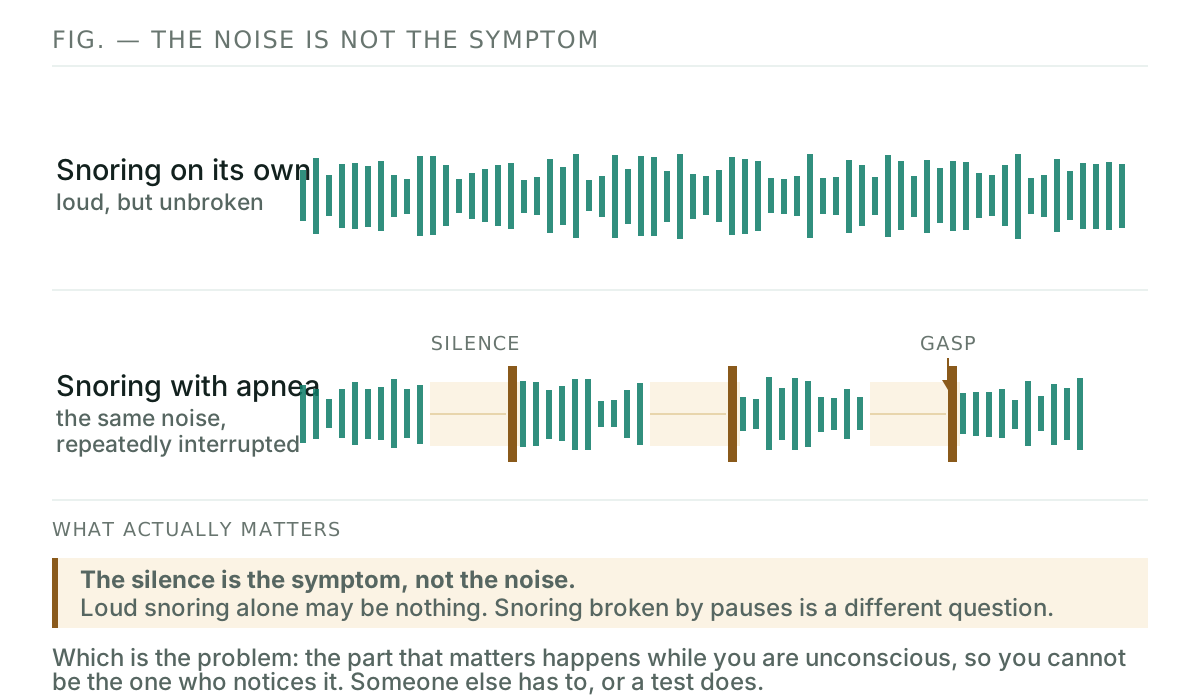
Snoring is the sound of a partly narrowed airway. Sleep apnea is that airway closing enough to stop the breath, over and over, each pause ending in a gasp. Volume does not separate them. What separates them is whether the noise is broken by silence — and whether the following day carries the cost.
Most men arrive at this question the same way: someone else complained. A partner moved to the spare room, or a friend mentioned it after a trip away, and the man in question has no first-hand knowledge of the thing being described.
That is not a joke about men not listening. It is the actual clinical difficulty of this condition, and the reason it goes unfound for years in people who had every reason to suspect it.
This page is part of our guide to sleep after 40, and it covers the third of the five problems set out there: when the night is long enough but the sleep is thin.
What snoring actually is
When you fall asleep, the muscles holding the airway open relax. In some people the airway narrows enough that the tissue at the back of the throat vibrates as air passes. That vibration is the noise.
It is extremely common, it becomes more common with age and with weight, and on its own it is a problem for the person next to you rather than for you. Alcohol makes it worse by relaxing those muscles further, which is one reason the night after a couple of drinks is louder as well as worse.
What sleep apnea adds
Apnea is the same mechanism taken further. Instead of narrowing, the airway closes. Breathing stops — for seconds at a time — until the brain registers the falling oxygen and pulls you into a brief arousal to reopen it. That reopening is the gasp.
Then you fall back asleep, and it happens again. In significant apnea this cycle repeats many times an hour, all night, every night.
The important consequence is not the pauses themselves but what they do to the structure of the night. Sleep never gets the chance to deepen. You can spend eight hours in bed and arrive at morning having had very little of the sleep that actually restores anything, which is why the complaint is almost never “I cannot sleep” and almost always “I sleep and it does nothing”.
So what actually separates them?
Not the volume. Men reach for loudness as the measure — whether it can be heard through a wall, whether it has been recorded and laughed at — and loudness is a poor guide in both directions. Thunderous unbroken snoring can be entirely benign. Moderate snoring with pauses is not.
What separates them is the silence. Snoring that runs continuously is one thing. Snoring that stops, stays stopped for an uncomfortable few seconds, and then restarts with a gasp is a different thing with a different name.
And then, in the morning, the day tells you the rest.
The signs split into two halves, and only one is yours
This is the structural problem with the whole condition, and it is worth seeing laid out.
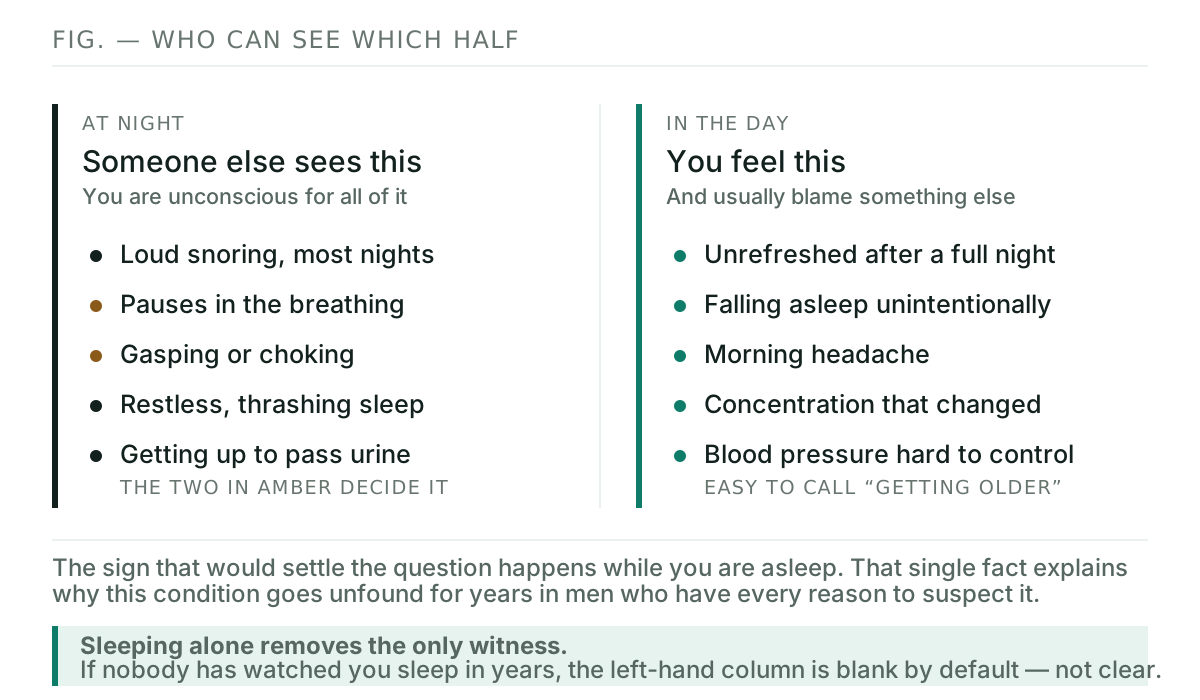
The two signs that would settle the question — pauses and gasping — are exactly the two you cannot observe. Everything you can observe is on the right, and every item on the right is easy to attribute to something else: work, age, stress, a bad mattress.
That mismatch is the entire reason this condition is so heavily underdiagnosed in men over 40.
The daytime sign men dismiss fastest
Falling asleep without intending to.
Nodding off in front of the television after dinner. Sleeping in the passenger seat on any journey over half an hour. Needing an afternoon nap most days and treating that as a preference rather than a symptom.
Wanting a nap is normal. Being unable to stay awake is different, and the line between them is worth being honest about with yourself. The version that matters most is the one nobody wants to admit: drowsiness at the wheel. That is not a symptom to sit on for another six months.
The connection to the bladder, which cuts both ways
Readers who came here from the prostate side of this site should know this one, because it reverses an assumption many men have been carrying for years.
Interrupted breathing increases the production of urine overnight. So a man getting up three times a night may not be getting up because of his prostate at all — or not only because of it.
The practical test is unglamorous but useful: if a prostate treatment has genuinely reduced the daytime symptoms but the night-time trips have barely moved, the bladder may not be what is waking you. We set the three competing mechanisms out in why you wake up three times a night to pee.
Who is more likely to have it
Nothing here diagnoses anybody. These are the things that raise the odds enough to be worth mentioning at an appointment:
- Being male, and being over 40. Both are independent factors.
- Weight, particularly weight carried around the neck and midsection.
- A larger collar size.
- Alcohol in the evening, and sedative medication — both relax the airway further.
- Nasal obstruction, or a jaw or airway shape that runs in the family.
- High blood pressure, especially blood pressure that has become hard to control.
That last one is worth pausing on. The relationship runs in both directions: untreated apnea makes blood pressure harder to manage. A man on two or three antihypertensives whose numbers still will not settle has a reason to ask about his sleep.
Why this is not a snoring complaint
It would be easy to file this under quality of life, alongside a creaky knee. It does not belong there.
Untreated sleep apnea is associated with high blood pressure, heart rhythm problems, heart disease and stroke, and with the daytime sleepiness that causes road accidents. The nightly pattern of falling oxygen and repeated arousals is a genuine physiological load, not simply an inconvenience.
We say that plainly and then stop, because the point is not to frighten anyone into a purchase — there is nothing here for us to sell. The point is that this one is worth finding out about rather than managing around.
What is not the answer
A large market exists for products aimed at the noise: strips, sprays, mouth tapes, pillows promising to reposition your head.
Some of these may reduce simple snoring for some people. None of them tests whether you are stopping breathing, and that is the problem: quietening the noise removes the one signal that would have sent you to get assessed. A man whose partner stops complaining has not necessarily improved. He has become harder to notice.
The same applies to supplements taken for sleep. Melatonin is a signal about timing; magnesium is a mineral with a modest and mostly low-quality evidence base for sleep quality. Neither of them opens an airway. If the problem is breathing, they are the wrong tool — not because they do nothing, but because they do nothing about this.
What to do instead
Three steps, in order, and none of them costs anything:
- Ask someone. If you share a bed, ask directly: do I stop? Do I gasp? Most men have never asked, and the answer usually exists.
- Record the day, not the night. For two weeks, note how you felt on waking and whether you fell asleep unintentionally. That record is what a clinician can act on.
- Take both to an appointment. Say the two sentences that matter: what someone has observed, and what the days cost you.
If it goes further, the next step is a sleep study, which is far less intrusive than most men expect and can often be done at home. That is a page of its own, and it is coming.
When to stop waiting
Sooner rather than later if any of these is true:
- Anyone has told you that you stop breathing, gasp or choke in your sleep.
- You have felt sleepy at the wheel.
- You wake unrefreshed after a full night, most nights.
- Morning headaches.
- Blood pressure that has become hard to control.
The first of those is the one to act on even if nothing else on the list applies. It is the observation that no product, no supplement and no amount of sleeping better on your own side of the bed will resolve.
Key takeaways
- Snoring is a narrowed airway making noise. Apnea is that airway closing, repeatedly, each pause ending in a gasp.
- Volume separates nothing. The silence between the noise does — and so does what the following day costs you.
- The two signs that would settle it happen while you are unconscious. Someone else has to see them, or a test does.
- Sleeping alone does not mean you are clear. It means there is no witness.
- Interrupted breathing raises overnight urine production, so the prostate is not always what is waking you.
- Products that quieten the noise remove the signal without testing the problem.
- Being told you stop breathing is reason enough to get assessed, on its own.
Where to go from here
If this sounds like your night, these are the pieces that go with it:
- Sleep After 40: What Changed and What Restores It — the complete guide, and the five separate problems.
- Why Do I Wake Up 3 Times a Night to Pee? — the three mechanisms, including this one.
- Enlarged Prostate After 40 — if the bladder is the other half of your night.
- Foods and Drinks That Make Symptoms Worse — where the evening drink fits.
- Waking at 3 a.m. and Cannot Get Back to Sleep — if the night breaks without an obvious cause.
- The Insomnia Treatment That Works Better Than Pills — the first-line treatment almost nobody is offered.
- All sleep articles — the section as it grows.
Frequently asked questions
What is the difference between snoring and sleep apnea?
Snoring is the sound of a partly narrowed airway. Sleep apnea is that airway closing enough to stop the breath, repeatedly, each pause ending in a gasp. The noise is not what separates them. The silence between the noise is.
Is loud snoring always sleep apnea?
No. Plenty of men snore loudly and have no apnea at all, and volume is a poor guide either way. What matters is whether the snoring is broken by pauses, and whether the following day carries the cost. Loud but unbroken snoring is a social problem, not a medical one.
Can you have sleep apnea without snoring?
Yes, though it is less common. The absence of snoring is not reassurance on its own. Daytime sleepiness you did not choose, waking unrefreshed after a full night, and blood pressure that has become hard to control all point the same way regardless of noise.
How do I know if I stop breathing in my sleep?
You mostly cannot, and that is the central problem. The defining sign happens while you are unconscious, so someone else has to witness it or a test has to record it. Men who sleep alone have no witness at all, which makes the daytime signs more important, not less.
Does sleep apnea make you get up to pee at night?
It can. Interrupted breathing increases overnight urine production, so some men who assume their prostate is waking them are being woken by their breathing first. If a prostate treatment has not reduced the night-time trips, this is worth raising.
When should I see a doctor about snoring?
When anyone has told you that you pause, gasp or choke in your sleep; when you fall asleep in the day without intending to, particularly while driving; when you wake unrefreshed after a full night; or when blood pressure has become difficult to control.
Sources
- National Heart, Lung, and Blood Institute (NIH) — Sleep Apnea
- National Heart, Lung, and Blood Institute (NIH) — Sleep Apnea: Diagnosis
- MedlinePlus (National Library of Medicine) — Sleep Apnea
- MedlinePlus (National Library of Medicine) — Snoring
- NHS — Sleep apnoea
- NHS — Snoring

Male Health Guide Editorial Team
We write about the health problems men over 40 actually search for at 3 a.m. — and we say plainly when the evidence for a popular product is thin. We do not invent credentials and we do not publish sponsored copy as editorial. Read more about how we work.
Medical disclaimer: This article is general information, not medical advice. We are not doctors, and nothing here diagnoses, treats or cures any condition. Sleep apnea can only be confirmed or excluded by proper assessment, not by reading a list of symptoms. If you have been told you stop breathing in your sleep, or you feel sleepy at the wheel, that is a reason to see a qualified healthcare professional promptly rather than to self-manage.