The Insomnia Treatment That Works Better Than Pills
Short answer
For long-term insomnia, the treatment guidelines put first is not a drug. It is a structured programme of five techniques, usually four to eight weeks, and its effect generally holds after it ends. Almost no man is offered it, largely because almost no man knows to ask for it by name.
We have written elsewhere on this site that the best-selling prostate supplement performs no better than placebo in the largest independent trials. That article is the most-read thing we have published, and it exists because we earn nothing from any product and can therefore report the awkward version.
This is the same kind of article, pointed the other way. Not “the popular thing does not work”, but “the thing that does work is barely mentioned”.
It is part of our guide to sleep after 40, and it is the answer to the first two of the five problems set out there: trouble getting to sleep, and trouble staying asleep.
What the guidelines actually say
The National Heart, Lung, and Blood Institute describes cognitive behavioural therapy for insomnia — CBT-I — as “usually recommended as the first treatment option for long-term insomnia”. The American College of Physicians goes further and strongly recommends it as the initial treatment for chronic insomnia in adults.
Read that again, because the ordering is the point. Not “try this if the tablets do not suit you”. First.
Now compare that with what actually happens in a ten-minute appointment about poor sleep. Most men leave with a prescription, advice about screens, or nothing at all. The gap between what the guidelines recommend and what men are offered is the widest we have found in anything we have covered on this site.
What it actually is, in plain terms
The name is the biggest obstacle. “Cognitive behavioural therapy” sounds like sitting in a room discussing your childhood, which puts men off before they have heard what it involves.
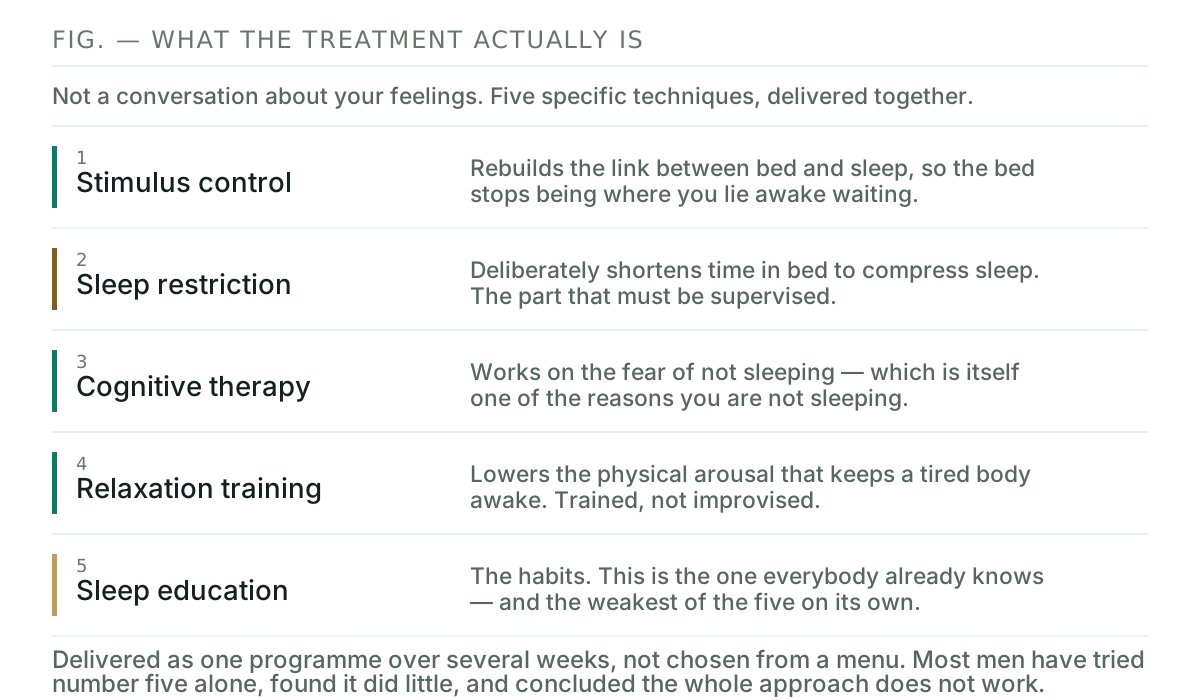
It is not that. It is five specific techniques, delivered together over several weeks, and most of them are practical instructions about what you do with your bed and your clock.
The part that does the most work
If only one component survived, it should be stimulus control, and it is the one that sounds least like treatment.
The premise is that after months of lying awake, the bed has stopped meaning sleep and started meaning waiting. That association is learned, and the rules that break it are blunt: bed is for sleep only, if you are awake and frustrated you get up, you return when sleepy, and you get up at the same time every morning regardless of how the night went.
It sounds trivial written down. It is difficult to do and it is the engine of the whole thing — and it is why we set out the same instructions in what to do at three in the morning.
The part that must be supervised
Sleep restriction is the component that produces the fastest results and the one nobody should improvise from a website, including this one.
The logic is counter-intuitive: rather than spending longer in bed to catch up, you deliberately spend less, compressing your sleep into a shorter window so that the proportion of the night actually spent asleep rises. As sleep consolidates, the window is widened again in stages.
That proportion has a name — sleep efficiency — and it is the number the whole technique is aimed at. Why it matters more than the hours you spend in bed is set out in how much sleep you actually need after 40.
The reason it needs supervision is that it makes you sleepier before it makes you better. For a few weeks you are running a deliberate sleep debt, which matters enormously if you drive, operate machinery, or have a condition that daytime sleepiness would make dangerous. It is a genuine clinical technique with genuine constraints.
Why most men think they have already tried this
Here is the misunderstanding that keeps the treatment obscure.
Sleep hygiene — the familiar advice about caffeine, screens, a dark room, a regular bedtime — is one of the five components, and on its own it is the weakest. It is also the only one most men have ever encountered, because it is the part that fits in a paragraph on a website or a leaflet.
So a man tries it, finds it does little for an established insomnia, and reasonably concludes that the behavioural approach does not work for him. He has tested one-fifth of the treatment — and the weakest fifth.
That is not his fault. It is a failure of how the thing is described.
Why it holds after it ends
This is the argument that matters, and it is the reason we would rather men knew about this than about anything else in the sleep category.
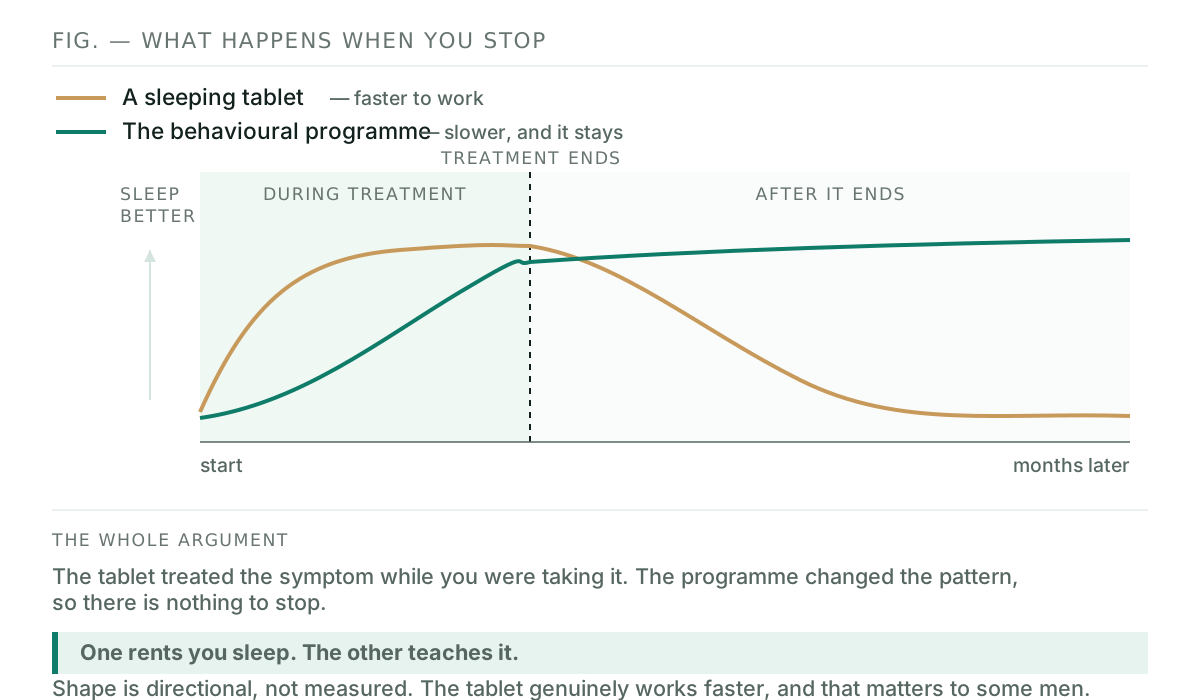
A sleeping tablet produces sleep for as long as you take it. Stop, and the insomnia is usually still there, sometimes worse for a few nights. That is not a criticism of the drug — it is doing exactly what it does.
The behavioural programme is slower and less comfortable, and what it changes is the pattern: the association with the bed, the fear of not sleeping, the response to a waking at three. Those changes are learned, so they do not stop when the treatment does.
One rents you sleep. The other teaches it. Both are legitimate; they are simply not the same purchase.
How long it takes, honestly
Four to eight weeks for a typical programme, and it is worth knowing the shape of it in advance:
- Week one to two: often worse, not better, because time in bed is being compressed.
- Week three to four: sleep begins consolidating — less time awake in bed, even if the total has not risen yet.
- Week five onwards: the window widens again as sleep fills it.
The first fortnight is where men quit. Knowing in advance that the dip is part of the method, rather than evidence of failure, is most of what gets people through it.
How to actually get it
The practical obstacle is not cost or availability so much as vocabulary.
Ask for it by name. Say “cognitive behavioural therapy for insomnia” or “CBT-I”. Describing how badly you sleep tends to produce a prescription; naming the treatment tends to produce a conversation about the treatment.
Ask about a referral to a sleep service or behavioural sleep medicine. Availability varies enormously by where you live, and it is a fair question to ask directly.
Ask about digital programmes. Structured app- and web-based versions exist and have been studied. They are not identical to seeing a clinician, but they are a great deal closer to the real thing than a list of sleep hygiene tips.
Take a diary. Two weeks of when you went to bed, roughly when you slept, what woke you and how the day went. It makes the case in a way that a description from memory cannot — the same discipline we recommend for judging whether a supplement is doing anything.
When this is not the answer
CBT-I treats insomnia. It does not treat the other reasons a night falls apart, and starting it before ruling those out wastes weeks.
If your breathing is interrupted, that is a different problem with a different treatment — covered in snoring or sleep apnea, and worth settling first if snoring with pauses or unexplained daytime sleepiness is part of your picture.
If something is physically waking you, treat that. For readers who arrived from the prostate side of this site, the candidate is obvious, and we separated the mechanisms in why you wake up three times a night to pee.
And if low mood sits alongside the sleep, say so at the appointment. The two travel together often enough that treating one while omitting the other is a wasted visit.
So are sleeping pills wrong?
No, and we are not going to pretend otherwise to make a cleaner argument.
There are situations where a short course is entirely reasonable, and a man in genuine crisis is not well served by being told to wait four weeks for a behavioural programme. Speed has value.
What the evidence does not support is the default: reaching for medication first, for months, for a long-term problem, without the first-line treatment ever being mentioned. The specifics of each drug class, and what they cost after 40, now have their own page: what each kind of sleeping pill actually does.
The honest summary is that this is one of the few places in men's health where the best-evidenced treatment is also the one nobody is selling. That should make you more suspicious of the alternatives, not less.
Key takeaways
- For long-term insomnia the guidelines put a behavioural programme first — not a drug. The ACP recommendation is a strong one.
- It is five specific techniques over four to eight weeks, not a conversation about your feelings.
- Sleep hygiene is one component and the weakest. Most men have tried only that and written off the whole approach.
- Stimulus control does the most work: bed is for sleep, get up when frustrated, same wake time regardless.
- Sleep restriction works fastest and must be supervised. It makes you sleepier before it helps.
- Expect the first fortnight to be worse. That dip is the method, not failure.
- Ask for it by name. Describing bad sleep produces a prescription; naming CBT-I produces a conversation.
Where to go from here
If you are deciding what to do about a long-running sleep problem, these go with it:
- Sleep After 40: What Changed and What Restores It — the complete guide, and the five separate problems.
- Waking at 3 a.m. and Cannot Get Back to Sleep — the instructions for the night itself.
- Snoring or Sleep Apnea? What Separates Them — rule this out before starting.
- Why Do I Wake Up 3 Times a Night to Pee? — if something is physically waking you.
- Saw Palmetto: What the Cochrane Review Actually Found — how we assess evidence here.
Frequently asked questions
What is CBT-I?
Cognitive behavioural therapy for insomnia is a structured programme of five techniques: stimulus control, sleep restriction, cognitive therapy, relaxation training and sleep education. It is delivered over several weeks and is not a conversation about your feelings.
Is CBT-I better than sleeping pills?
For long-term insomnia, guidelines recommend it first. A tablet works faster, but its benefit is tied to taking it. The behavioural programme is slower and its effect generally holds after treatment ends, because what it changed was the pattern rather than the symptom.
How long does CBT-I take to work?
A typical programme runs four to eight weeks. Sleep often gets worse in the first week or two before it improves, because time in bed is being deliberately compressed. Judging it after a fortnight is the commonest way men abandon it.
Is CBT-I the same as sleep hygiene?
No, and this is the most common misunderstanding. Sleep hygiene is one of the five components and the weakest of them on its own. Most men have tried the advice about screens and caffeine, found it did little, and concluded the whole approach does not work.
Can I do CBT-I on my own?
Partly. Stimulus control and the cognitive parts can be started alone, and digital programmes exist with evidence behind them. Sleep restriction is the component that needs supervision, because it increases daytime sleepiness before it helps and is unsuitable for some people.
How do I get CBT-I?
Ask for it by name, because it is rarely offered unprompted. Routes include a referral to a sleep or behavioural sleep medicine service, and structured digital programmes. Saying the words changes the conversation more than describing how badly you sleep.
Sources
- National Heart, Lung, and Blood Institute (NIH) — Insomnia: Treatment
- National Heart, Lung, and Blood Institute (NIH) — Insomnia
- National Center for Complementary and Integrative Health (NIH) — Melatonin: What You Need To Know (citing the American College of Physicians recommendation)
- MedlinePlus (National Library of Medicine) — Insomnia
- National Institute on Aging (NIH) — Sleep and Older Adults
- NHS — Insomnia

Male Health Guide Editorial Team
We write about the health problems men over 40 actually search for at 3 a.m. — and we say plainly when the evidence for a popular product is thin. We do not invent credentials and we do not publish sponsored copy as editorial. Read more about how we work.
Medical disclaimer: This article is general information, not medical advice. We are not doctors, and nothing here diagnoses, treats or cures any condition. Sleep restriction is a clinical technique that increases daytime sleepiness before it helps, is not suitable for everyone, and should be undertaken with supervision rather than improvised. Do not stop any prescribed sleep medication without discussing it first.