Waking at 3 a.m. and Cannot Get Back to Sleep
Short answer
Brief awakenings happen all night, at every age. What changes after 40 is the second half: most of your sleep pressure has been spent and the body has begun preparing for morning, so there is no longer enough drive to pull you straight back under. The waking is not new. The return is what stopped working.
There is a particular quality to being awake at three. Not drowsy, not almost-asleep — properly alert, in a way that feels like an accusation. The clock is the worst part. Every look at it converts a bad night into arithmetic about how bad tomorrow will be.
This page is about that specific problem: the sleep that starts fine and breaks in the middle. It is the second of the five separate problems set out in our guide to sleep after 40, and it is the commonest one in men of this age.
Why the second half of the night is different
Two systems govern when you sleep, and they are worth separating because they explain everything that follows.
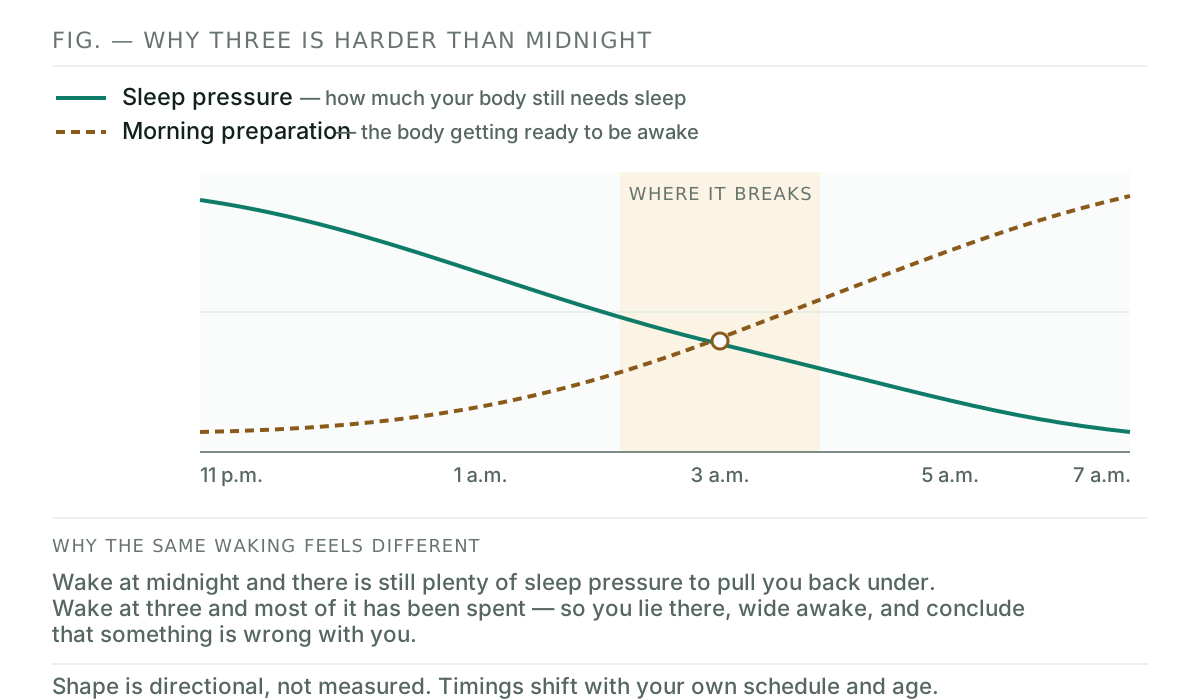
The first is sleep pressure: the accumulated need for sleep that builds across every hour you are awake. It is at its highest when you go to bed, and it is spent during the night in the way a battery discharges. By the small hours, most of it is gone.
The second is the body clock, which does not wait for morning to start preparing for it. Hours before you intend to wake, core temperature begins rising, and the systems that produce alertness begin switching on.
Put those together and the picture is clear. A waking at midnight lands in a night with plenty of pressure left, so you are pulled straight back down and usually never remember it. The identical waking at three finds an empty tank and a rising alertness system. Same interruption, entirely different outcome.
The useful consequence: you have not developed a new problem waking up. You have lost the ability to fall back asleep instantly, which used to disguise the fact that you were waking all along.
The awakenings were always there
This surprises men, and it takes some of the alarm out of it.
Nobody sleeps in one continuous block. Sleep cycles through stages all night, and brief arousals at the boundaries between cycles are entirely normal at every age. A twenty-year-old has them too and simply does not remember them, because he goes back under before the memory can form.
After 40 the awakenings get longer and the deep sleep that used to bury them is thinner. What you are noticing is not a night that has become broken. It is a night that has become visible.
Why it settles into the same hour
Men often report waking at almost exactly the same time night after night, and take that precision as evidence of something sinister. It usually is not. It is a loop.
You wake. You register that it has happened again. Frustration arrives, and frustration is physiological — heart rate rises, the body reads it as a reason to be alert. So you stay awake longer than the awakening itself required.
The next night, part of you is expecting it. Expectation is a mild arousal of its own. Over weeks the association strengthens until the bed itself becomes a cue for alertness rather than for sleep.
The reason this matters is that a learned pattern can be unlearned. That is precisely what the evidence-based treatment for chronic insomnia does, and it is why the first-line recommendation in the guidelines is behavioural rather than chemical.
The mistake almost everyone makes
Faced with a broken night, the instinct is to spend longer in bed. Go earlier, lie in later, try to bank the hours back.
It does the opposite, and the reason is arithmetic rather than willpower.
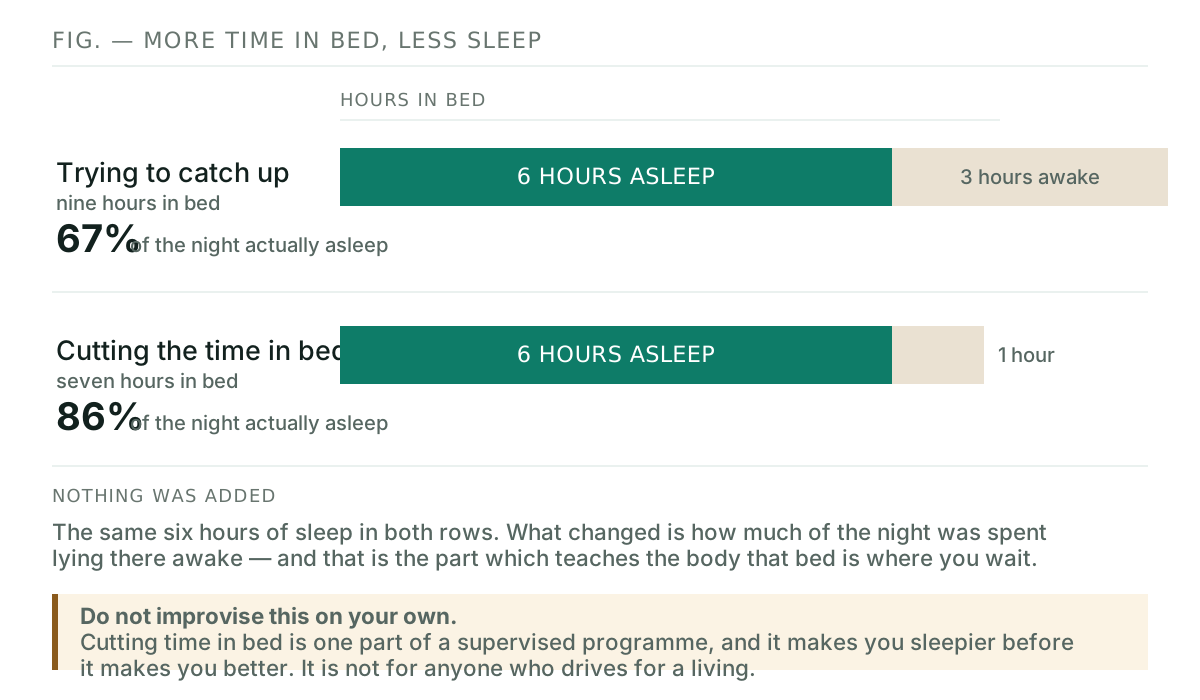
Extending time in bed does not reliably add sleeping hours. It adds waking ones. And every additional hour spent awake in bed reinforces the very association that is keeping you up.
There is a real technique built on this — deliberately restricting time in bed to compress sleep — and it works. But it is one component of a supervised programme, it makes you sleepier before it makes you better, and it is genuinely unsuitable for anyone who drives for a living. It is not something to improvise from a paragraph on a website, including this one.
What to do at three in the morning
The immediate question is practical, so here is the practical answer.
- Do not look at the clock. Turn it around. Knowing the time converts a bad night into a countdown and adds nothing you can act on.
- Give it about twenty minutes. Not measured — estimated. If you are drifting, stay put.
- If you are frustrated rather than drowsy, get up. Somewhere else, dim light, something dull. Not the phone, not work, not anything with a plot.
- Go back when sleepiness arrives, not when you decide you have been up long enough.
- Get up at the same time regardless. This is the single most useful habit, and the hardest. Sleeping in after a bad night pushes the following night later and keeps the cycle going.
The logic behind all of it is one idea: the bed should be associated with sleep, not with waiting for sleep. Everything above serves that.
What to rule out before calling it insomnia
Before treating this as a sleep problem in its own right, it is worth checking whether something is simply waking you.
The bladder. For readers of this site, the obvious candidate. If you wake and immediately need the bathroom, most nights, that is a different article — we set the three competing mechanisms out in why you wake up three times a night to pee. The word doing the work in that sentence is immediately. If you surface first and only then decide you may as well go, the bladder is not what woke you, and the difference between waking to pee and waking then peeing is how to tell those apart.
But notice the order of events, because it matters and almost nobody checks it: waking and then noticing a full bladder is not the same as being woken by one. Men who wake first and go to the bathroom because they are up anyway have often concluded, for years, that the prostate is the problem.
Breathing. If the waking comes with snoring that others complain about, or with daytime sleepiness you did not choose, the interruption may be your airway rather than your mind. That is covered in snoring or sleep apnea, and it is the one on this page worth taking most seriously.
Alcohol. A drink in the evening shortens the time it takes to fall asleep and then fragments the second half of the night — which is exactly the half we are discussing. If the pattern is worse on nights after drinking, that is not a coincidence and it is the cheapest thing on this page to test.
The one worth saying out loud
Early waking that will not resolve, particularly with low mood, flat interest or a sense of dread on waking, travels with depression often enough that it should be mentioned rather than managed around.
Men are markedly less likely to raise this, and the sleep complaint is frequently the only part that gets brought to an appointment. If both are true for you, say both. Treating one without mentioning the other wastes the visit.
What does not help
Alcohol as a sleep aid, for the reasons above — it is the most common self-treatment and it makes precisely this problem worse. The measured version, including why moving the drink earlier helps less than people expect, is in what a nightcap really costs you. And if a prescription is being considered instead, what each kind of sleeping pill actually does sets out what is on the table.
Melatonin, for most people with this pattern. It is a signal about timing rather than a sedative, and the evidence is strongest for problems where the clock is misaligned — jet lag, a sleep phase that has genuinely shifted. Guidelines for chronic insomnia do not currently find strong enough evidence to recommend it. If your body clock is fine and the problem is the second half of the night, it is aimed at the wrong thing.
The phone, at any point. Not primarily because of the light, but because it is engineered to produce alertness, which is the one thing you are trying to avoid.
When to take it to someone
- Three months or more, on most nights.
- Sleepiness in the day that you did not choose — particularly at the wheel.
- Anyone has told you that you snore with pauses, gasp or choke.
- Low mood alongside it.
- You have started drinking to get to sleep.
Take a record with you. Two weeks of when you went to bed, roughly when you slept, what woke you and how the day went is worth more than any description from memory — the same discipline we recommend for judging whether a supplement is doing anything, and for the same reason.
Key takeaways
- The awakenings are not new. Everyone has them. What changed is the ability to fall straight back asleep.
- By three, sleep pressure is largely spent and the body has begun preparing for morning — so the same waking finds you alert.
- Waking at the same hour is usually a learned loop, not a sign of disease. Learned patterns can be unlearned.
- Spending longer in bed backfires: it adds waking hours, not sleeping ones.
- After about twenty minutes of frustration, get up. The bed should mean sleep, not waiting for sleep.
- Get up at the same time regardless of how the night went. It is the hardest habit and the most useful.
- Check the order of events: waking and then needing the bathroom is not the same as being woken by a bladder.
Where to go from here
If this is your half of the night, these go with it:
- Sleep After 40: What Changed and What Restores It — the complete guide, and the five separate problems.
- Snoring or Sleep Apnea? What Separates Them — the interruption worth ruling out first.
- The Insomnia Treatment That Works Better Than Pills — the first-line treatment almost nobody is offered.
- Why Do I Wake Up 3 Times a Night to Pee? — if the bladder is the thing waking you.
- Foods and Drinks That Make Symptoms Worse — including the evening drink.
- All sleep articles — the section as it grows.
Frequently asked questions
Why do I wake up at 3 a.m. every night?
By the small hours most of your sleep pressure has been discharged and the body has begun preparing for morning. Brief awakenings happen all night at any age. What changes after 40 is that there is no longer enough drive to pull you straight back under.
Why is waking at 3 a.m. harder than waking at midnight?
At midnight there is still a large reserve of sleep pressure, so a waking is absorbed and usually forgotten. By three that reserve is largely spent and the morning system is rising, so the same waking finds you genuinely alert rather than drowsy.
Should I stay in bed or get up when I cannot sleep?
If you are still awake after roughly twenty minutes and are frustrated rather than drowsy, get up. Lying awake for hours teaches the body that bed is a place to be alert. Go somewhere dim and dull, and return only when sleepiness arrives.
Does waking at 3 a.m. mean something is medically wrong?
Usually not by itself. It becomes worth investigating when it is paired with something else: snoring with pauses, unrefreshing sleep despite a full night, daytime sleepiness you did not choose, or persistent low mood.
Will spending longer in bed help me catch up?
It reliably backfires. Extending time in bed adds waking hours rather than sleeping ones, and hours spent awake in bed train the body to be alert there. The proportion of the night actually spent asleep falls, and the pattern entrenches.
Why do I wake at the same time every night?
Partly because the body is rhythmic and partly because the pattern learns itself. Waking at a given hour, then lying there expecting it, is the sort of association that strengthens with repetition. That is also why it can be unlearned.
Sources
- National Heart, Lung, and Blood Institute (NIH) — Insomnia
- National Heart, Lung, and Blood Institute (NIH) — Sleep Deprivation and Deficiency
- National Institute on Aging (NIH) — Sleep and Older Adults
- National Center for Complementary and Integrative Health (NIH) — Melatonin: What You Need To Know
- MedlinePlus (National Library of Medicine) — Insomnia
- NHS — Insomnia

Male Health Guide Editorial Team
We write about the health problems men over 40 actually search for at 3 a.m. — and we say plainly when the evidence for a popular product is thin. We do not invent credentials and we do not publish sponsored copy as editorial. Read more about how we work.
Medical disclaimer: This article is general information, not medical advice. We are not doctors, and nothing here diagnoses, treats or cures any condition. Deliberately restricting time in bed is a clinical technique that belongs inside a supervised programme and is not suitable for everyone. Persistent poor sleep, daytime sleepiness or low mood alongside it belong with a qualified healthcare professional.