Nocturia or Insomnia: Which One Woke You?
Short answer
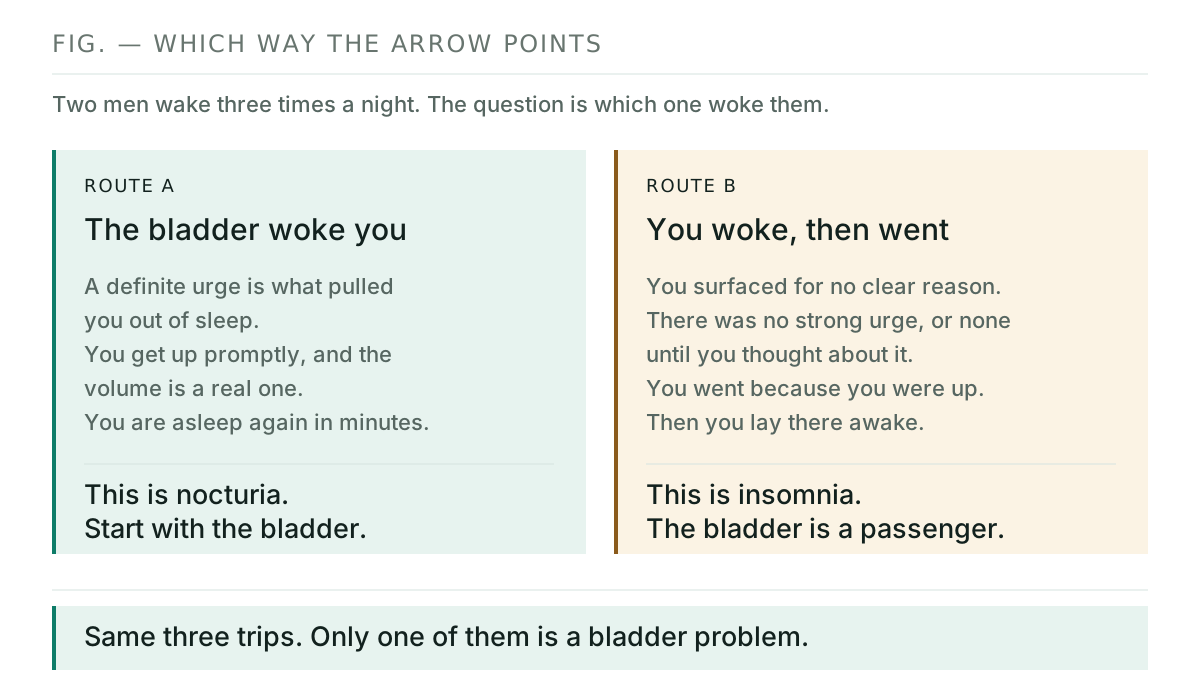
Nocturia means waking because you need to pass urine. If you woke for another reason and went while you were up, that is a sleep problem, usually insomnia, wearing the same clothes. The tell is the urge: how strong it was in the first moment, and how quickly you got back to sleep afterwards.
Two men are sitting in the same waiting room. Both of them say the same sentence: I am up three times a night to go to the bathroom. Same number, same age, same tired face.
One of them has a bladder problem. The other one has a sleep problem and a bladder that is simply along for the ride. If they are given the same treatment, one of them will get better and the other will spend eight months wondering why nothing is working.
This article is about telling those two men apart, and about which one you are. It is not about the causes of night-time urination — the site covers those separately, in why you wake up three times a night to pee. This is the question that comes before that one.
Why this is the question to settle first
Almost every article on this subject starts by listing causes. An enlarged prostate. The body making too much urine overnight. Untreated sleep apnea. Caffeine, alcohol, a diuretic taken at the wrong hour.
Every one of those lists quietly assumes something: that the bladder is what woke you. If that assumption is wrong, the entire list is the wrong list, and you can work your way down it for a year without touching the actual problem.
The distinction is not a technicality invented for this article. It is built into the definition of the condition, and the reference literature is unusually blunt about it.
What nocturia actually means
The International Continence Society defines nocturia as the need to wake at night one or more times to void. The StatPearls clinical reference spells out the mechanics: a period of sleep has to come both before and after the trip for it to count as a nocturnal void.
That definition is doing more work than it looks like. It is not a count of bathroom trips. It is a statement about cause. The waking has to be for the urine.
For context on what the body is supposed to be doing, MedlinePlus puts it plainly: the amount of urine your body produces normally decreases at night, which is what allows most people to sleep six to eight hours without having to go. When that stops being true, there is something to look into. But it has to have stopped being true.
The trip that looks like nocturia and is not
Here is the sentence that most men have never read, and it comes straight out of the clinical reference: getting up at night for any reason other than the need to urinate is technically not nocturia, although it will appear as such on a voiding diary.
Urologists call that a convenience void. You woke up. You were awake anyway. You are a sensible adult who has learned that going now saves getting up again later. So you go, and you go back to bed, and in the morning you count it as one of your three trips.
It is a completely reasonable thing to do. It is also the single largest source of confusion in this whole subject, because it is invisible to every measurement anyone normally takes. The diary shows a trip. The clock shows a time. The volume may even be respectable, because urine had been quietly accumulating while you lay there awake.
A convenience void is not a mistake and there is nothing wrong with making one. The mistake is counting it as evidence of a bladder problem — and then treating a bladder that was never the reason you were awake.
The tell: what happened in the first moment
Ask yourself one question about the moment you became aware you were awake, before you had moved, before you had thought about the bathroom at all.
Was there an urge, and was it the thing that pulled you out of sleep?
Men who are honest with themselves often find the answer surprising. There is a specific feeling to being woken by a full bladder: an unmistakable pressure that is already there when consciousness arrives, that does not improve by lying still, and that makes going back to sleep impossible until you deal with it.
There is a very different feeling to surfacing at three in the morning, lying there for a while, becoming gradually aware that you could go if you wanted to, and eventually deciding you may as well. That second experience is described in detail in the site's article on waking at 3 a.m. and not being able to get back to sleep, where the bathroom is a symptom of being awake rather than the reason for it.
And what happened in the twenty minutes after
The second tell is the return journey, and it is the one people find easiest to recall accurately.
If the bladder woke you, dealing with it usually removes the reason you were awake. You go back to bed and you are asleep again fairly quickly — often within a few minutes. The night has an interruption in it, but it is an interruption, not a collapse.
If sleep was the problem, emptying your bladder changes nothing at all, because it was never what was keeping you up. You get back into bed and you are still awake. Twenty minutes later you are still awake. That is the pattern that tells you the bathroom was a stop along the way, not the destination.
If you are asleep again in five minutes, the bladder woke you. If you are still staring at the ceiling forty minutes later, something else did.
Neither of these tells is perfect on its own. Together, over several nights, they separate the two men in the waiting room with a reliability that no amount of arguing about causes can manage.
The column your diary is probably missing
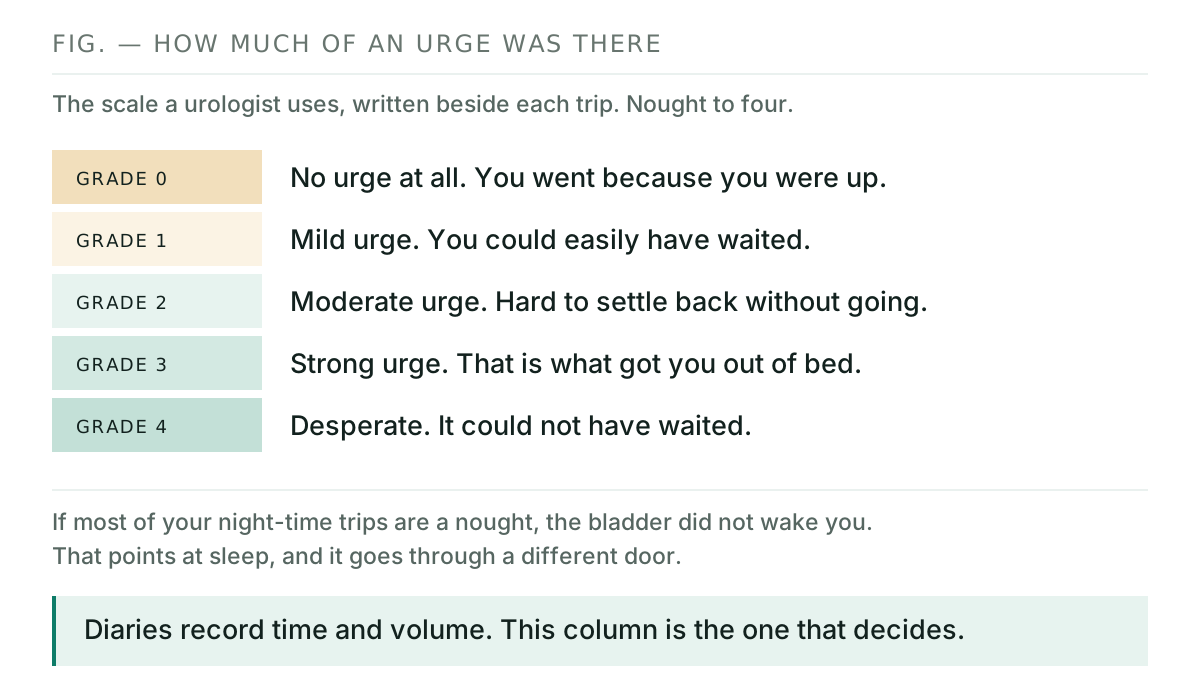
There is a formal version of the question above, and it exists precisely because specialists needed a way to separate these two men. It is called the urge perception grade, and it runs from nought to four: nought means you went out of convenience, and four means a desperate urge.
The clinical reasoning attached to it is refreshingly direct. If the urge perception grade for most of the night-time voids is nought, then the person was not woken by the desire to pass urine — and the appropriate referral is to someone who practises sleep medicine, not to a bladder specialist.
The site already recommends a bladder diary in the article on night-time urination, where it is used to compare volumes and work out which of the three usual mechanisms is producing them. This is the same sheet of paper with one more column on it, and that column answers a different question: not which cause, but whether the bladder is the cause at all.
When both are true, which is common
It would be tidy if every man fell cleanly into one column. Many do not, and the honest answer is that these two conditions keep each other alive.
A systematic review presented to the International Continence Society in 2024 pooled seven studies and found the odds of nocturia were around twice as high in people with insomnia, with a pooled odds ratio of 1.96. Its authors do not claim the arrow runs one way. They describe the relationship as bidirectional, and they recommend screening for nocturia in people being treated for insomnia rather than treating the two as separate complaints.
That is worth being careful with. It is a conference abstract rather than a large trial, and an association is not a mechanism. What it does establish is that finding one of these does not rule out the other, which is the practical point.
Lying awake gives urine time to accumulate, which produces a genuine urge, which produces a genuine trip. The bladder then looks guilty of a crime that insomnia committed — and treating the bladder alone leaves the insomnia running.
What happens when you treat the wrong one
This is where the distinction stops being interesting and starts costing you something.
Treat the bladder when sleep was the problem, and the trips may genuinely reduce — and you will still be exhausted, because the awakenings were never about the bladder and they are still happening. Men in this position often conclude that their treatment failed or that their prostate is worse than anyone realised. Neither is necessarily true. The wrong organ was addressed.
Treat the sleep when the bladder was the problem, and you get the mirror image: a man doing everything correctly for his insomnia who keeps being woken by something no behavioural programme can talk out of happening.
There is a third version worth naming, because it catches men who feel fine. Untreated sleep apnea can produce night-time urination, and it is covered in the existing article on waking up to pee and in what separates snoring from sleep apnea. In that case the bladder is real, the urge is real, and the cause is still in the airway.
What to record, and for how long
MedlinePlus advises keeping a diary of how much fluid you drink, how often you urinate and how much you urinate. The NIDDK suggests bringing a bladder diary covering two to three days before you see a provider, recording what and when you drink, when you go and how much comes out. StatPearls describes recording the time and amount voided across twenty-four hours for three consecutive days, and notes that a single properly completed twenty-four hour period is acceptable.
So the standard sheet is not in dispute. What this article suggests is adding two columns to it:
- Urge, nought to four. Written in the moment, not reconstructed in the morning. Nought means you went because you were up.
- Minutes to fall asleep again. A rough number is fine. Five, twenty, ninety.
Three nights of that will usually tell you, and whoever you show it to, more than any amount of describing it in a ten-minute appointment. Do not measure volumes into anything you also drink out of, and write it down at the time — memory at four in the morning is not a measuring instrument.
Do not cut your fluids drastically, and never change the dose or timing of a prescribed medication — particularly a blood pressure tablet or a diuretic — in order to produce a better-looking diary. If you suspect the timing of a medication is involved, that is a conversation with the prescriber, not an experiment.
Which door to knock on
Once the diary exists, it usually points somewhere on its own.
A pattern of genuine urges, real volumes and quick returns to sleep is nocturia, and the useful next question is which of the mechanisms is producing it — which is exactly what the article on night-time urination is for.
A pattern of noughts, where you were awake first and the bladder was incidental, is a sleep problem. For long-term insomnia, guidelines put a behavioural programme ahead of medication, which the site covers in the insomnia treatment that works better than pills. If the picture involves snoring, witnessed pauses in breathing or heavy daytime sleepiness, the route runs through what actually happens at a sleep study instead.
And if it is genuinely a mixture, say so out loud at the appointment. It is a far more useful sentence than a number of trips, and it is the sentence that stops one specialist assuming the other has already been ruled out.
Key takeaways
- Nocturia is defined by waking because you need to void, with sleep before and after — not by counting bathroom trips.
- Getting up for another reason and going while you are up is a convenience void, and it looks identical on an ordinary diary.
- The two tells are the strength of the urge in the first moment, and how long it took to fall asleep again.
- Asleep again in minutes points at the bladder. Still awake forty minutes later points at sleep.
- The urge perception grade, nought to four, is the missing column. Mostly noughts means sleep medicine, not a bladder specialist.
- The two conditions travel together and can both be true, so finding one does not rule out the other.
- Treating the wrong one produces months of effort with no improvement, and it is usually read as treatment failure.
Where to go from here
Once you know which one woke you, these are the next steps in each direction:
- Why Do I Wake Up 3 Times a Night to Pee? — if the urge is real, this sorts out which of the three mechanisms is producing it.
- Waking at 3 a.m. and Cannot Get Back to Sleep — if you were awake first, this is what is happening in the second half of the night.
- The Insomnia Treatment That Works Better Than Pills — what guidelines put first for long-term insomnia.
- Snoring or Sleep Apnea? What Separates Them — for when breathing is the hidden third answer.
- Sleep After 40: What Changed and What Restores It — the guide that sorts “I slept badly” into five separate problems.
Frequently asked questions
How do I know if my bladder woke me or if I woke up first?
Ask how strong the urge was in the first moment you were awake, and how fast you got back to sleep. A real urge that pulled you out of sleep, followed by a proper volume and sleep again within minutes, points at the bladder. Waking with no particular urge, then going because you were up, points at sleep.
What is a convenience void?
A trip to the bathroom made because you happened to be awake rather than because your bladder woke you. Clinical references note that getting up at night for any other reason and then passing urine is technically not nocturia, although it looks identical on a voiding diary.
Is it normal to wake once a night to pass urine?
The body normally makes less urine overnight, which MedlinePlus describes as allowing most people to sleep six to eight hours without needing to go. One trip is common and often untroubling. What matters more than the count is whether it wakes you and whether you get back to sleep.
Can insomnia cause nocturia?
The two travel together. A 2024 systematic review presented to the International Continence Society pooled seven studies and found the odds of nocturia were roughly twice as high in people with insomnia, and its authors describe the relationship as bidirectional rather than one-way.
What should I write in a bladder diary?
The time and the volume of every trip across twenty-four hours, plus what you drank and when. Add two columns most diaries leave out: how strong the urge was on a scale of nought to four, and how many minutes it took you to fall asleep again.
Should I see a urologist or a sleep doctor about waking at night?
That is what the diary decides, and it is a question for your own doctor rather than a website. Trips driven by a genuine urge point towards the bladder. Trips with no urge, where you were awake first, are a sleep problem and sleep medicine is the relevant door.
Sources
- StatPearls (NCBI Bookshelf, NIH) — Nocturia
- MedlinePlus (National Library of Medicine) — Urinating more at night
- National Institute of Diabetes and Digestive and Kidney Diseases (NIH) — Diagnosis of Bladder Control Problems
- International Continence Society, 2024 — From nocturnal awakenings to nocturnal voiding: the relationship between insomnia and nocturia. A systematic review
- National Heart, Lung, and Blood Institute (NIH) — Insomnia
- National Institute on Aging (NIH) — Sleep and Older Adults
- NHS — Insomnia

Male Health Guide Editorial Team
We write about the health problems men over 40 actually search for at 3 a.m. — and we say plainly when the evidence for a popular product is thin. We do not invent credentials and we do not publish sponsored copy as editorial. Read more about how we work.
Medical disclaimer: This article is general information about how two common problems are told apart, and it is not medical advice. It cannot diagnose you, and a diary is a way of describing your nights more accurately to a clinician rather than a substitute for seeing one. Please speak to a qualified healthcare professional about your own situation, and never start, stop or change a prescribed treatment based on what you read online.