What Actually Happens at a Sleep Study
Short answer
You arrive in the evening, a technician sticks sensors to your scalp, face, chest, legs and one finger, and you go to bed. Someone watches the recording from another room all night. Nothing hurts and nothing goes inside you. In the morning it comes off, and the result is eventually a number and a conversation.
Most men who avoid a sleep study are not avoiding the diagnosis. They are avoiding a thing they cannot picture. Somewhere unfamiliar, overnight, wired to equipment, being watched, with no idea what is expected of them or how long any of it takes.
That is a solvable problem, because the night is thoroughly ordinary and entirely describable. This article describes it, including the parts nobody mentions: what happens if you cannot sleep, whether you can get up in the night, and what the number at the end actually means.
We have no financial interest in whether you get tested. There are no affiliate links on this site and nothing here is sponsored, which is why we can also tell you the parts that are inconvenient.
Why the night has to be measured rather than described
Every other health complaint you can describe. You can tell a doctor where it hurts, when it started and what makes it worse. Sleep is the one condition where the symptoms happen during the hours you are, by definition, not available to observe them.
This is why the partner's account carries so much weight, and why so many men have no account at all. It is also why a test exists. A sleep study is not a formality on the way to a prescription. It is the only way to get information out of the part of the night that nobody, including you, can otherwise report on.
The site's guide to what separates snoring from sleep apnea sets out why the audible part tells you so little. The measurable part is what the study goes after.
Which test you get, and who decides
There are two routes, and you do not choose between them from a website.
The full version is called polysomnography, and it happens overnight at a sleep centre. The shorter version is a home sleep apnea test, where a small device is sent to you and worn for a night in your own bed. Both are legitimate. They measure different amounts.
The American Academy of Sleep Medicine treats the home test as an alternative to the laboratory study for uncomplicated adults whose history suggests a good chance of moderate to severe sleep apnea. Its position statement is explicit that the decision has to be based on your medical history and a face-to-face examination by a physician — in person or by telemedicine. So there is a consultation either way, and for many people that consultation can be a video call.
If the thing stopping you is that there is no sleep centre near you, the step you are picturing is not the first step. The first step is a conversation with a clinician, and that conversation is what decides whether you need the centre at all. Plenty of people find out they can be tested without going anywhere.
What they attach, and what each part is asking
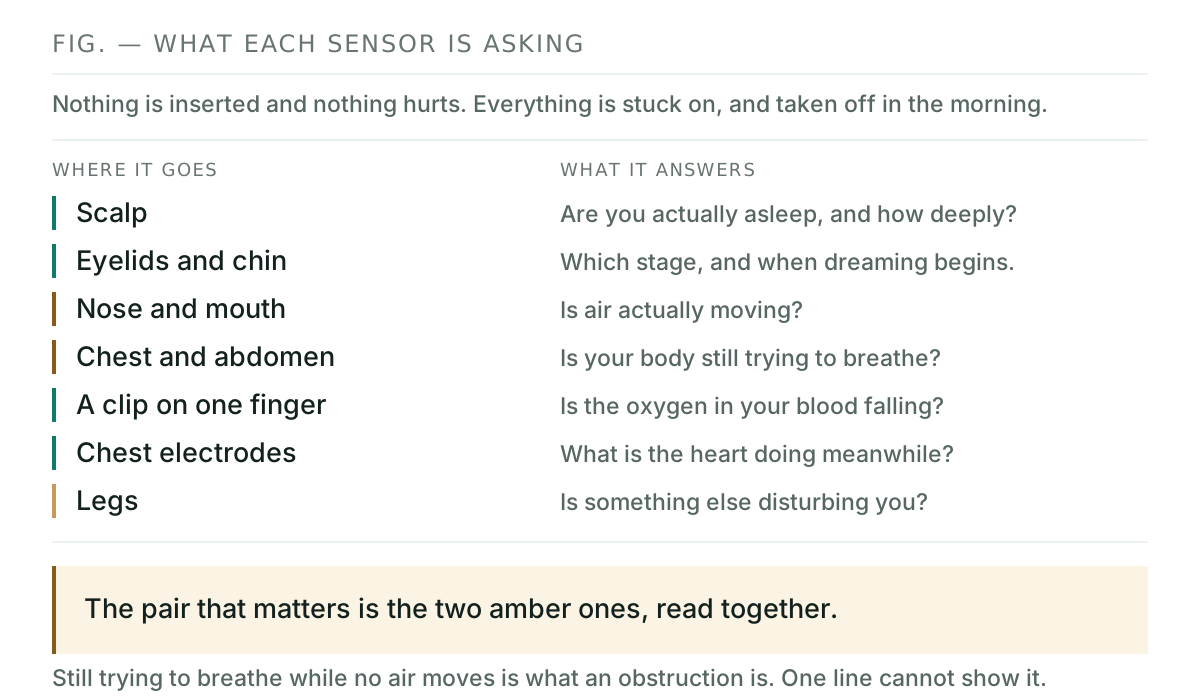
This is the part people dread and it is the least eventful part of the evening. The National Heart, Lung, and Blood Institute describes removable sensors placed on the scalp, face, eyelids, chest, limbs and a finger. MedlinePlus adds the detail that a technician places electrodes on your chin, scalp and the outer edge of your eyelids, with monitors on your chest for heart rate and breathing.
Nothing is inserted. Nothing breaks the skin. It is adhesive, wires and a couple of elastic bands, and it takes somewhere in the region of an hour to put on. The listed risk is skin irritation from the adhesive, which goes away when the sensors come off.
What matters is that each sensor is asking a specific question, and the answers only make sense together:
- Scalp — are you actually asleep, and how deeply? Without this, everything else is uninterpretable, because an event during wakefulness is not an event.
- Eyelids and chin — which stage of sleep you are in, and when dreaming sleep begins. Breathing events often cluster there.
- Nose and mouth — is air actually moving?
- Bands round the chest and abdomen — is your body still trying to breathe?
- A clip on one finger — is the oxygen in your blood falling as a result?
- Chest electrodes — what is the heart doing while this happens?
- Legs — is something other than breathing disturbing the night?
The two that carry the diagnosis are the middle pair. Effort with no airflow — your body straining while nothing moves — is the signature of an obstruction. One measurement alone cannot show it, which is precisely why a wearable on your wrist cannot replace this.
What the night is actually like
You are asked to arrive around two hours before your normal bedtime, so there is time to fit everything without rushing. MedlinePlus notes that many sleep centres have comfortable bedrooms, similar to a hotel. It is a private room with a bed, not a ward.
Then you read, or watch something, and go to sleep at roughly your usual time. A specially-trained technician observes you through the night from another room and notes changes in your breathing or heart rate. Sometimes a video camera records movement. You are not alone in the building and you are not being left to it.
Yes, you can get up in the night. The leads can be unhooked and reconnected, and needing the bathroom is entirely expected — particularly for the men who arrived at this article through waking several times a night to pee. Say so, and someone comes and sorts it out.
In the morning the sensors come off, you shower off the adhesive if you want to, and you leave. You do not get an answer at the door.
“I will never sleep with all that on”
This is the most common objection and it deserves a straight answer: you probably will sleep worse than usual, and the study usually works anyway.
The test is not looking for a good night. It is looking for a representative sample of your sleep, and breathing events show up in the sleep you do get rather than waiting politely for a full eight hours. People routinely leave convinced they were awake all night and return a result built on several hours of recorded sleep.
There is a limit to this. If too little sleep is recorded, a study can be inconclusive and may need repeating. That is a real inconvenience and worth knowing in advance. It is not, however, a reason to skip the first attempt.
A worse night than usual is still a usable night. That is the whole design of the test.
The night that can turn into treatment halfway through
Some laboratory studies are run as a split-night. The first part of the night is used to diagnose the breathing problem. If moderate to severe sleep apnea is identified early enough, the remaining hours are used to fit a CPAP machine and find the right pressure, rather than sending you home to come back another night.
There is arithmetic behind it: the diagnostic half needs a couple of hours of usable recording, and roughly three hours need to remain for the pressure to be set properly. If you take a long time to fall asleep, there may not be enough night left, and the treatment half is deferred to a separate visit.
Nobody starts treatment on you without saying so. But it is worth knowing this can happen, because a man who expected only to be measured can find himself being fitted with something, and that is a surprise best had in advance.
What the home version is instead
A home sleep apnea test measures less, on purpose. It concentrates on breathing, effort and oxygen, and generally does not record brain waves — which means it cannot tell how much of the night you were genuinely asleep for.
That is the trade. In exchange you sleep in your own bed, on your own schedule, with no travel and no overnight stay. For someone with a strong history and a high likelihood of moderate to severe apnea, that trade is often perfectly reasonable, which is exactly the situation the guidance describes.
Two things the home test does not do. It does not remove the clinician: the Academy's position statement requires the raw data to be reviewed by a physician certified in sleep medicine or supervised by one, and states that decisions must not be based on the device's automatic scoring alone. And it is not a consumer gadget you buy and interpret yourself.
When the home test is not the right test
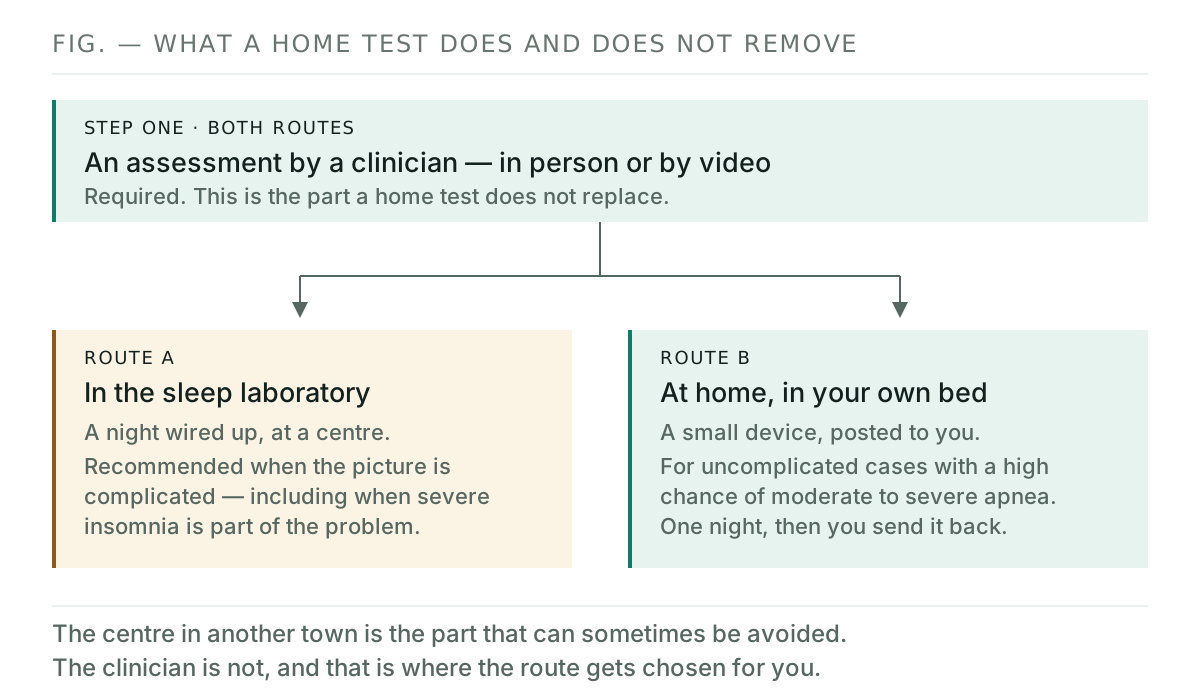
The Academy's diagnostic guideline names situations where a laboratory study should be used rather than a home test. The list includes significant heart or lung disease, potential respiratory muscle weakness from a neuromuscular condition, suspected under-breathing while awake or asleep, chronic opioid use, a history of stroke, and severe insomnia.
That last one catches more men than they expect. If your main complaint is lying awake rather than feeling sleepy — the situation described in waking at three in the morning — the home test may not be the appropriate route for you, even though it sounds like the easier one. Which is one more argument for having the conversation rather than shopping for a device.
The number you come away with
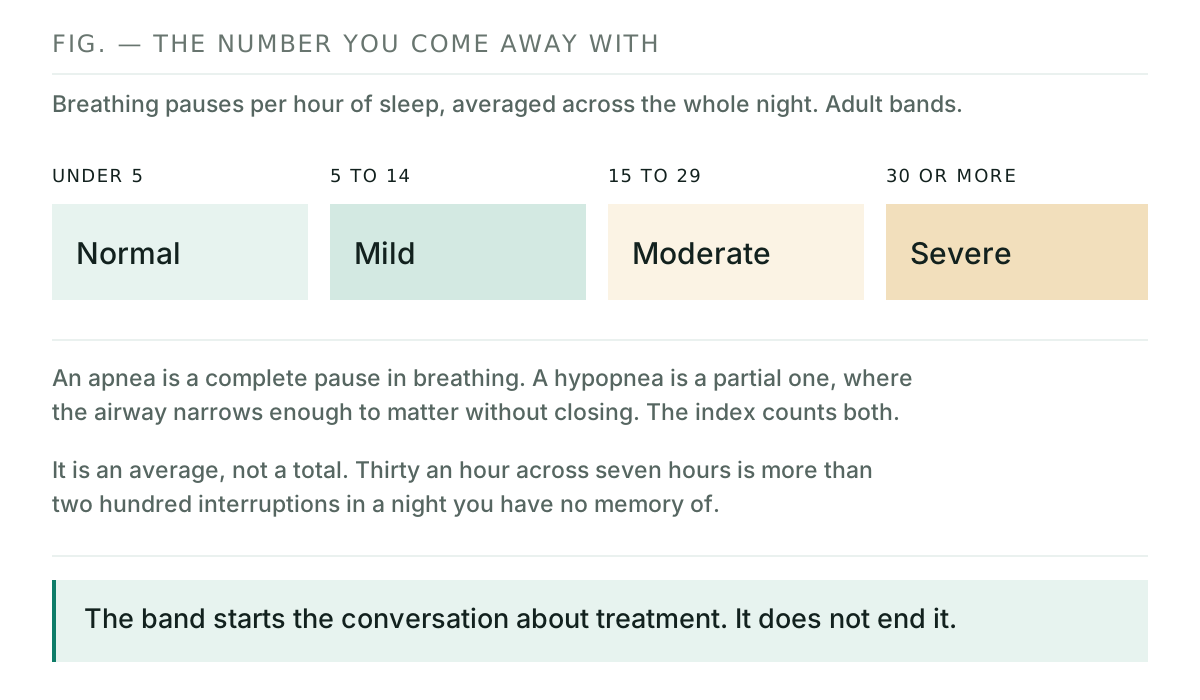
The headline result is the apnea-hypopnea index, usually written AHI. An apnea is a complete pause in breathing; a hypopnea is a partial one, where the airway narrows enough to matter without closing. The index is the average number of both, per hour of sleep.
MedlinePlus gives the adult bands: fewer than five an hour is considered normal, five to fourteen is mild sleep apnea, fifteen to twenty-nine is moderate, and thirty or more is severe.
An AHI of 30 across a seven-hour night is more than two hundred separate interruptions. Almost none of them will be remembered in the morning, which is why so many men with a high number insist they sleep fine.
The band is a starting point, not the whole answer. How low your oxygen went, how fragmented the night was, what else the study picked up and what your symptoms actually are all feed into what gets recommended. Two men with the same index can be given different advice, and that is not inconsistency.
What happens afterwards, and how long it takes
You will not be told anything meaningful as you leave. The recording has to be scored and interpreted, and then your doctor reviews the results and works out a plan — which is how the NHLBI describes it, and it is a separate appointment, usually some weeks later.
That gap is worth preparing for, because it is where a lot of men quietly drop out. The night felt like the hard part; the wait afterwards is where the momentum goes. Book the follow-up before you leave if you can.
And if the study is negative for apnea, that is not a wasted night. It removes the explanation that most needed removing, and it points the attention somewhere else — which for a lot of men over 40 is the ordinary, treatable insomnia covered in the behavioural programme that guidelines put ahead of sleeping pills, or the age-related changes set out in the guide to sleep after 40.
Key takeaways
- Nothing is inserted and nothing hurts. Sensors are stuck to the scalp, face, chest, limbs and a finger, and removed in the morning.
- You arrive about two hours before bedtime, and a technician watches the recording from another room all night.
- You can get up to use the bathroom. The leads unhook and reconnect.
- Sleeping badly does not ruin the test. It needs a representative sample of your sleep, not a good night.
- Adult AHI bands: under 5 normal, 5 to 14 mild, 15 to 29 moderate, 30 or more severe — averaged per hour.
- A home test can replace the overnight stay but not the clinician, and it is not the right route for everyone.
- The result comes at a later appointment, not on your way out. Book it before you leave.
Where to go from here
Whether this is the test you need depends on which problem you actually have:
- Snoring or Sleep Apnea? What Separates Them — why the silence between the noise is the part that counts.
- My Wife Says I Stop Breathing When I Sleep — one of our contributors has the witness and still has not been tested.
- Sleep After 40: What Changed and What Restores It — the guide that sorts “I slept badly” into five separate problems.
- Waking at 3 a.m. and Cannot Get Back to Sleep — for when lying awake, not breathing, is the complaint.
- The Insomnia Treatment That Works Better Than Pills — what the guidelines put first if apnea is ruled out.
Frequently asked questions
Does a sleep study hurt?
No. Nothing is inserted and nothing breaks the skin. Sensors are stuck to the scalp, face, chest, limbs and one finger, and are removed in the morning. Health authorities describe a small risk of skin irritation from the adhesive, which settles once the sensors come off.
What if I cannot sleep during a sleep study?
Most people sleep worse than usual and the study still works, because the test needs a representative sample of your sleep rather than a good night of it. Breathing events tend to appear in the sleep you do get. If too little is recorded, the study may be repeated.
Can I get up to use the bathroom during a sleep study?
Yes. A technician is monitoring you from another room and can unhook the leads so you can get up, then reconnect them. This is routine and expected, and it is one of the reasons a member of staff stays awake through the night.
What does the AHI number from a sleep study mean?
The apnea-hypopnea index is the average number of breathing pauses and partial pauses per hour of sleep. In adults, fewer than five per hour is considered normal, five to fourteen is mild, fifteen to twenty-nine is moderate and thirty or more is severe.
What is a split-night sleep study?
A single night used for two purposes. The first part diagnoses the breathing problem, and if moderate to severe sleep apnea is found early enough, the remaining hours are used to set up and adjust a CPAP machine. It can save you a second overnight visit.
Is a home sleep test as good as going to a sleep centre?
It is a recognized alternative for uncomplicated adults thought likely to have moderate to severe sleep apnea, but it measures less. Sleep medicine guidance sends people with certain conditions, including severe insomnia, to a laboratory study instead. A clinician decides which fits you.
Sources
- MedlinePlus (US National Library of Medicine) — Polysomnography
- National Heart, Lung, and Blood Institute (NIH) — Sleep Studies
- National Heart, Lung, and Blood Institute (NIH) — Sleep Apnea: Diagnosis
- American Academy of Sleep Medicine — Home Sleep Apnea Testing (HSAT) Position Statement
- American Academy of Sleep Medicine — Clinical practice guideline for diagnostic testing for adult obstructive sleep apnea
- Sleep Foundation — CPAP Titration Study: What to Expect and How to Prepare
- NHS — Sleep apnoea

Male Health Guide Editorial Team
We write about the health problems men over 40 actually search for at 3 a.m. — and we say plainly when the evidence for a popular product is thin. We do not invent credentials and we do not publish sponsored copy as editorial. Read more about how we work.
Medical disclaimer: This article is general information about a diagnostic procedure and is not medical advice. Practice varies between countries, health systems and individual sleep centres, so the details of your own appointment may differ from what is described here. Nothing on this page diagnoses or treats any condition. Please speak to a qualified healthcare professional about your own situation, and never start, stop or change a prescribed treatment based on what you read online.