Testosterone Replacement Therapy: What Each Form Does

Short answer
Testosterone replacement therapy is the hormone given from outside, and the form matters more than men expect: gels transfer to other people by touch, injections come short and long-acting, pellets are implanted. What separates good treatment from bad is what gets checked before it starts and how often it is checked afterwards.
Testosterone testing and prescriptions have nearly tripled in recent years, which means a great many men are now on this treatment, considering it, or being advertised it. Very few of them have been walked through what it actually involves in the form the guidelines describe.
This article does that. Not whether you should be on it — that decision needs someone who can see your results and your history — but what the treatment consists of, what differs between the forms, and what a properly run course looks like from the outside so you can tell whether yours is one.
We earn nothing from any of this. There are no affiliate links on this site, nothing here is sponsored, and we do not sell testosterone, testing or a clinic referral, which is why this page can describe the standard rather than sell you a version of it.
What the treatment is, and what it is not
Replacement means what the word says: putting back a hormone the body is no longer producing in sufficient quantity, to a level within the normal range. It is not a performance product and the guideline does not frame it as one — dosing is meant to be adjusted to achieve a total testosterone level in the middle third of the normal reference range.
That target is worth noticing, because it draws a line between two very different things. The aim is a normal level for a man, not the highest level a man can tolerate. Anything built around exceeding the normal range is a different activity with a different risk profile, and it is not what the guideline describes.
Before any of this applies, the diagnosis has to be real. That means a level below the cut-off measured on two separate early mornings, combined with symptoms or signs — the sequence set out in low testosterone after 40 and, for the measurement itself, in the testosterone test that actually tells you something.
What the guideline says it can improve
This is the part most editorial coverage skips or hedges, so here it is directly. The AUA guideline includes a counselling statement listing what patients should be told the treatment may do for them, and it is a substantial list rather than a grudging one.
That testosterone therapy may result in improvements in erectile function, low sex drive, anemia, bone mineral density, lean body mass, and/or depressive symptoms. American Urological Association, Testosterone Deficiency Guideline, statement 14
Note the verb. May result in improvements is the honest register: these are the outcomes the evidence supports as possible, in men who genuinely have the deficiency, not a promise of what will happen to any particular man. That is a different claim from the ones made in advertising, and it is the one that holds up.
The same guideline also asks clinicians to inform patients that low testosterone is itself a risk factor for cardiovascular disease — a strong recommendation. Which is a reason the condition is worth diagnosing properly rather than shrugging at.
The forms, and what actually separates them
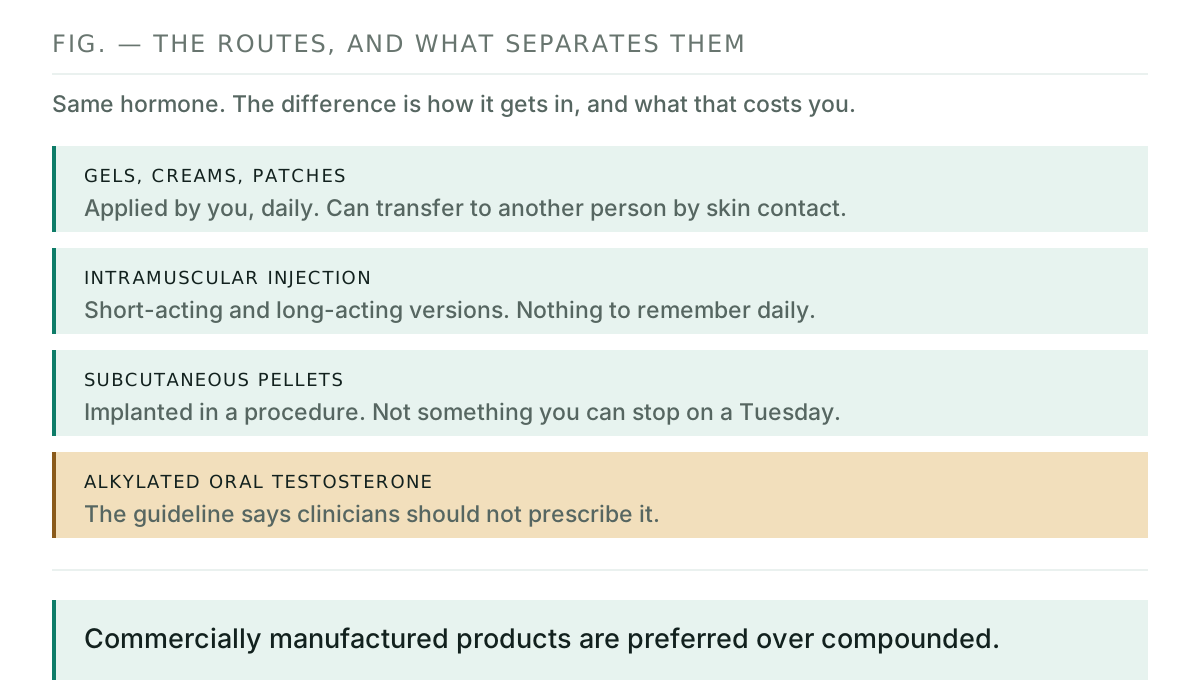
The guideline's review covered oral agents, transdermal agents in the form of gels, creams and patches, buccal agents, trans-nasal agents, intramuscular injections in short and long-acting versions, and subcutaneous pellets. Men are often offered one without being told the others exist.
The difference that matters most in daily life is not absorption or convenience. It is transference. Clinicians should discuss the risk of transference with patients using testosterone gels or creams, and the guideline grades that a strong recommendation.
That is a real consideration in a house with a partner, small grandchildren, or a dog that sleeps on the bed. It does not make gels a bad choice; it makes it a choice with a household consequence that an injection does not have, and one you are entitled to have raised before you pick.
In the other direction, the guideline is plain about one option: clinicians should not prescribe alkylated oral testosterone. It also says commercially manufactured testosterone products should be prescribed rather than compounded testosterone, when possible — which is worth remembering if a clinic offers you its own preparation.
What has to happen before the first dose
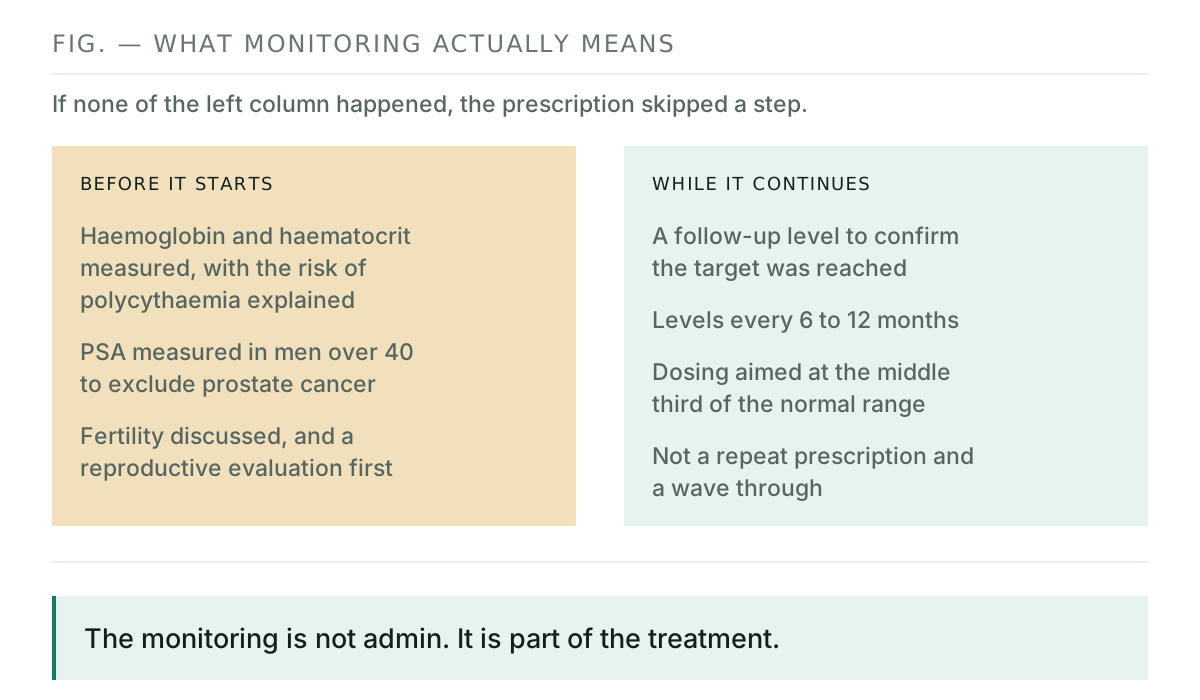
This is the most useful checklist on the page, because it is the part you can verify from the outside. A properly run start involves specific measurements taken before anything is prescribed, and each one exists for a stated reason rather than as routine paperwork.
Prior to offering testosterone therapy, clinicians should measure haemoglobin and haematocrit and inform patients regarding the increased risk of polycythaemia — a strong recommendation. Testosterone enhances red blood cell production, which is why men have higher haemoglobin than women, and adding more of it thickens blood that may already be thick.
PSA should be measured in men over 40 years of age prior to commencement of testosterone therapy, to exclude a prostate cancer diagnosis. That is a sequencing rule, not a claim that the treatment causes cancer: you establish the baseline before you change the input, so a later reading can be interpreted. PSA levels by age covers what the number means.
The part that surprises men in their forties
Of all the statements in this guideline, this is the one that catches people out, and it catches them out late. Exogenous testosterone therapy should not be prescribed to men who are currently trying to conceive, and the AUA grades that a strong recommendation with Grade A evidence.
The reasoning follows from the same signalling loop that explains a low reading in the first place. Testosterone arriving from outside quietens the instruction the brain sends to the testicle, and sperm production depends on that instruction continuing.
The guideline builds a step in for this: men with testosterone deficiency who are interested in fertility should have a reproductive health evaluation performed prior to treatment. It also notes that clinicians may use aromatase inhibitors, human chorionic gonadotropin, selective estrogen receptor modulators, or a combination, in men who want to maintain fertility.
If a second family is even a possibility, that conversation belongs before the first prescription, not after a year on treatment.
What the largest safety trial found
For a decade the honest answer to "is this safe for my heart" was that nobody had run a trial big enough to say. That changed in 2023, and the result is worth reporting precisely rather than as a headline in either direction.
TRAVERSE, published in the New England Journal of Medicine, enrolled 5,246 men aged 45 to 80 who had existing cardiovascular disease or a high risk of it, and who had two fasting testosterone levels below 300 ng/dL. They received either daily transdermal 1.62 per cent testosterone gel, dose-adjusted to hold levels between 350 and 750 ng/dL, or a placebo gel.
A primary cardiovascular event — death from cardiovascular causes, non-fatal heart attack or non-fatal stroke — occurred in 182 men (7.0 per cent) on testosterone and 190 men (7.3 per cent) on placebo. Hazard ratio 0.96. Mean follow-up was 33 months. Lincoff et al., New England Journal of Medicine, 2023
The trial's own conclusion is worded carefully and we will not improve on it: in men with hypogonadism and preexisting or high risk of cardiovascular disease, testosterone-replacement therapy was noninferior to placebo with respect to the incidence of major adverse cardiac events.
Noninferior is not the same as beneficial, and this was a safety trial rather than a trial of whether the treatment makes men feel better. What it settles is the specific fear that sent a generation of men away from the subject. It does not settle everything, and the guideline keeps a separate caution: therapy should not be commenced for a period of three to six months in patients with a history of a cardiovascular event.
What monitoring actually means
A prescription is where most coverage stops and where the guideline keeps going. Treatment here is a course with checkpoints, and if your experience of it has been a repeat prescription and no blood tests, that is a gap worth raising rather than a normal arrangement.
Clinicians should measure an initial follow-up total testosterone level after an appropriate interval, to ensure target levels have been achieved. After that, testosterone levels should be measured every 6 to 12 months while on therapy.
There is also a statement about stopping, and it is the most quietly sensible thing in the document. Clinicians should discuss the cessation of testosterone therapy three to six months after commencement in patients who experience normalisation of total testosterone levels but fail to achieve symptom or sign improvement.
If your level is now normal and you feel no different after three to six months, the guideline expects that to be discussed rather than continued indefinitely. It is a fair question to ask out loud, and a good clinician will already be asking it.
Reading a clinic the way you would read a contract
A large part of this market now runs through clinics that advertise directly, and the honest position is that some are excellent and some are selling a subscription. We are not going to name either kind. What we can do is give you the standard, because the standard is public and it is the same one above.
A service that matches the guideline will want two early morning measurements before it commits to anything, will measure luteinising hormone to work out where the low level comes from, will take haematocrit and, if you are over 40, PSA before starting, will ask about fertility, and will book you in for level checks every 6 to 12 months.
A service that diagnoses from one afternoon blood draw and ships product has skipped the strongest recommendation in the document. That is a fact you can check with a single question, before any money changes hands: how many measurements, and at what time of day?
When the answer is to treat something else
The last thing worth saying is that a low reading is not automatically a prescription, and the most common reason is not caution but accuracy. A level pushed down by weight, by untreated sleep apnoea, by alcohol or by another illness is a symptom of that thing.
Untreated breathing problems at night are the version this site sees most often, and they are checkable: what separates snoring from sleep apnea is the place to start, and the sleep guide covers the wider picture. Treating those does not rule out therapy later. It makes the decision about therapy a real one.
Key takeaways
- Dosing aims for the middle third of the normal reference range — a normal level, not the highest tolerable one.
- The guideline says patients should be told therapy may improve erectile function, sex drive, anemia, bone mineral density, lean body mass and depressive symptoms.
- Gels and creams can transfer to another person by skin contact, and discussing that is a strong recommendation.
- Alkylated oral testosterone should not be prescribed, and commercially manufactured products are preferred over compounded ones.
- Haemoglobin, haematocrit and, in men over 40, PSA are measured before therapy begins.
- It should not be prescribed to men currently trying to conceive — a strong recommendation with Grade A evidence.
- In TRAVERSE, 5,246 men at cardiovascular risk had events in 7.0 per cent on testosterone versus 7.3 per cent on placebo; the therapy was noninferior.
- Levels are checked every 6 to 12 months, and stopping is meant to be discussed if levels normalise but symptoms do not improve.
Where to go from here
This page assumes the diagnosis is settled. These cover how it gets settled, and what sits either side of it:
- Low Testosterone After 40: The Number and What It Means — the guide to the whole subject.
- The Testosterone Test That Actually Tells You Something — the two-morning rule this all depends on.
- PSA Levels by Age — the baseline taken before therapy in men over 40.
- Enlarged Prostate After 40 — where the prostate side of this leads.
- Snoring or Sleep Apnea? What Separates Them — one of the things that pushes a level down on its own.
- Sleep After 40 — the background condition behind a lot of low readings.
Frequently asked questions
What is testosterone replacement therapy?
It is testosterone given from outside the body to restore a level the body is no longer producing. The AUA guideline lists transdermal gels, creams and patches, intramuscular injections in short and long-acting forms, subcutaneous pellets, and buccal and trans-nasal preparations.
Does testosterone therapy actually improve anything?
The guideline says patients should be informed that testosterone therapy may result in improvements in erectile function, low sex drive, anemia, bone mineral density, lean body mass and depressive symptoms. It also expects the level to be brought into the middle third of the normal range.
Is testosterone therapy safe for the heart?
The TRAVERSE trial randomised 5,246 men aged 45 to 80 with existing or high cardiovascular risk to testosterone gel or placebo. A primary cardiovascular event occurred in 7.0 per cent on testosterone and 7.3 per cent on placebo, and the therapy was judged noninferior to placebo.
Can testosterone therapy affect fertility?
Yes, and the guideline is unusually firm about it. Exogenous testosterone therapy should not be prescribed to men who are currently trying to conceive, a strong recommendation. Men interested in fertility should have a reproductive health evaluation before treatment begins.
Can testosterone gel transfer to someone else?
It can, and the guideline makes discussing it a strong recommendation: clinicians should discuss the risk of transference with patients using testosterone gels or creams. It is the practical difference between a gel and an injection in a house with a partner or children.
How often should levels be checked on testosterone therapy?
An initial follow-up level after an appropriate interval to confirm the target was reached, and then testosterone levels measured every 6 to 12 months while on therapy. Dosing should be adjusted to reach the middle third of the normal reference range.
Sources
- American Urological Association — Testosterone Deficiency Guideline
- Lincoff et al., New England Journal of Medicine, 2023 — Cardiovascular Safety of Testosterone-Replacement Therapy (TRAVERSE)
- StatPearls (National Library of Medicine) — Physiology, Testosterone
- MedlinePlus (National Library of Medicine) — Testosterone Levels Test
- NHS — The “male menopause”

Male Health Guide Editorial Team
We write about the health problems men over 40 actually search for at 3 a.m. — and we say plainly when the evidence for a popular product is thin. We do not invent credentials and we do not publish sponsored copy as editorial. Read more about how we work.
Medical disclaimer: This article is general information about testosterone replacement therapy and is not medical advice. It is not a recommendation to start, stop or change any treatment, and it is not a dosing instruction. Testosterone is a prescription medicine with real effects and real risks, and the decision belongs with a qualified healthcare professional who can see your own results and history.