Low Testosterone After 40: The Number and What It Means
Short answer
Low testosterone after 40 is not a number on its own. Guidelines call for a total below 300 ng/dL, measured twice on separate early mornings, together with symptoms — because the same reading can come from the testicle, from the signal out of the brain, or from something else entirely.
There is a particular kind of appointment a man books in his late forties. Something is off. The afternoons are heavier than they used to be, the weight has settled somewhere it never used to settle, and the drive that used to arrive on its own now has to be summoned. He has read enough to have a word for it, and the word is testosterone.
Sometimes that is what it is. Often it is not, and the difference is not decided by how the man feels — it is decided by a specific sequence of measurements that most men never get put through properly. This guide is about that sequence: what number counts, why one blood draw settles nothing, and what the answer changes.
This is the guide to the section. It does not exhaust any single question, because each one below has, or will have, its own article. What it does is put them in the right order, so that you know which question you are actually in.
We earn nothing from any of this. There are no affiliate links on this site, nothing here is sponsored, and we do not sell a testosterone product of any kind, which is why this page can say plainly where the evidence is firm and where it stops.
What actually changes, and what gets blamed
Testosterone does fall gradually with age, and StatPearls links that gradual decline to a recognisable list: decreased libido, reduced testicular volume, loss of muscle mass, increased fat deposition, diminished bone density, and reduced red blood cell production which can contribute to anemia.
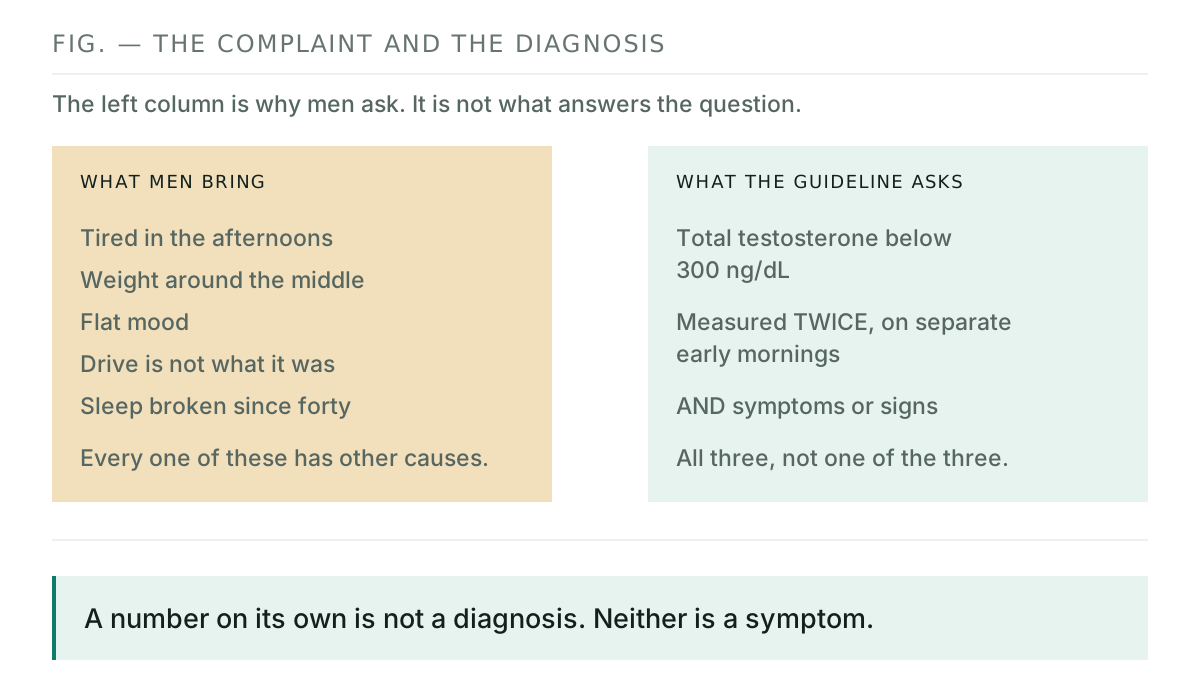
Read that list again and notice what is not on it. Not tiredness on its own. Not low mood on its own. Not weight on its own. Those appear in men with low testosterone, and they appear in men with perfectly ordinary levels who are sleeping badly, drinking more than they think, or carrying a condition nobody has looked for yet.
This is the single most useful idea on the page, and it is the reason the rest of the section exists. The symptoms that send a man looking are mostly the ones that point in every direction at once. The symptoms that actually narrow it down are more specific and more awkward to mention, which is exactly why they get left out of the conversation.
The number that counts as low
The American Urological Association guideline gives a figure, and it is worth quoting carefully because the wording does more work than the number: clinicians should use a total testosterone level below 300 ng/dL as a reasonable cut-off in support of the diagnosis of low testosterone. That is graded as a moderate recommendation.
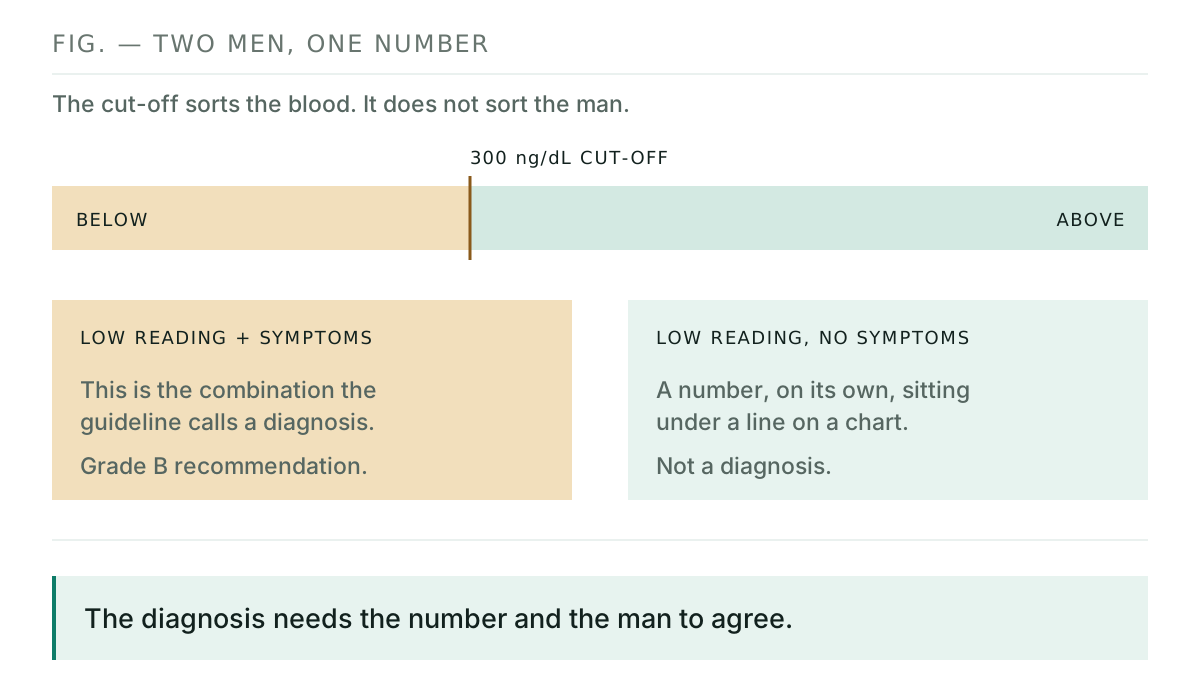
The same guideline states that the clinical diagnosis of testosterone deficiency is only made when patients have low total testosterone levels combined with symptoms and/or signs. American Urological Association, Testosterone Deficiency Guideline
You will also meet other numbers. The TRAVERSE trial, the large cardiovascular safety study published in the New England Journal of Medicine in 2023, enrolled men with two fasting testosterone levels below 300 ng per decilitre. Different bodies and different trials draw the line in slightly different places, which is itself a signal about how sharp the line really is.
What matters for you is less the exact figure than what sits on either side of it. Below the line with symptoms is a diagnosis. Below the line without symptoms is a number under a line on a chart. Above the line with symptoms means the symptoms have another cause, and that cause is still worth finding.
Why one blood test settles nothing
This is the part almost nobody is told, and it is the reason a lot of men are walking around with a diagnosis they do not have, or without one they do. The guideline is unusually firm here: the diagnosis should be made only after two total testosterone measurements taken on separate occasions, both conducted in an early morning fashion.
That is graded a strong recommendation, which in this document is the highest grade available. It is not a nicety. Repeat measures in the same man can fluctuate by 65 to 153 per cent between tests depending on the assay used, and using two or three measures reduces that variability by 30 to 43 per cent.
The timing matters as much as the repetition. Peak testosterone values occur around 3 to 8 a.m., and 32 to 39 per cent of the whole day's decline happens within the first thirty minutes of waking. An afternoon draw is not a slightly worse version of a morning draw. It is a different measurement.
Because this is where most of the damage is done, it has its own article: the testosterone test that actually tells you something, which covers what to ask for and how to read what comes back.
The same reading, three different origins
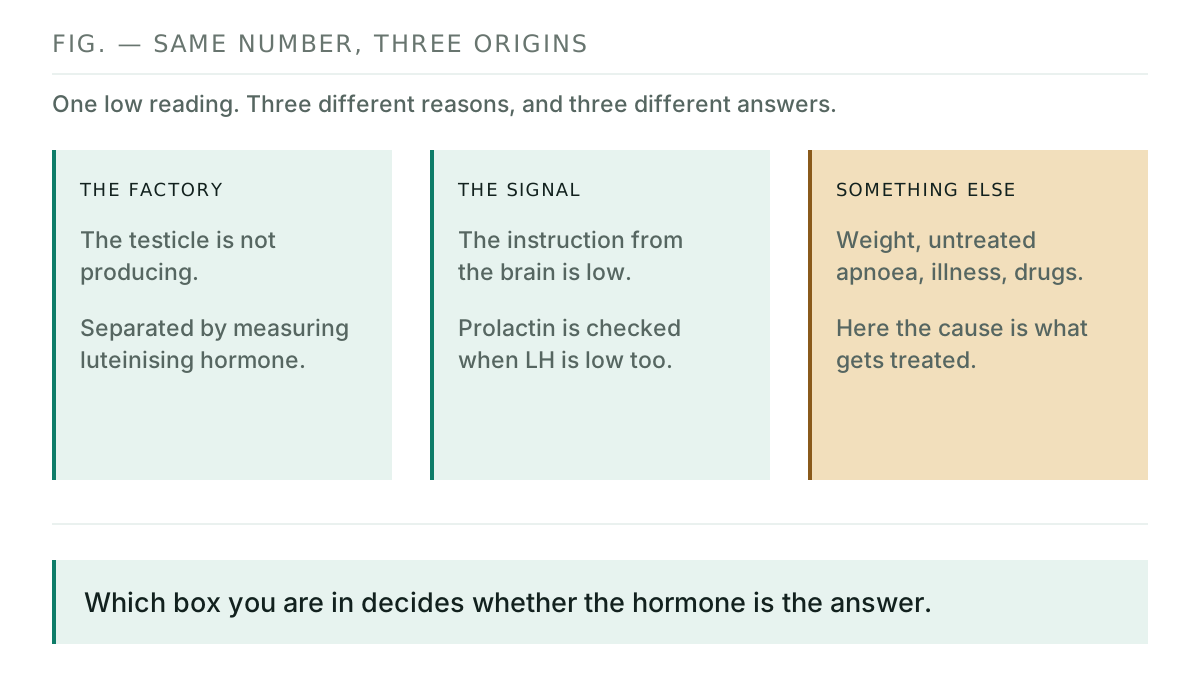
Two men can walk out with the same low figure on the same piece of paper and be in completely different situations. The guideline separates them with further blood work, and the logic behind it is simple enough to follow without a medical degree.
In patients with low testosterone, clinicians should measure serum luteinising hormone — a strong recommendation. Luteinising hormone is the instruction the brain sends to the testicle. If the instruction is loud and the output is low, the problem is at the factory. If the instruction itself is quiet, the problem is upstream, and the guideline then asks for prolactin when luteinising hormone is low or low-normal.
And there is a third box, which is the one most men over 40 are actually in: the level is being pushed down by something else. Weight, untreated sleep apnoea, illness, medication. Here the honest answer is that treating the cause is the treatment, and the hormone is a symptom rather than the disease.
Which symptoms narrow it down
MedlinePlus lists the symptoms that prompt a testosterone test in men who have gone through puberty: low sex drive, difficulty getting or keeping an erection, infertility, enlarged breasts, lack of face or body hair, thinning bones or anemia without a known cause, and loss of muscle mass.
Some of those are far more specific than others. Enlarged breast tissue, loss of body hair and unexplained thinning bones are not things a rough patch at work produces. Tiredness and low mood are, and so the list splits into two halves that should be weighed differently — something almost no article does when it reprints the list.
We are being careful with one item in particular. Difficulty with erections appears on the official list, and it belongs there as a biological signal. It is also a symptom with a long list of causes that have nothing to do with hormones, and treating it as proof of low testosterone is exactly the shortcut that sells the wrong thing to the wrong man.
Where sleep comes into it
This is the connection that gets missed most often, and it runs in the direction people do not expect. Testosterone production is bound up with sleeping through the night, which means a man whose nights have been broken for two years is not in a clean position to interpret a single low morning reading.
Untreated sleep apnoea belongs in the third box above — the things that push a level down without the hormone system itself being at fault. If a partner has mentioned pauses in your breathing, that is worth settling before anything else, and what separates snoring from sleep apnea is where to start.
The wider picture of what changes in a man's night after 40, and the five separate problems hiding inside the phrase "I slept badly", is covered in our sleep guide. If your nights are the problem, fixing the nights comes before interpreting the hormone.
Where the prostate comes into it
The two subjects meet at one specific point, and it is a point men are entitled to have explained before anyone writes a prescription. The guideline says PSA should be measured in men over 40 years of age prior to commencement of testosterone therapy, to exclude a prostate cancer diagnosis.
That is not a warning that testosterone causes prostate cancer. It is a sequencing rule: you establish what is there before you change anything, so that a later PSA reading can be interpreted against a known starting point. If you have never had a PSA and do not know what the number means, PSA levels by age explains it.
Symptoms overlap here too. A man getting up twice a night and feeling flat the next day may be reading a prostate problem as a hormone problem, and the enlarged prostate guide is the other half of that question.
What treatment actually involves
If the sequence above ends in a genuine diagnosis, replacement is a real option with real evidence behind it, and it is not the leap into the unknown that internet forums make it sound. It is also not a prescription you collect and forget, and the monitoring is part of the treatment rather than paperwork around it.
The forms differ more than most men expect — gels and creams that transfer to other people by skin contact, injections in short and long-acting versions, implanted pellets — and each carries a different set of practical consequences. All of that is set out in testosterone replacement therapy: what each form does.
On the question men ask first, the largest safety trial to date is reassuring on the main point. In TRAVERSE, 5,246 men aged 45 to 80 with existing or high cardiovascular risk were randomised to testosterone gel or placebo. A primary cardiovascular event occurred in 7.0 per cent of the testosterone group and 7.3 per cent of the placebo group.
What to do with all of this
The useful move is not to decide whether you have low testosterone. It is to work out which of the questions above you are actually in, because each one has a different next step and going straight to the last one is how men end up treating the wrong thing for a year.
- Get the measurement done properly. Early morning, on two separate occasions. Fasting is not required.
- Write the symptoms down before the appointment, and separate the specific ones from the ones that could be anything.
- Ask what else was measured. Luteinising hormone is the question that separates the factory from the signal.
- Deal with the third box first if it applies — weight, untreated apnoea, alcohol, a medication that could be doing this.
- If therapy is on the table, ask what was checked before it starts: haematocrit, PSA if you are over 40, and fertility if that still matters to you.
None of that requires you to know more medicine than your doctor. It requires you to know what a complete answer looks like, which is the one thing a fifteen-minute appointment rarely has room to explain.
Key takeaways
- The AUA guideline uses a total testosterone below 300 ng/dL as a reasonable cut-off in support of the diagnosis — a moderate recommendation, not a verdict.
- The clinical diagnosis is made only when a low level appears together with symptoms or signs.
- Two measurements, on separate occasions, both early morning, is a strong recommendation — the highest grade in the document.
- Repeat measures in the same man can fluctuate by 65 to 153 per cent depending on the assay; two or three reduce that by 30 to 43 per cent.
- Fasting is not required: the panel judged the evidence particularly weak and does not recommend insisting on it.
- A low reading has three possible origins — the testicle, the signal from the brain, or something else pushing it down — and luteinising hormone is what separates them.
- PSA should be measured in men over 40 before testosterone therapy begins, along with haemoglobin and haematocrit.
Where to go from here
This guide opens the subject. These go deeper, and they connect to the sleep and prostate work already published here:
- The Testosterone Test That Actually Tells You Something — why the test you may already have had does not count, and what a valid one requires.
- Testosterone Replacement Therapy: What Each Form Does — gels, injections and pellets, and what monitoring actually means.
- Sleep After 40: What Changed and What Restores It — the five separate problems behind one complaint.
- Snoring or Sleep Apnea? What Separates Them — one of the things that pushes a level down.
- PSA Levels by Age: What Your Number Actually Means — the reading taken before therapy starts.
- Enlarged Prostate After 40 — when the night-time symptoms have a different owner.
Frequently asked questions
What counts as low testosterone?
The American Urological Association guideline says clinicians should use a total testosterone level below 300 ng/dL as a reasonable cut-off in support of the diagnosis. It calls that a moderate recommendation, and it is a cut-off in support of a diagnosis rather than the diagnosis itself.
Can one blood test tell me if my testosterone is low?
No. The guideline states the diagnosis should be made only after two total testosterone measurements taken on separate occasions, both in an early morning fashion. That is a strong recommendation, and repeat measures in the same man can fluctuate by 65 to 153 per cent depending on the assay.
Does a low reading mean I need testosterone therapy?
Not by itself. The clinical diagnosis is made only when low levels appear together with symptoms or signs. A low reading also has more than one origin: the testicle, the signal from the brain, or something else pushing the level down, and those need different answers.
Which symptoms actually point at testosterone?
MedlinePlus lists low sex drive, difficulty getting or keeping an erection, infertility, enlarged breasts, lack of face or body hair, thinning bones or unexplained anemia, and loss of muscle mass. Tiredness and low mood are on the list too, but they belong to many other conditions.
Do I need to fast before a testosterone test?
The AUA panel does not recommend that clinicians insist on it. It judged the evidence that food ingestion affects testosterone levels to be particularly weak. What the guideline does insist on is the timing: early morning, and on two separate occasions.
Should I have my PSA checked before starting testosterone?
The guideline says PSA should be measured in men over 40 years of age prior to commencement of testosterone therapy, to exclude a prostate cancer diagnosis. It also says haemoglobin and haematocrit should be measured first, because of the increased risk of polycythaemia.
Sources
- American Urological Association — Testosterone Deficiency Guideline
- MedlinePlus (National Library of Medicine) — Testosterone Levels Test
- StatPearls (National Library of Medicine) — Physiology, Testosterone
- Lincoff et al., New England Journal of Medicine, 2023 — Cardiovascular Safety of Testosterone-Replacement Therapy (TRAVERSE)
- National Institute on Aging (NIH) — Sleep and Older Adults
- NHS — The “male menopause”

Male Health Guide Editorial Team
We write about the health problems men over 40 actually search for at 3 a.m. — and we say plainly when the evidence for a popular product is thin. We do not invent credentials and we do not publish sponsored copy as editorial. Read more about how we work.
Medical disclaimer: This article is general information about testosterone and how it is measured, and is not medical advice. It is not a diagnosis, not a recommendation to start or stop any treatment, and not a substitute for having your own results interpreted by someone who can see them. Please speak to a qualified healthcare professional about your own situation.