Prediabetes After 40: Results, Risks and Next Steps
Short answer
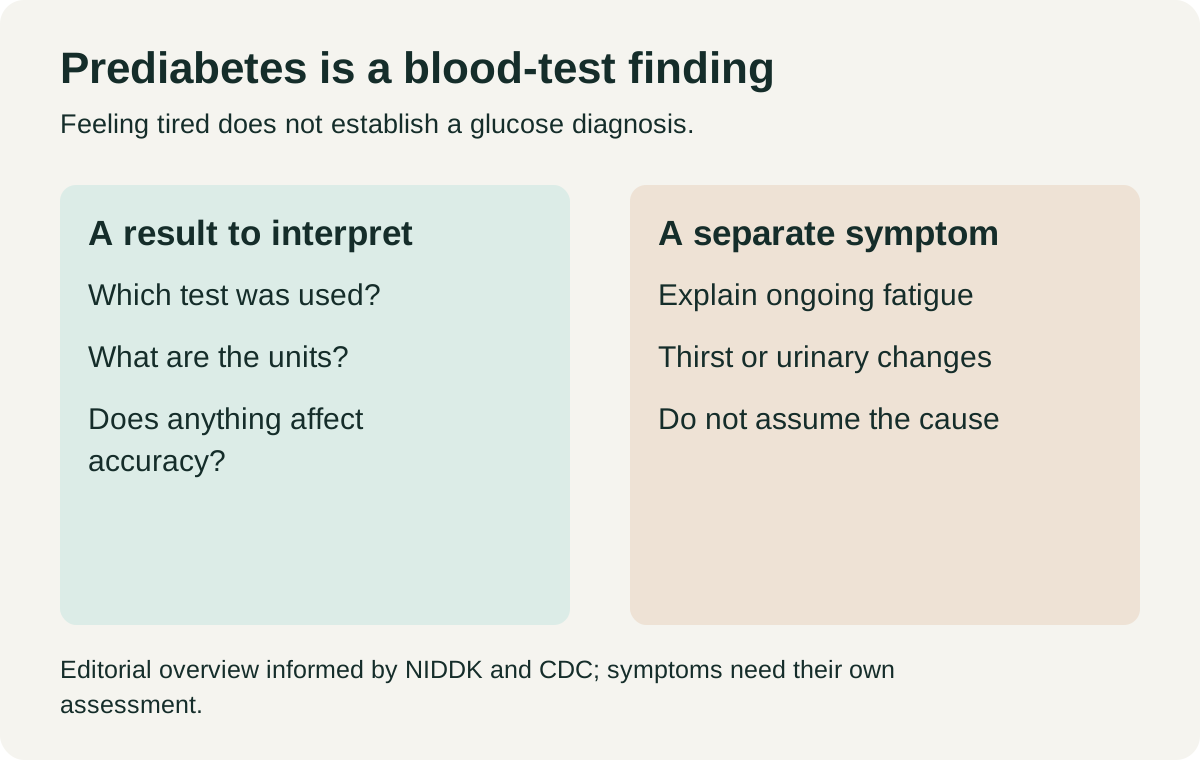
Prediabetes means blood glucose is above the usual range but below the thresholds used to diagnose diabetes. It often involves insulin resistance and usually causes no symptoms. It signals increased risk, not inevitable diabetes or a proven explanation for fatigue. Clinical interpretation, follow-up and sustainable changes can help guide your next steps.
Prediabetes often enters the conversation through a routine blood result rather than something you feel. You open a report, see a flagged number and wonder whether it explains the afternoon exhaustion you have been trying to ignore. These are two questions worth discussing, but the result does not automatically connect them.
For a man balancing work, family and less predictable opportunities for exercise, advice to change your lifestyle can sound both obvious and unhelpfully broad. What needs changing first? Do you actually have diabetes? Is the number reliable? And what would progress look like without turning every meal into a test? This guide works through those decisions.
The starting point is the report you have, not a diagnosis made from tiredness or a device you buy online. Bring the test name, result and circumstances to a clinician. You can ask for a prevention plan while still asking for a separate explanation of symptoms that affect your day. Neither concern has to cancel out the other.
How are prediabetes, insulin resistance and diabetes different?
Insulin resistance means the body responds less effectively to insulin. Prediabetes describes glucose results between the usual and diabetes ranges. They are related, but the terms are not interchangeable: insulin resistance can exist before glucose rises. Diabetes requires its own diagnostic assessment rather than an assumption based on the word prediabetes.
The NIDDK explanation of insulin resistance and prediabetes distinguishes the underlying response to insulin from the blood glucose category. Insulin helps glucose enter cells. When the response becomes less effective, maintaining usual glucose levels becomes harder. Progression to type 2 diabetes is possible, but not inevitable.
The practical distinction is between explaining a process and identifying a result. A clinician discussing insulin resistance is describing how the body handles insulin; a report labeling a result prediabetes is identifying a glucose range. You can ask which statement has actually been established in your case.
For example, imagine leaving an appointment with the phrase borderline sugar written on a scrap of paper. Before building a plan around that phrase, request the actual report. Ask which test was measured and what the clinician means by borderline. An informal phrase should not leave you guessing whether the discussion concerns risk, prediabetes or confirmed diabetes.
A useful opening is: I understand that my glucose is higher than expected, but I want to know what we have established and what still needs checking. That question makes room for uncertainty without dismissing the finding. You do not have to arrive knowing which medical label fits.
Keep a copy of the explanation with the result, particularly if another clinician later reviews it. Write down the follow-up step in ordinary words. The point is to leave with something more useful than a warning about the future: a shared understanding of the present result and a plan you can describe accurately.
Does prediabetes explain why you feel tired after 40?
Not by itself. Prediabetes usually has no symptoms, so finding it does not establish the cause of tiredness. Fatigue deserves its own history and assessment, especially when persistent or changing. Describe the symptoms and the glucose result separately instead of assuming that one necessarily explains the other.
MedlinePlus notes that prediabetes is usually symptomless. Feeling well does not exclude it, and feeling exhausted does not prove it. A laboratory finding can matter for prevention without answering why you struggle to get through the afternoon.
Our fatigue after 40 guide is the starting point for that broader discussion. Related guides cover anemia after 40, hypothyroidism and dehydration. These links explain different questions to discuss; they are not a list of diagnoses to assign yourself or a request for every available test.
When preparing for a visit, describe what tired means in your day. Are you sleepy and likely to doze, short of stamina during an ordinary task, or mentally drained? When did this begin? A specific example gives the clinician more to work with than a general statement that your energy is low.
You might say that the fatigue began before the blood test, or that your sleep changed around the same time. Mention medicine changes, work patterns and any other symptoms you have noticed. You do not need to decide which detail is the explanation before reporting it.
If the discussion becomes focused only on the glucose result, bring the original question back: What is the plan for evaluating the tiredness? Equally, a separate explanation for fatigue would not make the glucose finding disappear. It is reasonable to leave with two tracks of care rather than force everything into one story.
Avoid treating an ordinary afternoon slump as a home experiment in blood sugar. Record the situation if it helps the consultation, but do not use how you feel after one meal to confirm or overturn a laboratory diagnosis.
Which test results fall in the prediabetes range?
In standard U.S. criteria for nonpregnant adults, prediabetes includes A1C of 5.7–6.4%, fasting plasma glucose of 100–125 mg/dL, or a two-hour oral glucose tolerance result of 140–199 mg/dL. These tests measure different things. A clinician should interpret the test type, preparation and result before deciding what it means for you.
The NIDDK diagnostic table presents these U.S. ranges. They apply to clinical testing in nonpregnant adults; thresholds and terminology can differ internationally. The two-hour result refers to a standardized oral glucose tolerance test, not a measurement two hours after an ordinary meal.
| Test | Prediabetes range | What to clarify |
|---|---|---|
| A1C | 5.7–6.4% | Whether this result is reliable in your medical circumstances. |
| Fasting plasma glucose | 100–125 mg/dL | Whether fasting preparation was followed. |
| Two-hour oral glucose tolerance test | 140–199 mg/dL | Whether this was the standardized glucose-drink test. |
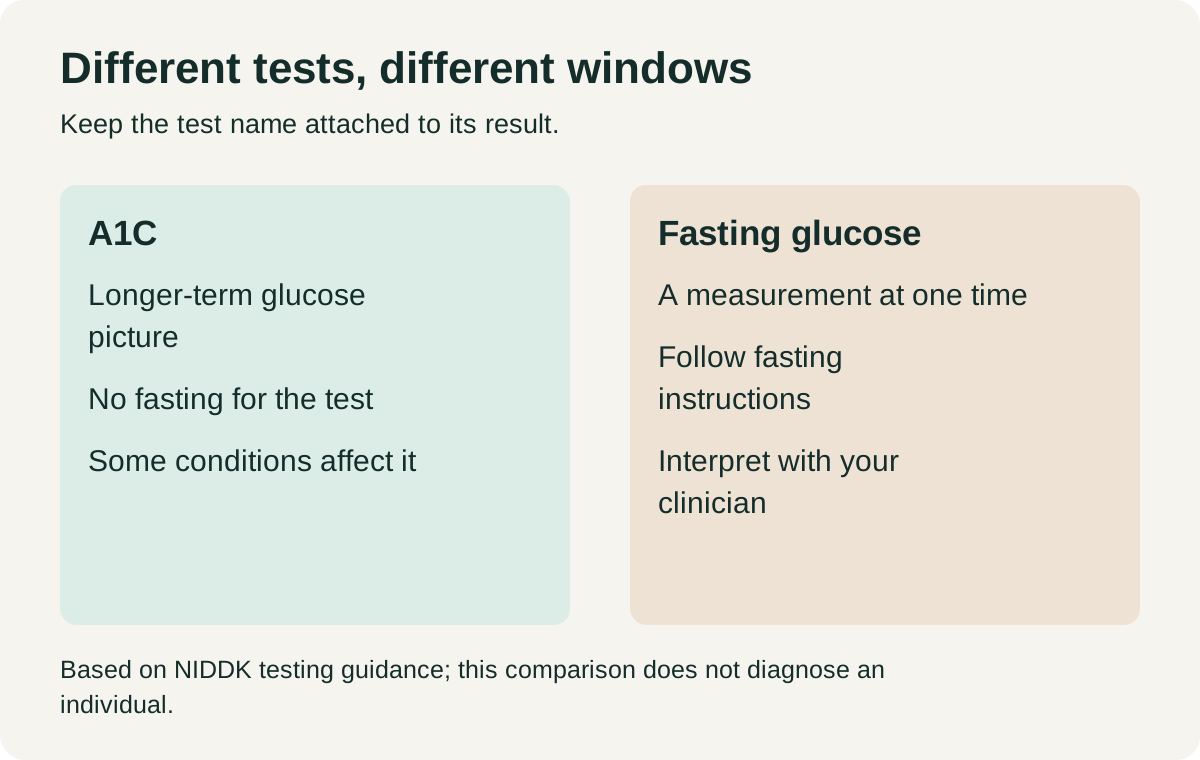
A1C reflects longer-term glucose exposure, while fasting glucose describes a measurement at a particular time. The report should identify the test and units. Do not read a value as a percentage if the laboratory reported mg/dL, or compare numbers without checking what they represent.
Before the appointment, copy the result exactly, including the date, units and any laboratory comment. If you were told to fast, note whether you followed those instructions. If you are uncertain, explain the uncertainty rather than quietly assuming that the preparation was close enough.
You do not need to choose among the tests yourself. Ask why the clinician selected this one and whether another measurement is needed to interpret it. A table is a way to understand an existing report, not a prescription to order a panel.
If the number sits near a boundary, ask how the team handles that situation. The useful outcome is a clear explanation and follow-up plan, not an argument about whether a small numerical difference makes the finding meaningful or meaningless.
Why might an A1C result need checking or confirmation?
A1C reflects average glucose exposure over roughly three months, but blood conditions and other circumstances can affect its accuracy. Results can also disagree with glucose tests. A clinician decides whether confirmation, a different test or closer follow-up is appropriate; one unexpected number should be interpreted in context rather than ignored or overread.
The NIDDK A1C guide explains that iron deficiency, altered red blood cell survival, recent blood loss or transfusion, and some hemoglobin variants can interfere with interpretation. Tell the clinician about relevant medical history rather than trying to calculate your own correction.
NIDDK advises repeat testing to confirm an unexpected prediabetes or diabetes A1C finding in someone without symptoms. How confirmation is arranged depends on the situation. Do not assume that everyone needs every test, or that a result can be dismissed just because another measurement looked different.
Suppose your fasting glucose and A1C appear to tell different stories. Bring both reports, including the dates, and ask how they fit together. The next step is interpretation, not choosing whichever result feels more reassuring. It can help to ask whether a health condition, preparation issue or test difference matters in your case.
A home glucose meter or continuous glucose monitor is not a substitute for this diagnostic process. NIDDK's testing guidance cautions against self-diagnosis with consumer blood glucose equipment. You do not need to buy a device to make your concern legitimate.
For a follow-up appointment, put three questions beside the report: Is this result reliable for me? Do we need to confirm it? When should I hear the plan? If the answer involves another test, ask the testing team for preparation instructions rather than improvising a fast or changing prescribed medicines yourself.
A clear plan also names who will review the result. If you have not heard back, contact the office rather than treating silence as either reassurance or confirmation. This is a practical way to close the loop without repeatedly checking numbers on your own.
What does the evidence say about lowering diabetes risk?
Structured lifestyle intervention can reduce the risk of type 2 diabetes in adults at high risk. In the original Diabetes Prevention Program, the lifestyle group had 58% lower diabetes incidence than the placebo group over about three years. That is a relative reduction in a study population, not a personal guarantee.
The original Diabetes Prevention Program report, PMID 11832527, studied adults with elevated fasting and post-load glucose, with an average BMI in the obesity range. Mean follow-up was 2.8 years. Its 58% result compared intensive lifestyle support with placebo; it did not mean that 58 out of every 100 participants were cured.
The study also found benefit from metformin in these high-risk adults. That does not establish that every person with prediabetes needs it. A clinician may discuss medication for selected people at higher risk. The trial is evidence about prevention, not a statement that metformin has FDA approval specifically for preventing diabetes.
The CDC National Diabetes Prevention Program lifestyle change program offers coaching and support over a year, in person or online. Its purpose is sustained change, not a brief challenge or a supplement purchase. Ask whether a recognized program is appropriate and accessible for you.
Before enrolling, look beyond the headline result. Ask about meeting times, cost, insurance coverage, online access and what happens when you miss a session. These practical details determine whether the support fits your life; they are not excuses to be overcome by willpower.
If your main difficulty is getting started, choose the kind of support you actually need. That might be help planning meals around shifts, finding suitable activity with joint pain, or talking through changes with someone who shares the cooking. A program should help solve those problems rather than simply repeat that you should try harder.
Keep the research in perspective: evidence can justify taking action without predicting your individual future. Ask what success would look like for you and how your clinician plans to review it, rather than treating a published percentage as a contract.
What food changes are practical without an extreme diet?
A workable eating plan considers portions, food quality, drinks, preferences and your usual schedule. Vegetables, protein and carbohydrate foods can all fit. A dietitian can help personalize the approach. You do not need a detox, a rigid list of forbidden foods or a supplement promising to erase prediabetes.
The CDC meal-planning guide describes a plate method: about half nonstarchy vegetables, a quarter lean protein and a quarter carbohydrate foods, alongside water or a low-calorie drink. It emphasizes a plan that fits preferences, lifestyle and medicines. This is a planning framework, not an individualized prescription.
Start with a meal you eat frequently. Perhaps lunch is bought near work, dinner depends on what the family wants, or you skip planning until you are already hungry. Describe that situation honestly. A recommendation that assumes a kitchen and a quiet lunch break will need adapting if neither is available.
For example, you could look at a familiar dinner and ask where vegetables, protein and the starchy food currently fit. Keep foods you enjoy in the conversation and discuss portions or preparation where appropriate. You are trying to make an ordinary meal workable, not create a separate menu that nobody else in the house will eat.
Drinks are another practical starting point. NIDDK's prevention guidance suggests water instead of sweetened beverages. If that is relevant to your routine, choose a realistic replacement and make it available where you usually buy or prepare a drink.
For shopping, consider writing down the ingredients for a few repeatable meals before looking for specialty products. Ask about affordable options and storage if fresh food regularly goes unused. Frozen vegetables or a planned packed lunch are practical examples to discuss, not mandatory items in a universal prediabetes diet.
If a plan leaves you hungry, anxious about eating or unable to manage family meals, bring that back to the clinician or dietitian. Ask for an adjustment. Follow-up should include whether the plan is livable, not just whether you followed instructions on a particularly easy day.
How should activity and weight goals be put in context?
Prevention programs commonly work toward at least 150 minutes of moderate activity each week. For people with overweight, losing roughly 5–7% of starting weight may help reduce diabetes risk. These are contextual goals, not instructions for everyone to lose weight or begin strenuous exercise. Agree on a suitable starting point with your clinician.
NIDDK prevention advice recommends gradually building activity and discussing suitable options if you have been inactive. Weight loss is relevant when needed, not a compulsory response to a laboratory label. Your health history, current capacity and circumstances belong in the plan.
Translate a weekly goal into your actual calendar before deciding that it is either easy or impossible. Where is there a realistic opportunity to move? What would stop it happening? A commute, caring responsibility, unsafe walking route or painful knee changes the practical question. Ask for help adapting the activity rather than abandoning the conversation.
One example is choosing a manageable walking opportunity on days when you are already out of the house. Another is asking which alternative would suit you if walking is uncomfortable. These examples illustrate planning, not a prescribed exercise schedule or a test of your fitness.
If weight reduction is appropriate, ask what pace and support make sense for you. You do not need to turn the target into repeated daily weigh-ins or an attempt to lose as much as possible. A discussion about eating, activity and access to support can be more useful than another instruction to focus on the scale.
Write down a starting action and a fallback. The fallback might be a shorter opportunity on a busy day or a conversation with the clinician about a physical limitation. A missed day is information about the plan, not proof that prevention is beyond you.
At review, describe what you could repeat and where the plan broke down. That helps distinguish a goal that needs time from one that needs redesign. Ask how activity, laboratory results and any agreed weight goal will be considered together, rather than treating any one measure as a verdict on your effort.
What follow-up and symptoms should you discuss with a clinician?
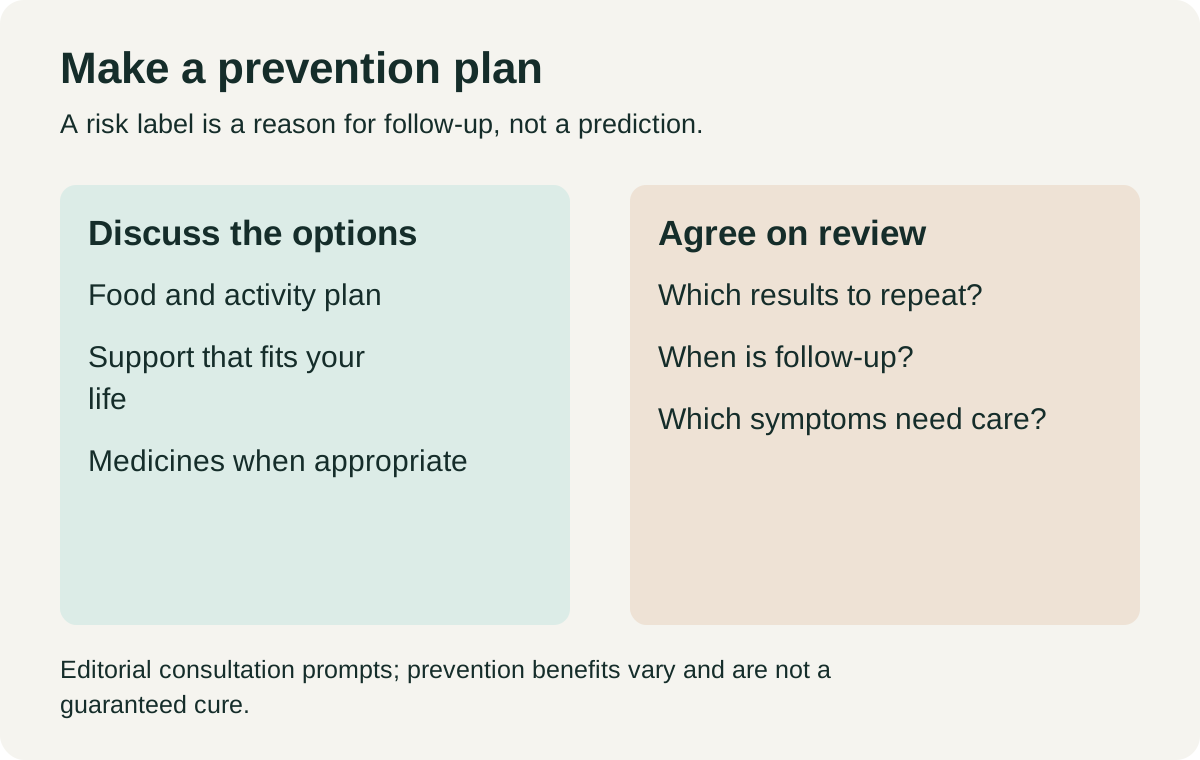
Ask when to repeat clinical testing, which other health risks need attention and whom to contact with new symptoms. Increasing thirst, frequent urination or unexplained weight loss warrants prompt assessment rather than being labeled prediabetes. Vomiting with acute illness, difficulty breathing or confusion can signal an emergency and needs immediate medical help.
NIDDK diabetes symptom guidance lists thirst and increased urination, and explains that unexplained weight loss can occur with type 1 diabetes, which can begin in adulthood. These symptoms need assessment; they are not a reason to assume that an earlier prediabetes label remains the complete explanation.
The CDC describes diabetic ketoacidosis as a potentially life-threatening complication of diabetes, sometimes its first recognized presentation. Vomiting, inability to keep fluids down and rapid or difficult breathing are warning features. If you are acutely ill with these symptoms, confused or rapidly worsening, seek emergency care immediately; call 911 if you need emergency transport. Do not wait for a routine retest or an online interpretation.
For routine care, ask your clinician to write the testing interval and what would bring the review forward. NIDDK's prediabetes guidance generally recommends annual diabetes testing for people with prediabetes. Your clinician should explain how the follow-up fits your individual results.
Also ask about the wider picture. MedlinePlus links prediabetes with increased cardiovascular risk. Our guides to cholesterol after 40 and heart health after 40 help prepare those separate conversations. A glucose result should not crowd out the rest of preventive care.
If a later result returns to the usual range, ask what that changes and what follow-up remains. It is encouraging information, not proof that risk has permanently disappeared or that future symptoms can be ignored. Keep the plan sustainable rather than treating the next blood draw as a finish line.
Before leaving an appointment, make sure you can answer three questions: What does the result mean, what are we doing next, and when will we review it? If fatigue brought you there, add a fourth: What is the separate plan for that symptom?
Key takeaways
- Prediabetes is a glucose category and a reason to address risk, not a diagnosis of the cause of fatigue.
- Insulin resistance, prediabetes and diabetes are related but distinct terms.
- Read the test name, units and preparation context before interpreting a number.
- Structured prevention support and repeatable changes are more useful than extreme diets or cure promises.
- Agree on follow-up, and seek prompt assessment for thirst, frequent urination or unexplained weight loss; acute severe illness needs emergency care.
Where to go from here
Frequently asked questions
Is prediabetes the same as insulin resistance?
No. Insulin resistance describes a reduced response to insulin, while prediabetes describes glucose results above the usual range but below diabetes thresholds. The two often overlap, but insulin resistance can develop before glucose rises. Ask which finding has been established rather than treating the terms as interchangeable.
Can prediabetes be diagnosed from tiredness?
No. Prediabetes usually causes no symptoms and is identified through clinical blood testing, not a fatigue checklist. Tiredness can still deserve assessment when a test finds prediabetes. Describe both concerns to your clinician and ask what the plan is for each, rather than assuming the result explains your energy.
What A1C level is considered prediabetes in the United States?
For nonpregnant adults, the standard U.S. prediabetes A1C range is 5.7–6.4%. It is a clinical interpretation range, not a complete diagnosis from a screenshot. Ask whether the result is reliable in your circumstances and whether it needs confirmation, especially when it is unexpected or differs from glucose testing.
Do I need to buy a glucose monitor?
Not simply because you have read about prediabetes. Consumer glucose readings do not replace clinical diagnostic testing or interpretation. Ask your clinician whether any monitoring would answer a useful question in your situation. You can discuss prevention and follow-up without first purchasing a meter or continuous glucose monitor.
Does a lower result mean prediabetes is permanently cured?
A result can return to the usual range, but that does not promise permanent protection from diabetes. Ask what the improvement means for your ongoing plan and testing schedule. Continue discussing sustainable habits and relevant health risks instead of assuming one normal result means no further follow-up is needed.
Should thirst and frequent urination wait until my next checkup?
New or increasing thirst, frequent urination or unexplained weight loss deserves prompt medical assessment. Do not assume it is ordinary prediabetes. If you are acutely ill with vomiting, difficulty breathing, confusion or rapid deterioration, seek emergency help immediately rather than waiting for a routine appointment or another laboratory result.
Sources
- NIDDK / NIH: Insulin resistance and prediabetes
- NIDDK / NIH: The A1C test and diabetes
- NIDDK / NIH: Diabetes tests and diagnosis
- NIDDK / NIH: Preventing type 2 diabetes
- NIDDK / NIH: Symptoms and causes of diabetes
- CDC: Preventing type 2 diabetes with the lifestyle change program
- Diabetes Prevention Program Research Group, NEJM, 2002; PMID 11832527: Reduction in the incidence of type 2 diabetes with lifestyle intervention or metformin: original abstract at the study coordinating center
- CDC: Diabetes meal planning
- CDC: Diabetic ketoacidosis
- MedlinePlus / National Library of Medicine: Prediabetes
How we prepared this guide. We compared the named sources listed above on October 26, 2026. Practical suggestions for organizing a consultation are labeled as ours; they are not results of a clinical trial. This article is not medically reviewed, and no personal treatment experience is claimed.

Male Health Guide Editorial Team
We write about the health problems men over 40 actually search for at 3 a.m. — and we say plainly when the evidence for a popular product is thin. We do not invent credentials and we do not publish sponsored copy as editorial. Read more about how we work.
Medical disclaimer: This article is general information, not individual medical advice. We are not doctors. A qualified clinician should assess your symptoms, test results and treatment. Seek urgent care for severe or sudden symptoms.