Low Blood Sugar (Hypoglycemia): Signs, Causes, What to Do
Short answer
For many people with diabetes, low blood sugar (hypoglycemia) means below 70 mg/dL; MedlinePlus puts it below 55 without diabetes, and calls lows rare there. They are common with insulin or certain diabetes pills. Treat with 15 grams of fast sugar, recheck in 15 minutes. If that fails, call 911; anyone who can't be woken needs help right away.
Blood sugar is usually discussed as something that runs too high. Low blood sugar gets less attention, but the NIDDK says its symptoms tend to come on quickly, can include confusion, and, when blood glucose is very low, can include a seizure or loss of consciousness. For a man taking insulin or certain diabetes pills, it is a real and recurring risk.
This article covers the numbers that count, the symptoms, low blood sugar during sleep, who is at risk, the medicines involved, the rarer causes in men without diabetes, alcohol, how to treat a low, and what to do in an emergency. It sits in this site's Energy section because tiredness and weakness are among the symptoms, though, as below, they are far from the most specific ones.
The numbers that count
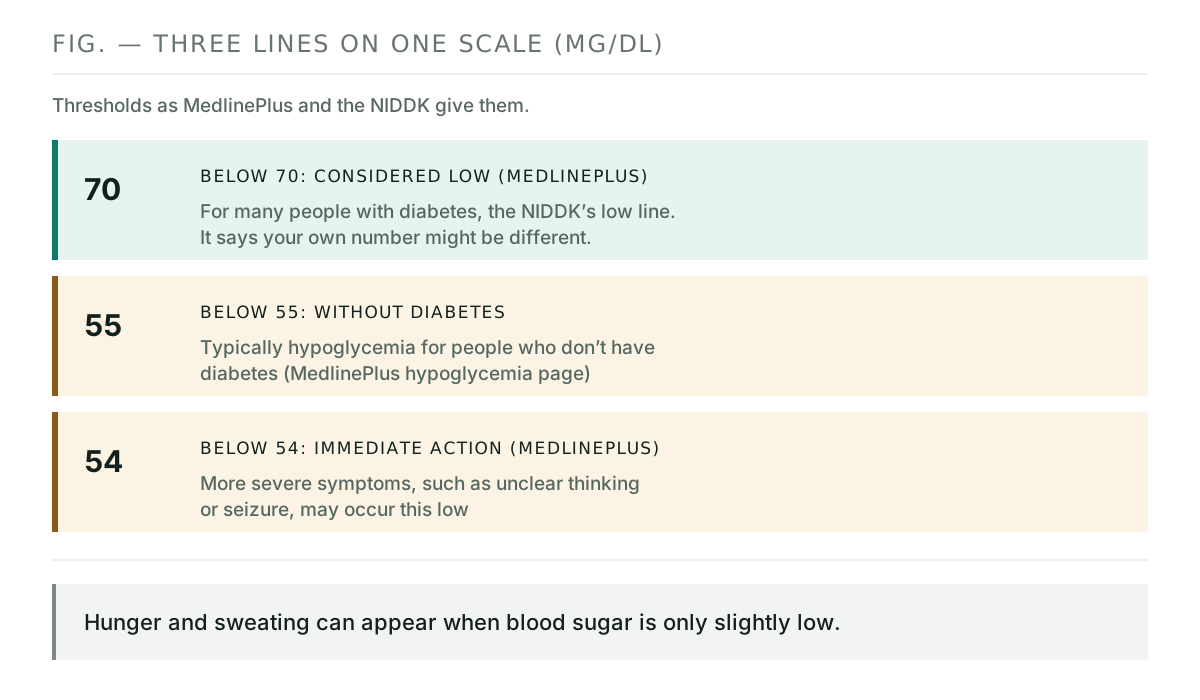
MedlinePlus says blood sugar below 70 mg/dL (3.9 mmol/L) is considered low, and that at or below this level it can be harmful. Its self-care page adds a second line: a level below 54 mg/dL (3.0 mmol/L) "is a cause for immediate action." The NIDDK uses the same 70 mg/dL line for many people with diabetes, but says your number might be different, so it is worth checking with your care team.
For people who don't have diabetes, the MedlinePlus hypoglycemia page gives a lower figure: "typically a blood glucose level lower than 55 mg/dL." In our reading, that difference matters for men without diabetes who check a reading out of curiosity, because a single number in the high 60s means something different for them than for a man on insulin.
The symptoms
MedlinePlus lists symptoms that include double or blurry vision, a fast or pounding heartbeat, feeling cranky or acting aggressive, feeling nervous, headache, hunger, seizures, shaking or trembling, sweating, tingling or numbness of the skin, tiredness or weakness, trouble sleeping, and unclear thinking. It says some symptoms, like hunger or sweating, occur when blood sugar is only slightly low, while more severe ones, such as unclear thinking or seizure, may occur below 54 mg/dL.
The NIDDK sorts them by severity. Mild to moderate: feeling shaky or jittery, hungry, tired, dizzy, lightheaded, confused or irritable, a heartbeat that is too fast or not steady, a headache, and being unable to see or speak clearly. Severe: the brain may stop working as it should, and you may lose consciousness or have a seizure. It says symptoms tend to come on quickly and vary from person to person.
MedlinePlus warns that your blood sugar could still be too low even without symptoms, which is called hypoglycemic unawareness, and that you may not know until you faint, have a seizure, or go into a coma. Its self-care page says some people who have had diabetes for a long time stop being able to sense low blood sugar. It suggests asking your provider whether a continuous glucose monitor could help.
Low blood sugar during sleep
The NIDDK says blood glucose can drop while you sleep and stay low for several hours, causing serious problems. Signs can include crying out or having nightmares, sweating enough to make your pajamas or sheets damp, and feeling tired, irritable or confused after waking up. It adds that low blood glucose during sleep can make you less likely to notice and respond to symptoms during the day.
The damp-sheets sign links to this site's night sweats in men article, where low blood sugar is one of the causes on the NHS list. MedlinePlus's self-care page suggests asking your provider whether you need a bedtime snack to prevent low blood sugar overnight.
Who is at risk
The NIDDK says low blood glucose is common in people with type 1 diabetes and in people with type 2 diabetes who take insulin or some other diabetes medicines. In a large global study of people taking insulin, it says, 4 in 5 people with type 1 diabetes and nearly half of those with type 2 reported a low at least once over a 4-week period.
For people with diabetes, its list of those more likely to have lows includes people who have type 1 diabetes, take insulin or some other diabetes medicines, are age 65 or older, have had low blood glucose before, or have other health problems such as kidney disease, heart disease or cognitive impairment. Severe lows are less common: among U.S. adults with diabetes who take insulin or medicines that help the pancreas release insulin, it says 2 in 100 may develop severely low blood glucose each year.
The medicines involved
The NIDDK says low blood glucose can be a side effect of insulin or some other medicines that help the pancreas release insulin into the blood, and names two types of diabetes pills: sulfonylureas and meglitinides. MedlinePlus is equally clear about the other side: "many other diabetes medicines do not cause low blood sugar." In our reading, if you have type 2 diabetes or prediabetes, which medicine you take matters as much as the diagnosis.
MedlinePlus's page on drug-induced low blood sugar lists medicines that include insulin, sulfonylureas (such as glipizide, glimepiride and glyburide), glinides, metformin when used with sulfonylureas, SGLT2 inhibitors with or without sulfonylureas, and some medicines not used for diabetes, such as certain heart rhythm drugs, indomethacin, certain antibiotics, and beta-blockers such as atenolol, or a propranolol overdose. It adds that, in rare cases, non-diabetes medicines can cause low blood sugar.
If your blood sugar is frequently or consistently low on insulin, MedlinePlus's self-care page says to ask your provider about your injection technique, needle, dose or type of insulin, and "do not make any changes without talking to your provider or nurse first." It also suggests checking your medicines with your pharmacist, since lows can come from taking the wrong one by accident.
Low blood sugar without diabetes
The MedlinePlus hypoglycemia page says low blood glucose without diabetes is rare, but possible. Its encyclopedia lists causes in people who don't have diabetes: drinking alcohol; an insulinoma, a rare tumor in the pancreas that produces too much insulin; a lack of a hormone such as cortisol, growth hormone or thyroid hormone; severe heart, kidney or liver failure; an infection affecting the whole body (sepsis); some types of weight-loss surgery, usually 5 or more years after the surgery; and some medicines not used for diabetes, such as certain antibiotics or heart medicines.
If you don't have diabetes and have a low, MedlinePlus says your provider will likely order other tests to find the cause; its encyclopedia notes that, in the hospital, tests to diagnose the cause need to be carefully timed in relation to the low. An underactive thyroid is covered in this site's hypothyroidism article.
Alcohol
Alcohol shows up on every list. The NIDDK explains that it makes it harder for your body to keep blood glucose steady, especially if you haven't eaten in a while, and that it can keep you from feeling the first symptoms of a low, which can lead to severe symptoms. MedlinePlus's self-care advice is not to drink alcohol without eating food, and says men should limit alcohol to 2 drinks a day.
How to treat a low: the 15-15 rule
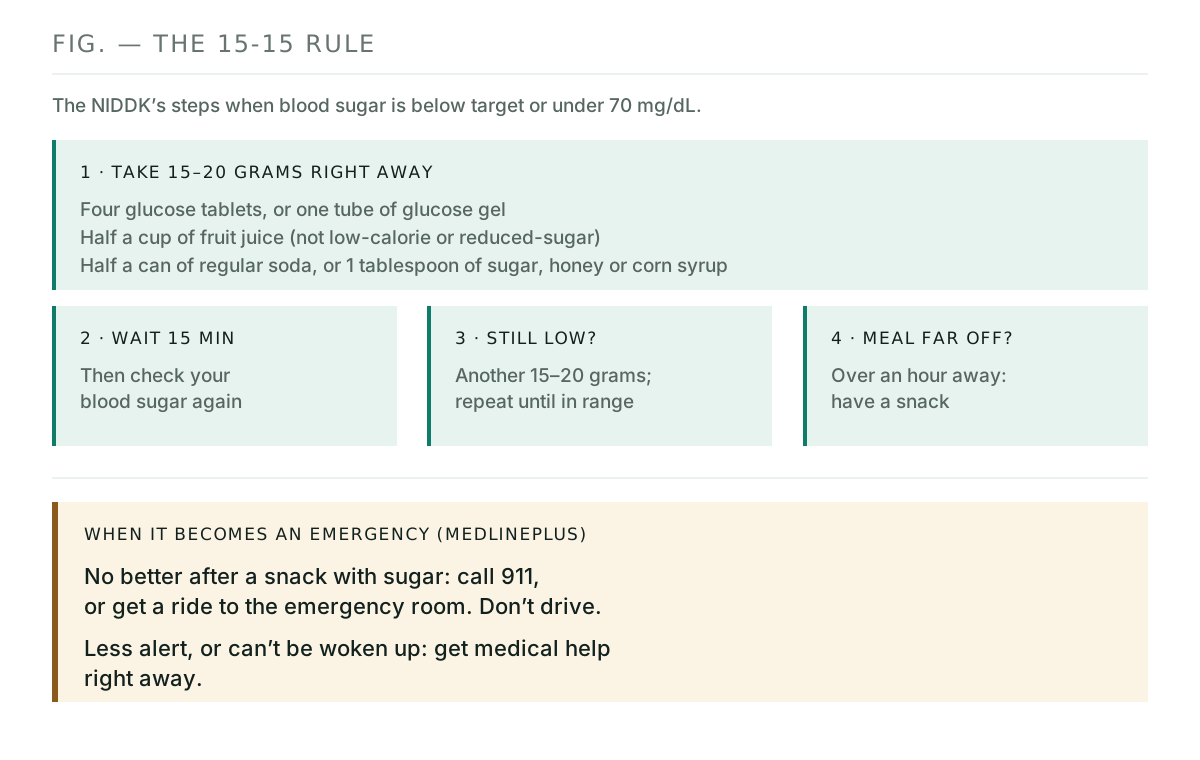
The NIDDK says that if your blood glucose is below your target or less than 70 mg/dL, eat or drink 15 to 20 grams of glucose or carbohydrates right away. Its examples: four glucose tablets or one tube of glucose gel; half a cup (4 ounces) of fruit juice that isn't low-calorie or reduced-sugar; half a can (4 to 6 ounces) of regular soda; or 1 tablespoon of sugar, honey or corn syrup. Wait 15 minutes, check again, and if still low, take another 15 to 20 grams. Repeat until you're back in your target range.
Two practical details from the NIDDK. If you have kidney disease, avoid orange juice because it has a lot of potassium; apple, grape or cranberry juice are good options. And if you take diabetes medicines that slow the digestion of carbohydrates, use glucose tablets or gel, because other carbohydrates won't raise blood sugar quickly enough. If your next meal is more than an hour away, it suggests a snack such as crackers or a piece of fruit.
Severe lows and when to call 911
MedlinePlus says severe low blood sugar is a medical emergency that can cause seizures and brain damage. If signs of low blood sugar don't improve after eating a snack that has sugar, it says to get a ride to the emergency room, without driving yourself, or call 911. It says to get medical help right away for a person with diabetes or low blood sugar who becomes less alert or cannot be woken up.
The NIDDK says glucagon, a hormone that raises blood glucose, is the best way to treat severely low blood glucose, and is available as an injection or a nasal spray. If you have a glucagon kit, it says to teach family, friends and coworkers when and how to give it, and to tell them to call 911 right away after giving it, or if you don't have a kit with you. It also recommends wearing a medical alert ID.
Is low blood sugar behind your tiredness?
Tiredness and weakness are on the MedlinePlus symptom list, so it is tempting to blame low blood sugar for fatigue. In our reading, the sources used here point to a narrower picture: low blood sugar is common in men taking insulin or certain diabetes pills, and rare otherwise. For a man without diabetes who simply feels tired, other explanations are covered in this site's fatigue after 40 article.
Key takeaways
- MedlinePlus considers blood sugar below 70 mg/dL low, below 54 mg/dL a cause for immediate action, and, for people without diabetes, typically below 55 mg/dL.
- Lows are common with insulin, sulfonylureas and meglitinides; MedlinePlus says many other diabetes medicines do not cause them.
- Without diabetes, low blood sugar is rare; causes include alcohol, hormone deficiencies, organ failure, some weight-loss surgery and certain medicines.
- The NIDDK's rule: 15 to 20 grams of fast carbohydrates, wait 15 minutes, recheck, and repeat until back in range.
- If a sugary snack doesn't help, MedlinePlus says to call 911 or get a ride to the emergency room without driving; for a person who becomes less alert or can't be woken, it says to get medical help right away.
Where to go from here
If low blood sugar is what brought you here, these pages cover the surrounding ground:
- Prediabetes After 40 — blood sugar from the other direction.
- High Blood Sugar (Hyperglycemia) — the opposite problem, and the slower one.
- Night Sweats in Men — one of the signs of a low during sleep.
- Fatigue After 40 — the more common reasons for feeling worn out.
- Hypothyroidism Explained — one of the hormone causes.
- All energy articles
Frequently asked questions
What blood sugar level is too low?
MedlinePlus says a blood sugar below 70 mg/dL (3.9 mmol/L) is considered low, and that a level below 54 mg/dL (3.0 mmol/L) is a cause for immediate action. For people who do not have diabetes, MedlinePlus says hypoglycemia is typically a level lower than 55 mg/dL. The NIDDK says your own number might be different.
What are the first signs of low blood sugar?
MedlinePlus says some symptoms, like hunger or sweating, occur when blood sugar is only slightly low. The NIDDK lists feeling shaky or jittery, hungry, tired, dizzy, lightheaded, confused or irritable, a fast or unsteady heartbeat, a headache, and being unable to see or speak clearly as mild-to-moderate symptoms.
Can you have low blood sugar without diabetes?
Yes, but MedlinePlus calls it rare. Causes in people without diabetes include drinking alcohol, a rare insulin-producing tumor called an insulinoma, a lack of certain hormones, severe heart, kidney or liver failure, sepsis, some types of weight-loss surgery, and some medicines, such as certain antibiotics or heart medicines.
What is the 15-15 rule for low blood sugar?
The NIDDK says to eat or drink 15 to 20 grams of glucose or carbohydrates right away, such as four glucose tablets or half a cup of regular fruit juice, wait 15 minutes, and check your blood sugar again. If it is still low, take another 15 to 20 grams, and repeat until it is back in your target range.
Can low blood sugar happen during sleep?
Yes. The NIDDK says blood glucose can drop during sleep and stay low for several hours. Signs can include crying out or having nightmares, sweating enough to make your pajamas or sheets damp, and feeling tired, irritable or confused after waking up.
When is low blood sugar an emergency?
MedlinePlus says that if signs of low blood sugar do not improve after eating a snack that has sugar, you should get a ride to the emergency room or call 911, and not drive yourself. It says to get medical help right away for a person with diabetes or low blood sugar who becomes less alert or cannot be woken up.
Sources
- MedlinePlus (National Library of Medicine) — Low blood sugar
- MedlinePlus (National Library of Medicine) — Hypoglycemia
- MedlinePlus (National Library of Medicine) — Low blood sugar — self-care
- MedlinePlus (National Library of Medicine) — Drug-induced low blood sugar
- National Institute of Diabetes and Digestive and Kidney Diseases (NIH) — Low Blood Glucose (Hypoglycemia)

Male Health Guide Editorial Team
We write about the health problems men over 40 actually search for at 3 a.m. — and we say plainly when the evidence for a popular product is thin. We do not invent credentials and we do not publish sponsored copy as editorial. Read more about how we work.
Medical disclaimer: This article is general information, not medical advice. We are not doctors, and nothing here diagnoses, treats or cures any condition. Do not change a diabetes medicine without your provider. Call 911 if a low does not improve after sugar, and get medical help right away for someone who becomes less alert or cannot be woken.