Night Sweats in Men: When Soaked Sheets Are Worth a Check
Short answer
Night sweats are not just a warm night: the NHS means night clothes and bedding soaking wet in a cool room. Common causes include anxiety, some medicines, low blood sugar and alcohol. See a GP if they are regular and wake or worry you, or come with other signs on the NHS list, such as a very high temperature or unexplained weight loss.
Most men who wake up damp assume the room was too warm, and the NHS agrees that sweating at night is normal when the room or bedding is too hot. The question worth asking is what happens when the room was not warm — when the sheets are soaked, the window is open, and it keeps happening. That is the line the NHS draws, and it is a more useful line than most people expect.
This article covers what counts as night sweats and what doesn't, why men sweat differently, the most common causes, the medicines involved, the prostate cancer treatments that cause them in men, the low blood sugar and alcohol links, the honest answer on testosterone, when to see a doctor, and what actually helps. It sits in this site's Sleep section because the first thing night sweats take is the night.
What counts as night sweats
The NHS starts with reassurance: most people sweat during the night, and it is normal to sweat if the room or your bedding is making you too hot. Night sweats, it says, are something else — when you sweat so much that your night clothes and bedding are soaking wet, even though where you are sleeping is cool. Adults and children can get them.
That definition gives you a simple first test before worrying about anything else. If the bedroom is warm, the duvet is heavy, or you went to bed after a hot shower, fix that first and see what happens. If the sheets are still soaked in a cool room, you are in the territory the NHS is describing, and its headline advice applies: if you regularly wake up with soaking wet sheets, you should get it checked by a GP.
Why men sweat differently
MedlinePlus explains that sweating is the release of liquid, containing salt, from the body's sweat glands, and that it is the body's natural way of regulating temperature. It is controlled by the autonomic nervous system, the part of the nervous system that is not under your control. A person is born with about 2 to 4 million sweat glands, which begin to become fully active during puberty, and the amount you sweat depends on how many you have.
Then comes a line that matters for this site's readers: "Men's sweat glands tend to be more active." MedlinePlus lists hot weather, exercise, and situations that make you nervous, angry, embarrassed or afraid among the things that can make you sweat more. In our reading, that means comparing yourself with a partner in the same bed is not a reliable test. The NHS definition, soaking wet in a cool room, is the more useful one — and MedlinePlus separately says to contact your provider if you often sweat during sleep.
The most common causes
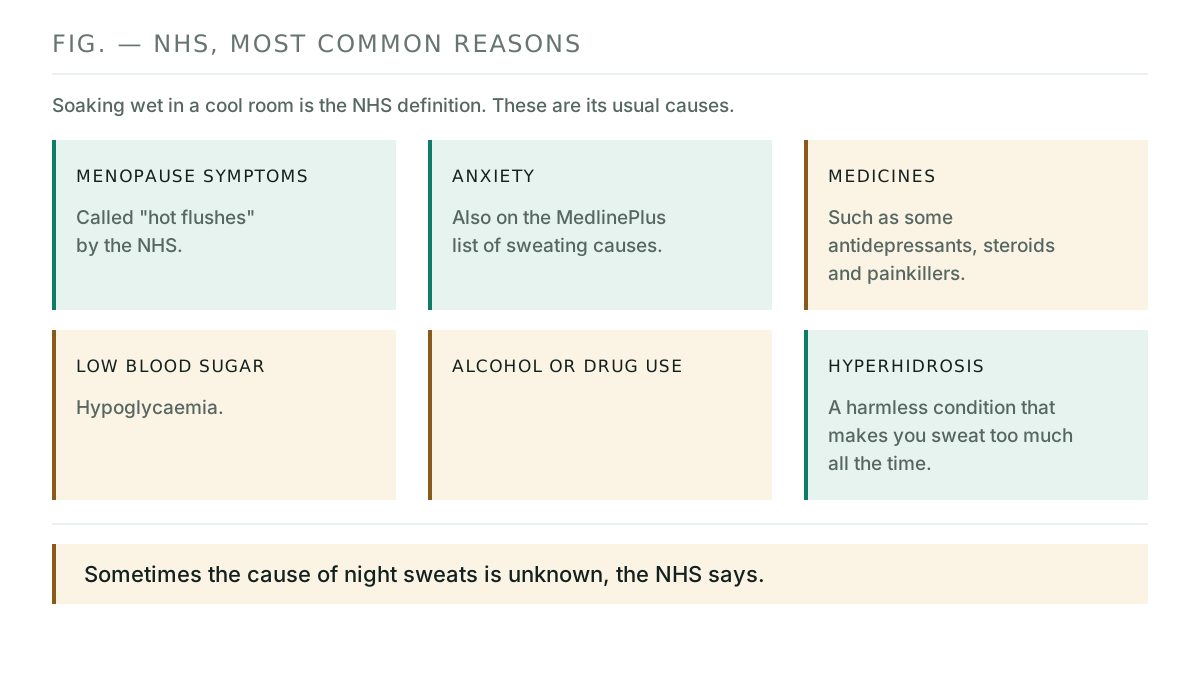
The NHS lists the most common reasons for night sweats as menopause symptoms ("hot flushes"); anxiety; medicines, such as some antidepressants, steroids and painkillers; low blood sugar (hypoglycaemia); alcohol or drug use; and a harmless condition called hyperhidrosis that makes you sweat too much all the time. It adds, honestly, that sometimes the cause of night sweats is unknown.
MedlinePlus has a longer list of causes for sweating in general, not only at night. It includes alcohol, caffeine, cancer, complex regional pain syndrome, emotional or stressful situations (anxiety), essential hyperhidrosis, exercise, fever, infection, low blood sugar, certain medicines, menopause, spicy foods, warm temperatures, and withdrawal from alcohol, sedatives or narcotic painkillers. Most of that list is ordinary. In our reading, a few items on it, such as cancer and infection, are a good reason not to ignore night sweats that keep coming back.
Anxiety appears on both lists: the NHS names it directly, and MedlinePlus lists emotional or stressful situations (anxiety). MedlinePlus also names situations that make you nervous or afraid among the things that can make you sweat more.
Medicines that can cause them
Medicines show up on every source used here, and each names different examples. The NHS mentions some antidepressants, steroids and painkillers. MedlinePlus lists medicines such as thyroid hormone, morphine, medicines to reduce fever, and medicines to treat mental disorders. The National Cancer Institute (NCI), writing about people with cancer and survivors, names opioids, tricyclic antidepressants and steroids as other drug therapies that may also cause hot flashes and night sweats.
The NHS describes what a GP may do here: if you are taking medicine and the GP thinks it might be causing night sweats, they may prescribe a different one. That decision belongs to the prescriber. Stopping a medicine on your own because of sweating can create a bigger problem than the one you started with, and MedlinePlus lists withdrawal from sedatives or narcotic painkillers as a cause of sweating in its own right.
Prostate cancer treatment: the male hot flash
Hot flashes are usually discussed as a women's symptom. The NCI's page on hot flashes and night sweats has a separate section for men, and it is specific. In men, it explains, the testes produce testosterone. Surgery to remove one or both testicles for the treatment of prostate cancer can trigger a set of symptoms that include hot flashes and night sweats. Hormone therapy with gonadotropin-releasing hormone or estrogen also causes these symptoms in men.
The NCI describes a hot flash as a sudden warm feeling over the face, neck and chest that may cause you to sweat and your face to turn red, and notes that hot flashes combined with sweats that happen while sleeping are often called night sweats. It says they are common in people receiving cancer treatment, and that some people continue to have them after treatment ends.
On treatment, the NCI states that treatment of hot flashes in men who have been treated for prostate cancer may include estrogens, progestin, antidepressants and anticonvulsants. It lists possible side effects of the non-hormonal options: antidepressants used over a short period may cause nausea, fatigue, dry mouth and changes in appetite, and anticonvulsants may cause fatigue, dizziness and trouble concentrating. It adds that if one medicine does not improve symptoms, switching to another may help. For the prostate cancer side of this site, start with the BPH vs prostate cancer article.
Low blood sugar at night
Low blood sugar is on the NHS list of common causes. MedlinePlus lists sweating among the symptoms you may have when blood sugar gets too low, along with a fast or pounding heartbeat, shaking, hunger, headache, tiredness or weakness, unclear thinking and trouble sleeping. It notes that some symptoms, like hunger or sweating, occur when blood sugar is only slightly low.
Who is at risk matters here. MedlinePlus says low blood sugar may occur in people with diabetes who take insulin or certain other medicines to control their diabetes, while many other diabetes medicines do not cause it. In people who do not have diabetes, it lists causes including drinking alcohol, a rare insulin-producing tumor of the pancreas, a lack of certain hormones, severe heart, kidney or liver failure, sepsis, some types of weight-loss surgery, and some non-diabetes medicines. Blood sugar from the other direction is covered in this site's prediabetes article.
MedlinePlus states that severe low blood sugar is a medical emergency. It lists ways to treat a low, such as drinking juice or another sugary drink, eating food, or taking glucose tablets. If signs of low blood sugar do not improve after eating a snack that has sugar, it says to get a ride to the emergency room (do not drive yourself) or call 911, and to get medical help right away for a person with diabetes or low blood sugar who becomes less alert or cannot be woken up. Waking up drenched while on these medicines is worth checking your blood sugar for, and raising with the provider managing your diabetes.
Alcohol, and stopping it
Alcohol appears in three places across these sources. The NHS lists alcohol or drug use among the most common causes of night sweats. MedlinePlus lists alcohol as a cause of sweating, and separately lists withdrawal from alcohol, sedatives or narcotic painkillers. And MedlinePlus's low blood sugar page names drinking alcohol as one cause of low blood sugar in people who do not have diabetes.
In our reading, that makes the evening drink worth a look for a man with unexplained night sweats, and makes any plan to stop heavy drinking worth discussing with a provider first rather than doing it abruptly on your own. How alcohol affects the rest of the night is covered in this site's alcohol and sleep article.
What about testosterone?
Many men searching this topic want to know whether night sweats mean low testosterone. The honest answer from the sources used here: none of them lists ordinary, age-related low testosterone as a cause of night sweats. The NHS list does not mention it. MedlinePlus's sweating page does not mention it. The NCI's male section is about something more drastic — treatments for prostate cancer that remove the testicles or use hormone therapy with gonadotropin-releasing hormone or estrogen.
That is not proof that no link exists; it means these sources do not make one, and this article will not invent it. If you suspect low testosterone for other reasons, the symptoms that do point that way are covered in this site's low testosterone symptoms article, and the right first step is a properly timed blood test, explained in the testosterone test article.
When to see a doctor
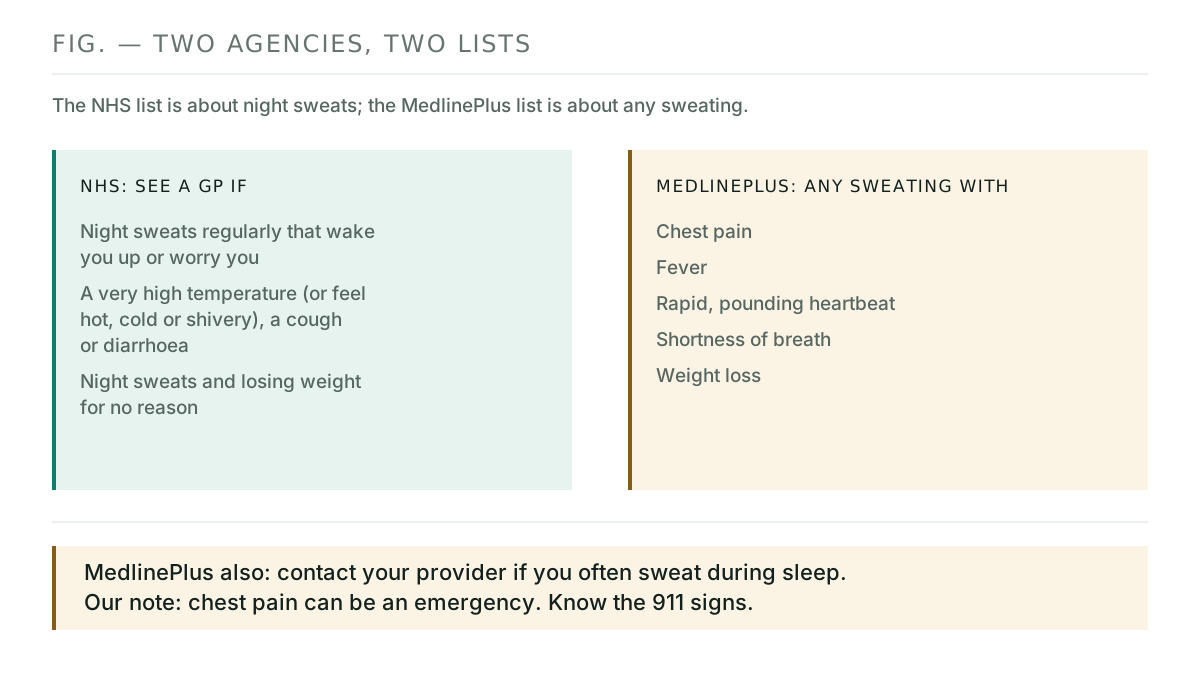
The NHS gives three reasons to see a GP: you have night sweats regularly that wake you up or worry you; you also have a very high temperature (or feel hot, cold or shivery), a cough or diarrhoea; or you have night sweats and you're losing weight for no reason. It classes these as non-urgent advice.
MedlinePlus says to contact your health care provider if sweating occurs with chest pain, fever, a rapid pounding heartbeat, shortness of breath, or weight loss, noting that these symptoms may indicate a problem such as an overactive thyroid or an infection. It also says to contact your provider if you sweat a lot or the sweating lasts a long time or cannot be explained; if sweating occurs with or is followed by chest pain or pressure; or if you lose weight from sweating or often sweat during sleep.
MedlinePlus's sweating page groups chest pain with sweating under "contact your provider." Chest pain itself can be an emergency, and this site's chest pain after 40 article covers the signs that mean calling 911 rather than booking an appointment.
What actually helps
The NHS is reassuring here too: if you have night sweats, you will not usually need treatment, but the GP will want to check if you have any other symptoms. One option it mentions is a different medicine, if the GP thinks yours might be the cause.
For the sweating itself, MedlinePlus's home-care advice after sweating a lot is to drink plenty of fluids (water, or fluids containing electrolytes such as sports drinks) to replace sweat, to lower the room temperature a little to prevent more sweating, and to wash if salt from sweat has dried on your skin. Losing fluid overnight connects to this site's dehydration article.
The NCI's comfort measures, written for people with cancer-related hot flashes, follow the same logic: since body temperature goes up before a hot flash, it says wearing loose-fitting cotton clothes, using fans and open windows to keep air moving, and practicing relaxation techniques may help control body temperature and symptoms. On supplements it is cautious. It says vitamin E is only slightly better than a placebo for hot flashes, that most studies of soy and black cohosh show they are no better than a placebo, and that your providers should know about any supplements you take with your medicines.
Key takeaways
- The NHS defines night sweats as sweating so much that night clothes and bedding are soaking wet even though the room is cool.
- MedlinePlus notes that men's sweat glands tend to be more active, and separately says to contact your provider if you often sweat during sleep.
- Common causes per the NHS include anxiety, some medicines, low blood sugar, alcohol or drug use and hyperhidrosis; sometimes the cause is unknown.
- The NCI says removing the testicles, or hormone therapy with gonadotropin-releasing hormone or estrogen, for prostate cancer can cause hot flashes and night sweats in men.
- See a GP if night sweats are regular and wake you or worry you, or come with a very high temperature (or feeling hot, cold or shivery), a cough, diarrhoea or unexplained weight loss.
Where to go from here
If night sweats are what brought you here, these pages cover the surrounding ground:
- Alcohol and Sleep — one of the most common causes, and what it does to the rest of the night.
- Waking at 3 a.m. — the broken-night pattern from a different angle.
- Low Testosterone Symptoms — the symptoms that do point that way.
- Dehydration After 40 — replacing what a drenched night costs.
- All sleep articles
Frequently asked questions
What counts as night sweats?
The NHS says it is normal to sweat during the night if the room or your bedding is making you too hot. Night sweats are when you sweat so much that your night clothes and bedding are soaking wet, even though where you are sleeping is cool.
What are the most common causes of night sweats?
The NHS lists menopause symptoms, anxiety, medicines such as some antidepressants, steroids and painkillers, low blood sugar, alcohol or drug use, and a harmless condition called hyperhidrosis as the most common reasons. It adds that sometimes the cause is unknown.
Can prostate cancer treatment cause night sweats in men?
Yes. The National Cancer Institute states that surgery to remove one or both testicles for prostate cancer can trigger symptoms that include hot flashes and night sweats, and that hormone therapy with gonadotropin-releasing hormone or estrogen also causes these symptoms in men.
When should I see a doctor about night sweats?
The NHS says to see a GP if you have night sweats regularly that wake you up or worry you, if you also have a very high temperature or feel hot, cold or shivery, a cough or diarrhoea, or if you have night sweats and are losing weight for no reason.
Do night sweats need treatment?
The NHS says you will not usually need treatment, but a GP will want to check whether you have any other symptoms. If you are taking a medicine the GP thinks might be causing the night sweats, they may prescribe a different one.
Is low testosterone a cause of night sweats?
None of the sources this article uses lists ordinary age-related low testosterone as a cause of night sweats. The National Cancer Institute links hot flashes and night sweats in men to prostate cancer treatments that remove the testicles or use hormone therapy with gonadotropin-releasing hormone or estrogen, which is a different situation.
Sources
- NHS — Night sweats
- MedlinePlus (National Library of Medicine) — Sweating
- National Cancer Institute (NIH) — Hot Flashes and Night Sweats (PDQ®)–Patient Version
- MedlinePlus (National Library of Medicine) — Low blood sugar

Male Health Guide Editorial Team
We write about the health problems men over 40 actually search for at 3 a.m. — and we say plainly when the evidence for a popular product is thin. We do not invent credentials and we do not publish sponsored copy as editorial. Read more about how we work.
Medical disclaimer: This article is general information, not medical advice. We are not doctors, and nothing here diagnoses, treats or cures any condition. Do not stop or change a prescribed medicine because of night sweats without talking to the provider who prescribed it, and seek urgent care for chest pain.