Heart Health After 40: What the Numbers Mean
Short answer
Heart health after 40 usually comes down to two numbers nobody explains: blood pressure and cholesterol. Blood pressure runs on a five-step scale from normal to a same-day emergency. Cholesterol is three separate numbers, two of which should be low and one of which should be high. Both usually cause no symptoms until something goes wrong.
Somewhere around 40, a man starts leaving the doctor's office with a slip of paper that has two or three numbers on it and a nurse saying some version of "that's a little high, keep an eye on it." Nobody explains what the number actually measures, what would count as genuinely bad, or what changes it. He nods, folds the paper, and generally does nothing differently.
That gap — between getting the number and understanding it — is what this guide exists to close. It is not a cardiology textbook. It is the plain explanation that usually doesn't happen in a 12-minute appointment, for the two numbers that matter most and the handful of situations where a number stops being a number and starts being an emergency.
We earn nothing from any of it. There is no supplement, clinic or device being sold on this page, which is the only reason it can walk through what a genuinely dangerous number looks like without steering you toward a purchase at the end.
Why a heart section, and why now
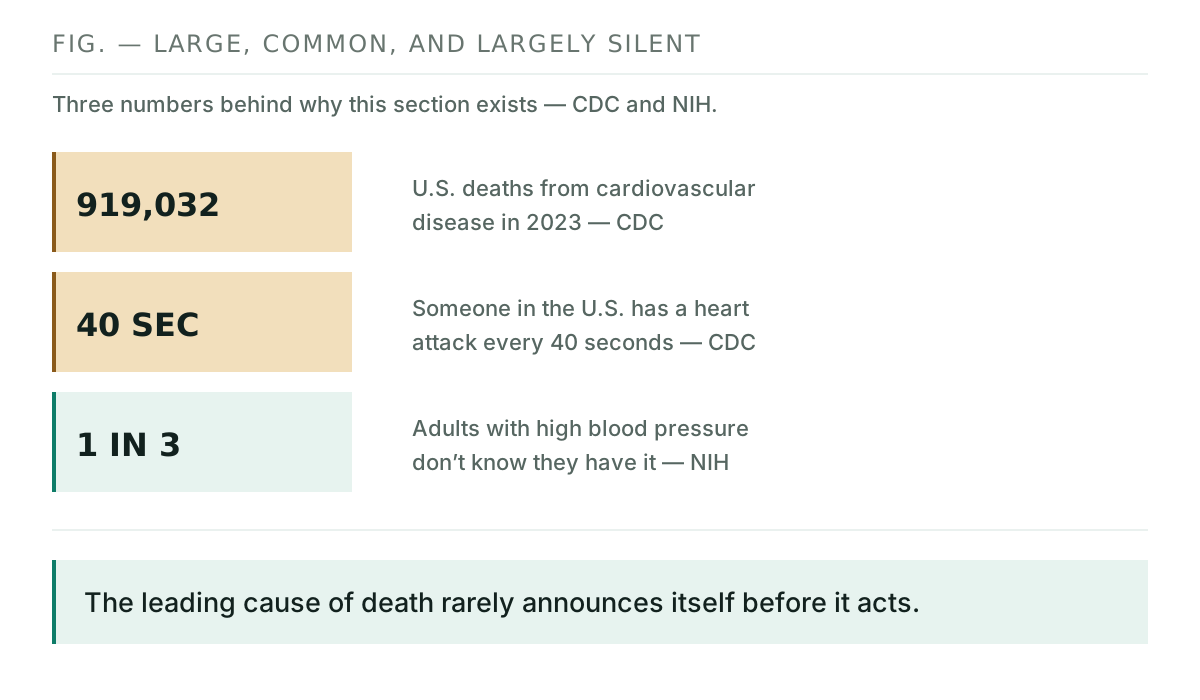
Heart disease is not a niche concern reserved for the elderly or the unlucky. The CDC states plainly that it is "the leading cause of death for men, women, and people of most racial and ethnic groups" in the United States. In 2023, "919,032 people died from cardiovascular disease." Put another way, someone in the U.S. has a heart attack every 40 seconds.
What makes this different from a joint that aches or a prostate symptom that announces itself is that the two numbers driving most of that risk — blood pressure and cholesterol — typically feel like nothing at all. That is the entire reason this section leads with numbers instead of symptoms: for most men, the numbers arrive well before any feeling does, and by the time there is a feeling, the numbers have usually been wrong for years.
Blood pressure: the two numbers, and the five steps
A blood pressure reading is two numbers separated by a slash — systolic over diastolic, both in millimeters of mercury (mmHg). Systolic is the pressure while the heart is beating; diastolic is the pressure between beats. Most men can tell you they've had it taken. Fewer can tell you what counts as normal.
The National Heart, Lung, and Blood Institute (NHLBI) lays out five categories, and the gap between "worth a mention" and "go now" is smaller than most people assume.
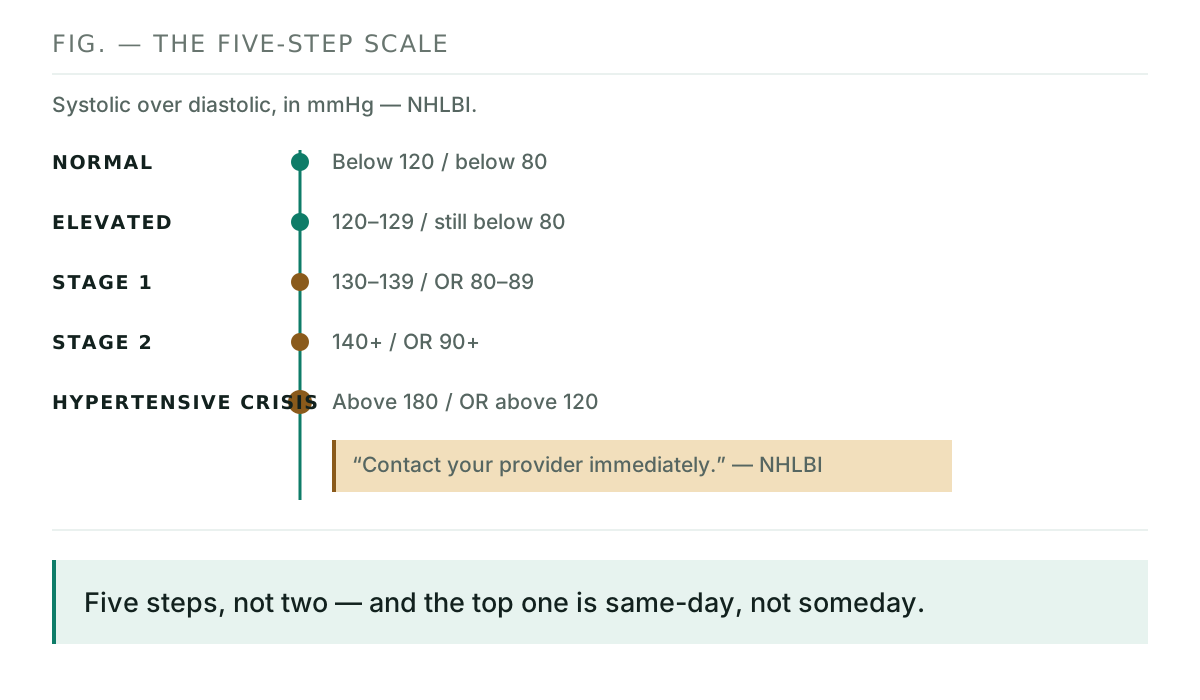
In NHLBI's own words: normal is "less than 120 systolic pressure AND less than 80 diastolic pressure." Elevated is "120 to 129 systolic pressure AND less than 80 diastolic pressure." Stage 1 is "130 to 139 systolic pressure OR 80 to 89 diastolic pressure." Stage 2 is "140 or higher systolic pressure OR 90 or higher diastolic pressure." And a hypertensive crisis is "higher than 180 systolic pressure OR higher than 120 diastolic pressure" — the one reading on this list that is not a lifestyle conversation but an instruction to "contact your provider immediately."
The word "silent" gets used a lot about high blood pressure, and NHLBI explains exactly why: "symptoms from high blood pressure don't usually occur until it causes serious health problems." The practical result is stark — "about 1 in 3 U.S. adults with high blood pressure aren't even aware they have it." A cuff on the arm tells you something your body generally will not.
Cholesterol: three numbers, and they don't all point the same way
Cholesterol confuses people for a specific reason: unlike almost every other health number, "lower is better" is only true for two-thirds of it. The panel a doctor orders returns at least three figures, and MedlinePlus is direct about what each one does.
LDL is "often called 'bad' cholesterol because it is the main source of cholesterol buildup and blockage in the arteries." HDL is "often called 'good' cholesterol because it helps remove cholesterol from your arteries." Triglycerides are described as "another type of fat in your blood that can raise the risk of heart disease."
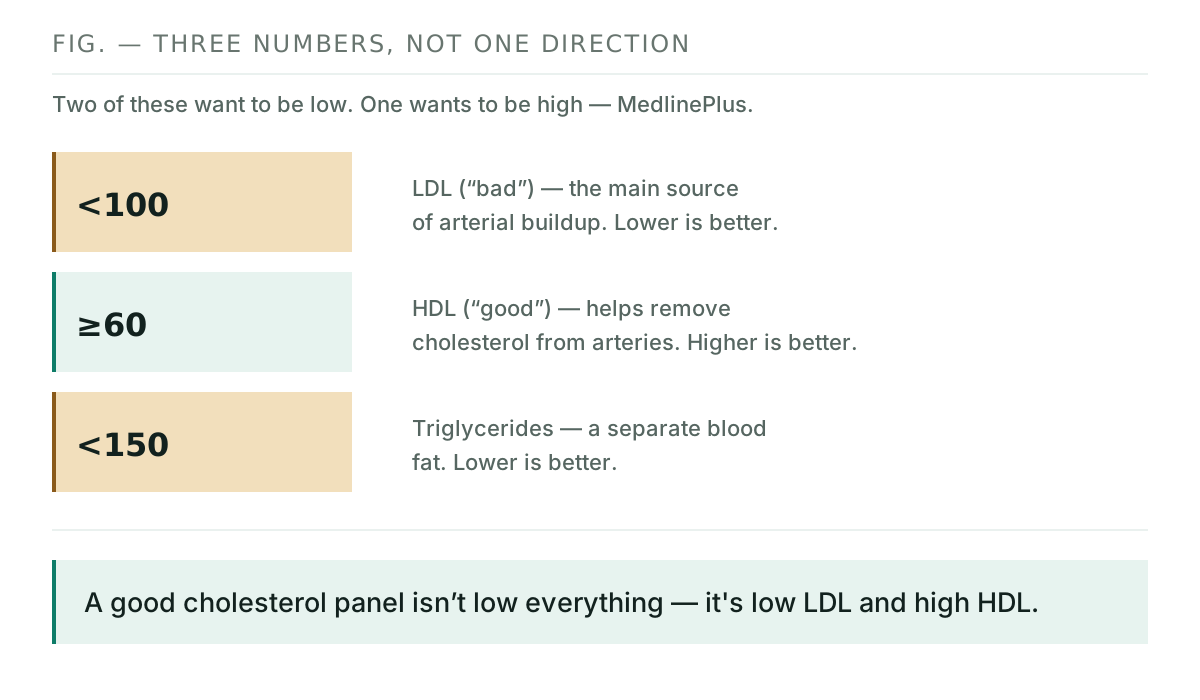
The specific targets, per MedlinePlus: total cholesterol "less than 200 mg/dL," LDL "less than 100 mg/dL," HDL "greater than or equal to 60 mg/dL is best," with levels "less than 40 mg/dL...considered low," and triglycerides "below 150 mg/dL." Two numbers you want low. One you want high. Reading a lab report as if every arrow pointing up is bad will get the HDL line backward.
On timing, MedlinePlus recommends adults get tested "every 5 years" starting at 20, with one specific acceleration: "men ages 45 to 65...should have it every 1 to 2 years." A man in his early 40s is close enough to that window that asking at the next checkup, rather than waiting to be told, costs nothing.
The number nobody explains: resting heart rate
A fitness watch or a pulse check on the wrist gives a third figure that gets less airtime than the other two, but is worth knowing. MedlinePlus lists the normal resting range for adults, including seniors, as "60 to 100 beats per minute." Well below that isn't automatically a problem — "well-trained athletes" often sit at "40 to 60 beats per minute" — not automatically a red flag on its own, since a well-conditioned heart is generally assumed to move more blood per beat.
A resting rate that sits persistently above 100, or one that has crept up over months without a clear reason like poor sleep, stress or caffeine, is worth mentioning at an appointment — not as an emergency on its own, but as another data point alongside blood pressure and cholesterol rather than a separate crisis.
What actually moves the risk
The CDC lists high blood pressure and high cholesterol — two of the numbers already covered here — among its key risk factors for heart disease, in a separate list from the behaviors that also raise it: an unhealthy diet, not enough physical activity, heavy alcohol use, and tobacco. Sitting apart from both lists are the factors a man cannot change: age, sex, and family history.
The CDC names age directly as a risk factor for heart disease, alongside family history and genetics. That is a real part of why 40 is a reasonable point to start paying attention to these numbers, separate from anything a man is or isn't doing. Centers for Disease Control and Prevention
The honest read is that some of this section's readers will do everything right and still carry real risk, because family history and age don't respond to a better diet. That doesn't make the modifiable half pointless — it makes it worth doing precisely, rather than vaguely, because the part you can influence is the part actually worth the effort.
When a number stops being a number
Most of this article is about numbers that call for a conversation with a doctor, not a trip to the emergency room. Two specific situations are the exception. A blood pressure reading above the hypertensive crisis line — above 180 systolic or above 120 diastolic — is, per NHLBI, a reason to "contact your provider immediately," on its own, whether or not it comes with any other symptom.
The second is chest pain itself, which deserves its own article rather than a paragraph here, because "is this the heart or not" is a genuinely hard question that a lot of health content answers too glibly. That article, along with the rest of this section, is being written next.
The part a single appointment usually skips
A 12-minute visit has room for a number and a one-line instruction. It rarely has room to explain that a Stage 1 reading and a Stage 2 reading call for different urgency, that HDL is the one line on the panel you want climbing instead of falling, or that "every 1 to 2 years" is a specific instruction for men in their mid-40s rather than a vague suggestion. None of that is a criticism of any one doctor — it is just more than a short visit was ever built to cover, which is the actual reason this page exists.
What to do with this
- Get the actual numbers, not the summary. "A little high" is not a number. Ask for the systolic/diastolic reading and the full lipid panel, in writing.
- Check them against the five-step and three-number scales above. Know which category you're in before the next appointment, not during it.
- Book the cholesterol check on a schedule, not a whim. Every 1 to 2 years from 45 is the specific guidance for men — put it on a calendar.
- Separate what you can change from what you can't. Diet, activity, alcohol and smoking move the number. Age and family history don't — and knowing that is not fatalism, it's accuracy.
- Know the one number that means "now." Above 180/120, with symptoms, is not a wait-and-see reading.
None of this replaces a doctor who can see your actual chart. What it should do is turn the next slip of paper with numbers on it from something you fold and forget into something you can read.
Key takeaways
- Heart disease caused 919,032 U.S. deaths in 2023 and is the leading cause of death for most groups — CDC.
- Blood pressure runs on a five-step scale: normal, elevated, stage 1, stage 2, and hypertensive crisis (above 180/120) — NHLBI.
- About 1 in 3 adults with high blood pressure don't know they have it, because it usually causes no symptoms — NHLBI.
- Cholesterol is three numbers, not one: LDL under 100 and triglycerides under 150 are better low; HDL at 60+ is better high — MedlinePlus.
- Men 45 to 65 should have cholesterol checked every 1 to 2 years — MedlinePlus.
- Normal resting heart rate for adults is 60 to 100 beats per minute; well-trained athletes often run 40 to 60 — MedlinePlus.
- Age itself is a named, non-modifiable risk factor alongside family history — CDC.
Where to go from here
This is the first article in the heart section. The rest are being written now, one at a time:
- High blood pressure after 40 — what the numbers mean and when they become an emergency.
- Cholesterol after 40 — LDL, HDL and triglycerides, and what to actually do about the number.
- Chest pain after 40 — when it's the heart, and when it usually is not.
- Heart attack vs cardiac arrest — two different emergencies with two different responses.
- Heart palpitations vs AFib — a harmless racing heart or an arrhythmia that needs a test.
- Blood pressure medication — what to expect, and what still depends on lifestyle.
- Statins — what the big trials found, benefit and side effect.
- Fish oil for heart health — what the evidence actually shows.
Frequently asked questions
What blood pressure number is actually dangerous?
NHLBI defines normal as below 120/80. Elevated is 120-129 with diastolic still below 80. Stage 1 is 130-139 or 80-89. Stage 2 is 140 or higher, or 90 or higher. A reading above 180 systolic or above 120 diastolic is a hypertensive crisis, and the guidance is to contact a provider immediately.
Why is high blood pressure called a silent condition?
Because NHLBI states symptoms from high blood pressure "don't usually occur until it causes serious health problems." About 1 in 3 U.S. adults with high blood pressure aren't even aware they have it, which is why a cuff reading matters more than how you feel.
What should my cholesterol numbers be?
Per MedlinePlus, total cholesterol under 200 mg/dL, LDL under 100 mg/dL, HDL at 60 mg/dL or above, and triglycerides under 150 mg/dL. LDL and triglycerides are better lower; HDL is better higher — they don't all move the same direction.
How often should a man over 40 get his cholesterol checked?
MedlinePlus recommends adults get tested every 5 years starting at 20, and specifically that men ages 45 to 65 have it checked every 1 to 2 years. A man in his early 40s is close enough to that window to ask his doctor now rather than wait for a reminder.
What is a normal resting heart rate?
MedlinePlus lists 60 to 100 beats per minute as normal for adults, including seniors. Well-trained athletes often run lower, 40 to 60 beats per minute — MedlinePlus does not explain why, but a more efficient heart moving more blood per beat is the usual explanation given elsewhere.
How many people actually die from heart disease?
The CDC reports 919,032 U.S. deaths from cardiovascular disease in 2023, making it the leading cause of death for men, women and most racial and ethnic groups. Someone in the U.S. has a heart attack every 40 seconds.
Sources
- Centers for Disease Control and Prevention — Heart Disease Facts
- Centers for Disease Control and Prevention — Heart Disease Risk Factors
- National Heart, Lung, and Blood Institute (NIH) — High Blood Pressure
- MedlinePlus (NIH) — Cholesterol Levels: What You Need to Know
- MedlinePlus (NIH) — Pulse (Medical Encyclopedia)

Male Health Guide Editorial Team
We write about the health problems men over 40 actually search for at 3 a.m. — and we say plainly when the evidence for a popular product is thin. We do not invent credentials and we do not publish sponsored copy as editorial. Read more about how we work.
Medical disclaimer: This article is general information about blood pressure and cholesterol numbers, and is not medical advice. It is not a diagnosis and not a substitute for a healthcare professional who can see your actual readings and history. If you have chest pain, shortness of breath, or a blood pressure reading above 180/120, seek emergency care.