Rotator Cuff vs Frozen Shoulder: Two Fixes, Not One
Short answer
A rotator cuff tear and a frozen shoulder can both get better without surgery, but for opposite reasons. A torn tendon in the rotator cuff does not heal itself — function improves around the damage. A frozen shoulder's stiff capsule genuinely loosens over time, often within three years. Knowing which one is happening changes what waiting actually buys.
Two men can describe the exact same complaint — a shoulder that will not lift the way it used to — and be living through completely different problems. One has a tendon that tore and will not reattach itself. The other has a joint capsule that has tightened and, given enough time, will loosen again on its own. Waiting is a reasonable plan for one of them and a costly one for the other.
Our shoulder pain article already introduced the ten-second test that separates the two at a glance: have someone else lift the relaxed arm for you. Moves with help means weakness, pointing at the rotator cuff. Will not move either way means stiffness, the hallmark of frozen shoulder. That article deliberately stopped there. This one goes the rest of the way.
We earn nothing from any of this. There is no brace, supplement or clinic being sold here, which is why this page can spend its time on what actually distinguishes these two conditions rather than steering every reader toward the same purchase.
Same test, two very different diseases
The active-versus-passive lift test still matters, and it is worth repeating in one sentence: if the range of motion is there when someone else supplies the force, the joint itself is not the problem — something pulling it is. If the range is not there even with help, the joint itself is restricted. Everything below builds on that starting split.
What is actually torn, and what is actually stuck
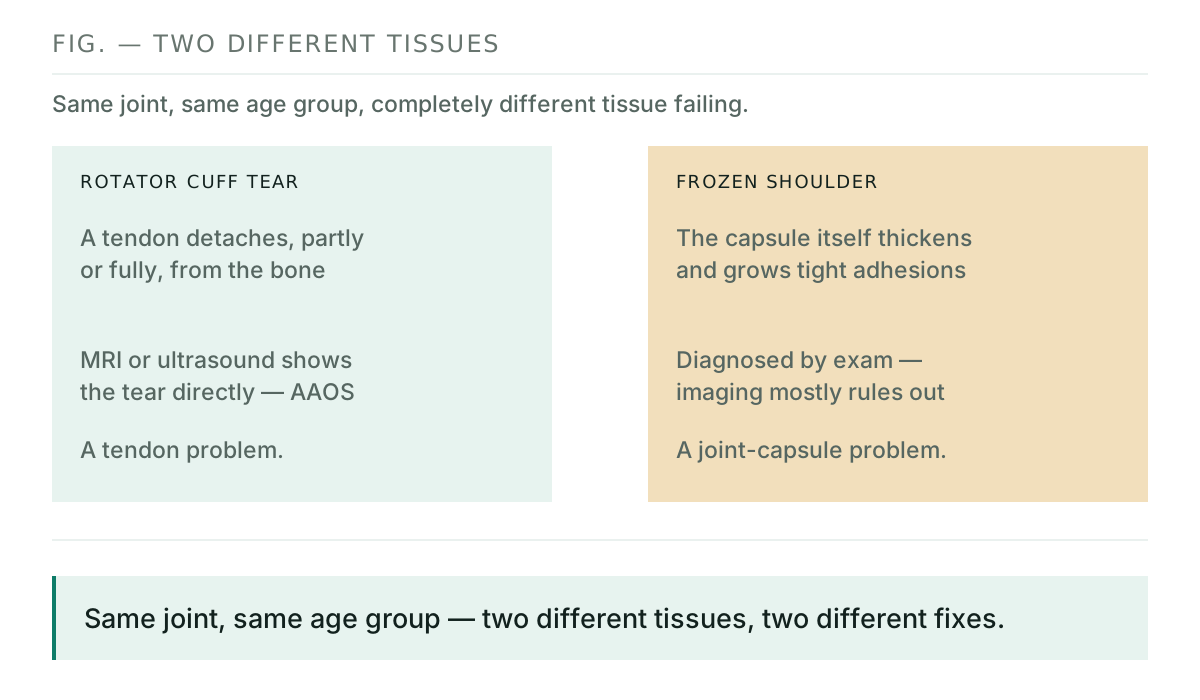
A rotator cuff tear is a tendon problem. AAOS describes it plainly: "when one or more of the rotator cuff tendons is torn, the tendon becomes partially or completely detached from the head of the humerus." The tendon itself has come away from the bone it is supposed to hold.
Frozen shoulder is a completely different kind of failure. AAOS states that "the shoulder capsule thickens and becomes stiff and tight," with "thick bands of tissue — called adhesions" developing inside it. Nothing has torn. The joint's own wrapping has tightened around it.
Will it fix itself if you just wait?
This is the question that actually matters, and the two answers point in opposite directions. On the rotator cuff, AAOS is direct: "even though most tears cannot heal on their own, you can often achieve good function without surgery." Read that twice — good function is genuinely possible without surgery, but the tear itself is still there. Nothing is repairing.
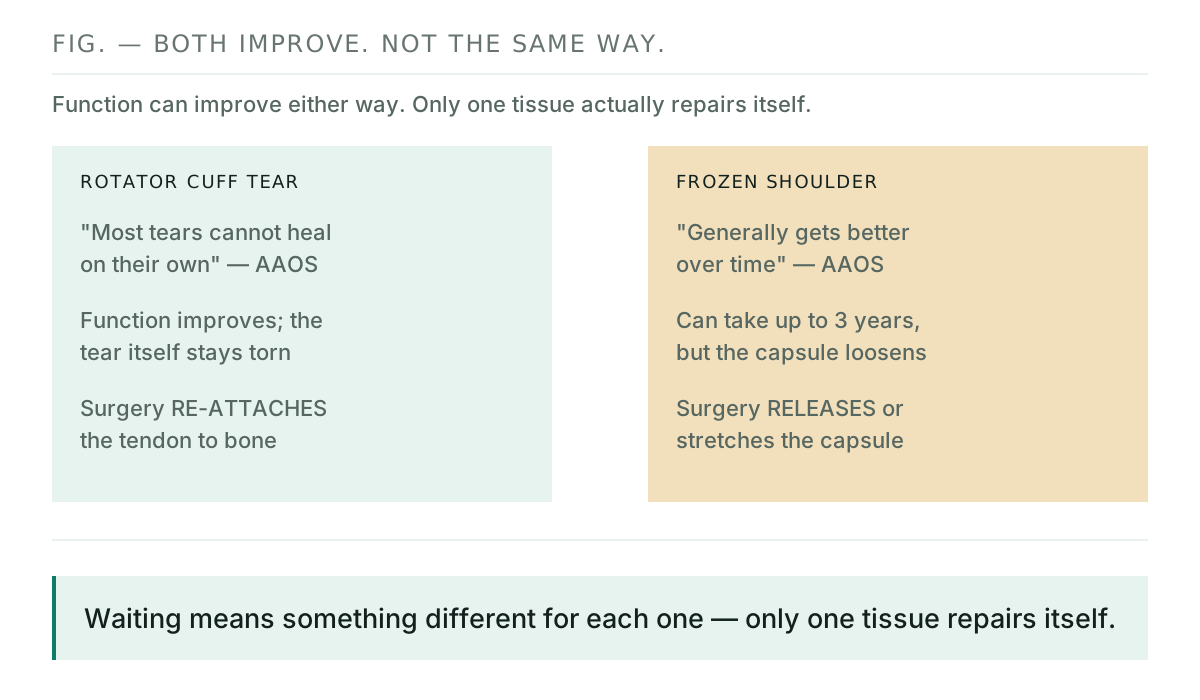
On frozen shoulder, AAOS says the opposite: it "generally gets better over time without surgery, although it may take up to 3 years." That is not symptom management around a permanent problem. The stiff capsule itself is the thing getting better, on its own timeline, with or without treatment speeding it along.
Why one gets a scan and the other gets an exam
Rotator cuff tears are, in a practical sense, visible. AAOS notes that "an MRI or ultrasound can show the soft tissues, like the rotator cuff tendons," and will show "the location and size of the rotator cuff tear." There is a physical gap to photograph.
Frozen shoulder does not photograph the same way. AAOS describes the diagnosis coming from the exam itself — "people with frozen shoulder have limited range of motion both actively and passively" — while X-rays and MRI are used mainly to rule other conditions out rather than to confirm this one. A frozen shoulder can look ordinary on a scan and still be genuinely frozen.
Different risk factors, and one honest overlap
Rotator cuff risk tracks with mechanical life: age over 40, repetitive overhead work or sport, and, per AAOS, reduced blood supply in an aging tendon that leaves it less able to repair itself even when it tries.
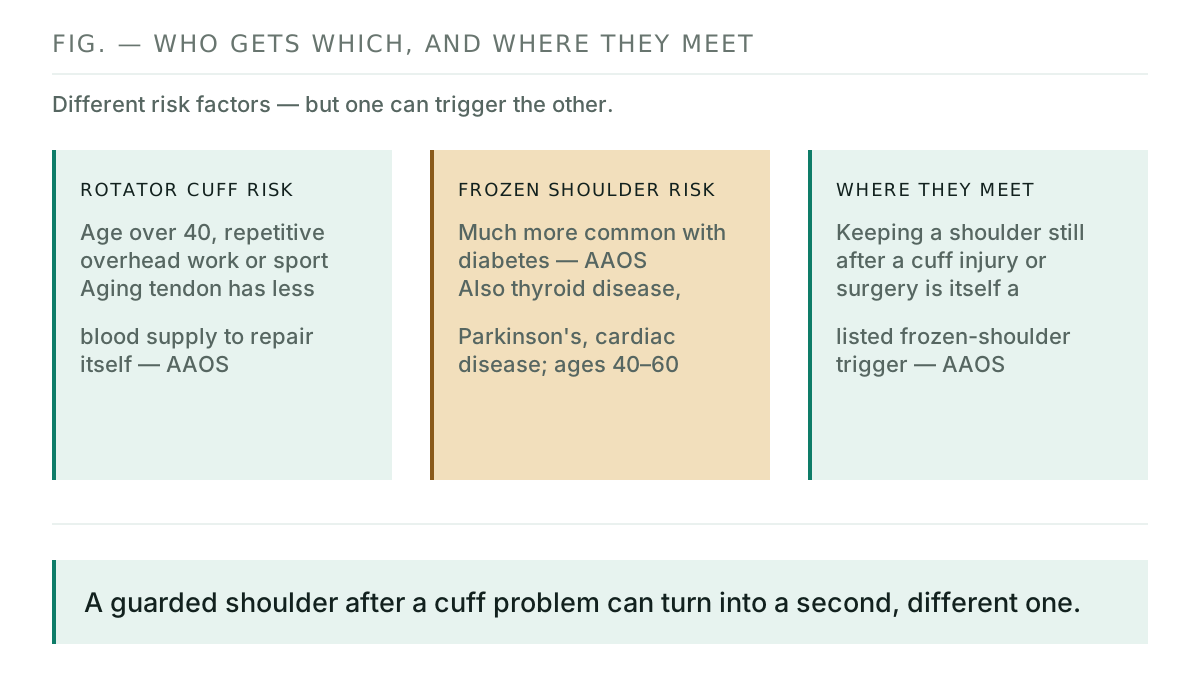
Frozen shoulder risk tracks with something else entirely. AAOS states it "occurs much more often in people with diabetes," and lists hypothyroidism, hyperthyroidism, Parkinson's disease and cardiac disease as associated conditions, most common between the ages of 40 and 60 and more frequent in women.
The honest overlap: AAOS also lists immobilization after surgery or injury as a trigger for frozen shoulder. A shoulder kept still too long while a cuff tear is managed — brace, sling, sheer avoidance — can go on to freeze on top of the original problem, which is exactly why "just rest it" is not free advice for either condition.
When surgery enters, it means opposite things
Surgery for a rotator cuff tear adds structure back. AAOS: "surgery to repair a torn rotator cuff most often involves re-attaching the tendon to the head of humerus." Something that came apart gets put back together.
AAOS lists manipulation under anesthesia and shoulder arthroscopy, "often combined," and notes surgery is typically offered during the frozen stage specifically. The goal is not reattachment — it is releasing or stretching a capsule that has tightened too far to loosen on its own in a reasonable time. American Academy of Orthopaedic Surgeons
One surgery closes a gap. The other opens one back up. Asking which kind of surgery is on the table is a fair way to confirm which condition a doctor actually means.
The part most comparisons leave out
Frozen shoulder is described as uncommon to recur, but AAOS adds a real caveat: it "can recur (come back), especially if a contributing factor like diabetes is still present." The underlying risk factor, not just the shoulder, is what needs managing.
And the two are not always cleanly separate stories. A man can tear his rotator cuff, favor the arm for months out of reasonable caution, and end up treating a second condition — frozen shoulder — that grew out of protecting the first one. Neither AAOS page frames this as rare.
What to do with this
- Redo the lift test. Someone else moving the arm further than you can on your own still separates a weakness problem from a stiffness problem fastest.
- Ask what a scan is actually for. If it is meant to size a tear, that is rotator cuff logic. If a doctor says imaging mainly rules other things out, that fits frozen shoulder.
- Ask what surgery would actually do. Re-attaching a tendon and releasing a capsule are opposite procedures with opposite goals.
- Don't over-protect a healing shoulder. Prolonged stillness after a cuff injury is a listed way to end up with frozen shoulder as well.
- If it's frozen shoulder, plan in years, not weeks. Up to three years to resolve is the honest timeline, treated or not.
Same joint, same decade of life, and two tissues that fail — and recover — on completely different terms. Knowing which one is actually happening is what turns "just give it time" from a guess into an actual plan.
Key takeaways
- A rotator cuff tear is a tendon detaching from bone; frozen shoulder is the joint capsule thickening and forming adhesions — AAOS.
- Most rotator cuff tears cannot heal on their own, though function can still improve without surgery — AAOS.
- Frozen shoulder generally gets better over time without surgery, though it can take up to three years — AAOS.
- Rotator cuff tears show up directly on MRI or ultrasound; frozen shoulder is diagnosed mainly by limited motion on exam — AAOS.
- Frozen shoulder occurs much more often with diabetes, and is linked to thyroid disease, Parkinson's disease and cardiac disease — AAOS.
- Immobilizing a shoulder after a cuff injury or surgery is itself a listed trigger for frozen shoulder — AAOS.
- Surgery repairs a torn cuff by re-attaching the tendon; surgery for frozen shoulder releases or stretches the capsule instead — AAOS.
Where to go from here
This is the sixth article in the joints section. The rest are being written now, one at a time:
- Joint Pain After 40 — the pillar guide, covering osteoarthritis, rheumatoid arthritis and post-traumatic arthritis.
- Knee Pain: What's Different About Where It Hurts — front, outside, behind, or sudden swelling, and what each one usually means.
- Shoulder Pain After 40: What the Arm Can't Do — the ten-second test that separates a weak shoulder from a stiff one.
- Hip Pain Explained: Why It's Often Not the Hip — sudden or gradual, and why it is often felt somewhere other than the hip.
- Osteoarthritis vs Rheumatoid Arthritis: What Differs — how long the stiffness lasts, whether both sides hurt, and why one of the two has a clock on it.
- Knee replacement — what gets tried first, and what recovery involves.
- Meniscus tear — injury or wear, and why imaging can blur the two.
- Glucosamine for joint pain — what the evidence actually shows.
Frequently asked questions
Can a torn rotator cuff heal on its own?
No, and AAOS says so directly: "even though most tears cannot heal on their own, you can often achieve good function without surgery." Physical therapy and strengthening improve what the shoulder can do, but the torn tendon itself stays torn unless it is surgically repaired.
Does frozen shoulder ever go away without treatment?
Usually, yes. AAOS states that frozen shoulder "generally gets better over time without surgery, although it may take up to 3 years." The stiff capsule itself loosens, which is the opposite of what happens with a torn tendon.
How do doctors tell the two apart before ordering a scan?
Largely by how the shoulder moves with help. If someone else can move the arm through a fuller range than the person can manage alone, the range exists and the problem is weakness. If motion is limited even with help, AAOS lists that as frozen shoulder, which is diagnosed by exam rather than imaging.
What actually causes a frozen shoulder?
AAOS describes the shoulder capsule thickening and becoming stiff and tight, with bands of tissue called adhesions forming inside it. It occurs much more often in people with diabetes, and is also associated with thyroid disease, Parkinson's disease and cardiac disease.
Can a rotator cuff injury turn into a frozen shoulder?
Yes. Immobilizing a shoulder after an injury or surgery is a listed trigger for frozen shoulder, according to AAOS, so a shoulder guarded too long after a cuff problem can go on to develop a second, different problem.
Does surgery mean the same thing for both conditions?
No. Surgery for a rotator cuff tear, per AAOS, most often means re-attaching the tendon to the bone. Surgery for frozen shoulder, when needed, means manipulation under anesthesia or releasing the tight capsule — adding structure back versus removing a restriction.
Sources
- American Academy of Orthopaedic Surgeons (OrthoInfo) — Rotator Cuff Tears
- American Academy of Orthopaedic Surgeons (OrthoInfo) — Rotator Cuff Tears: Frequently Asked Questions
- American Academy of Orthopaedic Surgeons (OrthoInfo) — Frozen Shoulder
- American Academy of Orthopaedic Surgeons (OrthoInfo) — Shoulder Pain and Common Shoulder Problems

Male Health Guide Editorial Team
We write about the health problems men over 40 actually search for at 3 a.m. — and we say plainly when the evidence for a popular product is thin. We do not invent credentials and we do not publish sponsored copy as editorial. Read more about how we work.
Medical disclaimer: This article is general information comparing common features of rotator cuff tears and frozen shoulder, and is not medical advice. It is not a diagnosis, not a recommendation to start or stop any treatment, and not a substitute for examination by someone who can see and test the shoulder in question. Please speak to a qualified healthcare professional about your own situation.