Joint Pain After 40: What's Actually Wearing Down
Short answer
Joint pain after 40 is not one problem. It is usually one of three different diseases with the same symptom — ordinary wear (osteoarthritis), an autoimmune condition (rheumatoid arthritis), or the delayed effect of an old injury (post-traumatic arthritis) — and each one calls for a different next step, not the same ice pack and hope.
It rarely announces itself. A knee that used to forgive a long walk now has an opinion about stairs. A shoulder that reached overhead without a thought now needs a run-up. Somewhere in his forties, a man starts describing himself as "getting old," as if that were a diagnosis rather than an excuse to stop asking what is actually happening.
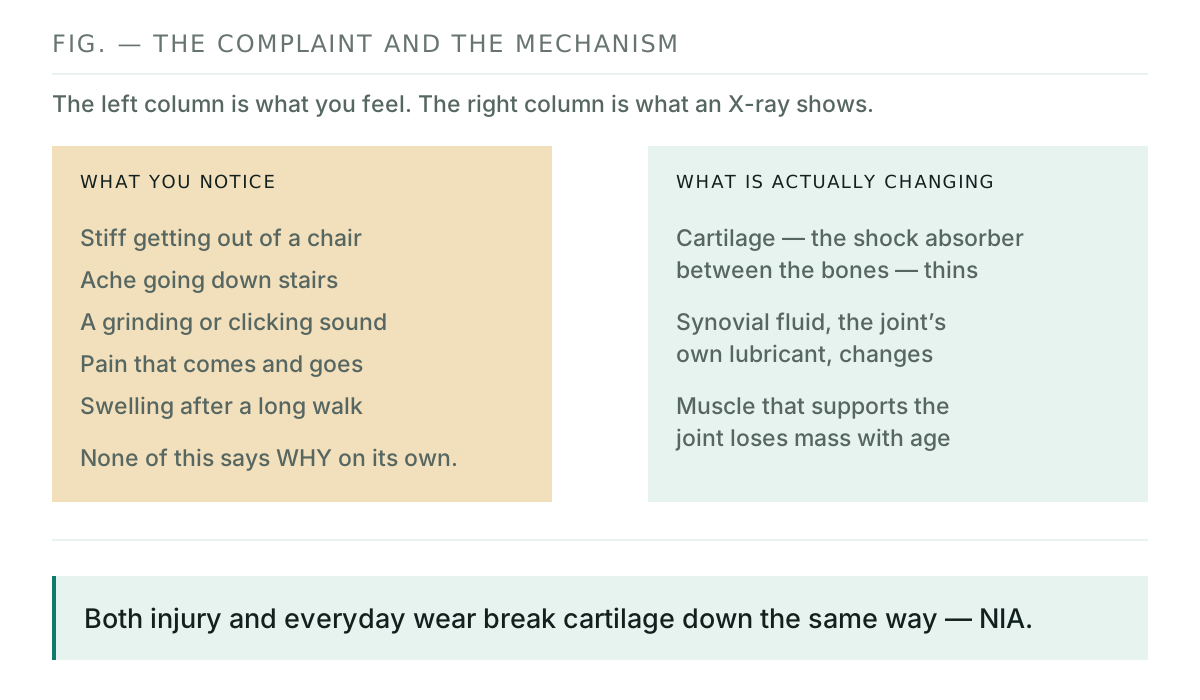
Something is happening, and it has a mechanism, not just an age. Cartilage thins. The fluid that lubricates the joint changes. The muscle that used to take some of the load quietly loses mass. None of that shows up as a single test result you can point to, which is exactly why so much joint pain gets waved off with a shrug instead of a plan.
This is the guide to the section. It does not settle any one question on its own — each one below has, or will have, its own article. What it does is put the questions in the right order, starting with the one almost nobody asks first: which of three different diseases is actually doing this.
We earn nothing from any of this. There are no affiliate links on this site, nothing here is sponsored, and we do not sell a joint supplement, a brace or a clinic referral, which is why this page can say plainly where the evidence is solid and where it runs out.
What actually wears down after 40
Cartilage is the tissue that covers the ends of the bones inside a joint. The National Institute on Aging describes it plainly: cartilage helps prevent friction between bones and acts as a shock absorber during ordinary physical activity. It is not padding in a decorative sense — it is the part doing the actual work every time you take a step.
Two separate things can break that shock absorber down, and the Institute is specific that both routes lead to the same place: acute injury and everyday wear and tear can both cause cartilage to break down, and if the loss is severe enough, the bone underneath begins to change as well. That is the point where the joint stops being merely stiff and starts being arthritic.
Based on national survey data collected between 2017 and March 2020, the condition most commonly affects the hands, hips, back and knees. Centers for Disease Control and Prevention
Cartilage is not the only thing changing. NIAMS describes osteoarthritis as damage that can extend to the tendons, ligaments, the synovium lining the joint, the bone itself, and — in the knee specifically — the meniscus. And separately from all of that, muscle mass around a joint declines with age, which matters because that muscle was quietly absorbing load the cartilage no longer has to handle alone.
Which joint is talking, and what that usually means
Not every joint wears the same way, and the National Institute on Aging is specific enough about each one to be useful rather than generic.
Hands. Hand osteoarthritis tends to run in families, and it shows up as small, bony knobs at the joints closest to the nails, with fingers that can become enlarged, stiff or numb. The base of the thumb is a common site.
Knees. Among the joints most commonly affected, with stiffness, swelling and a grinding or scraping sensation that makes stairs and getting out of a chair the two earliest complaints.
Hips. Pain and stiffness in the joint itself, but also — and this catches people off guard — pain felt in the groin, inner thigh or buttocks rather than where the joint actually is.
Spine. Stiffness and pain in the neck or lower back, and in some cases pressure on nearby nerves that produces weakness, tingling or numbness somewhere else entirely — a reminder that the site of the ache and the site of the damage are not always the same place.
Wear, autoimmune, or injury: three different diseases
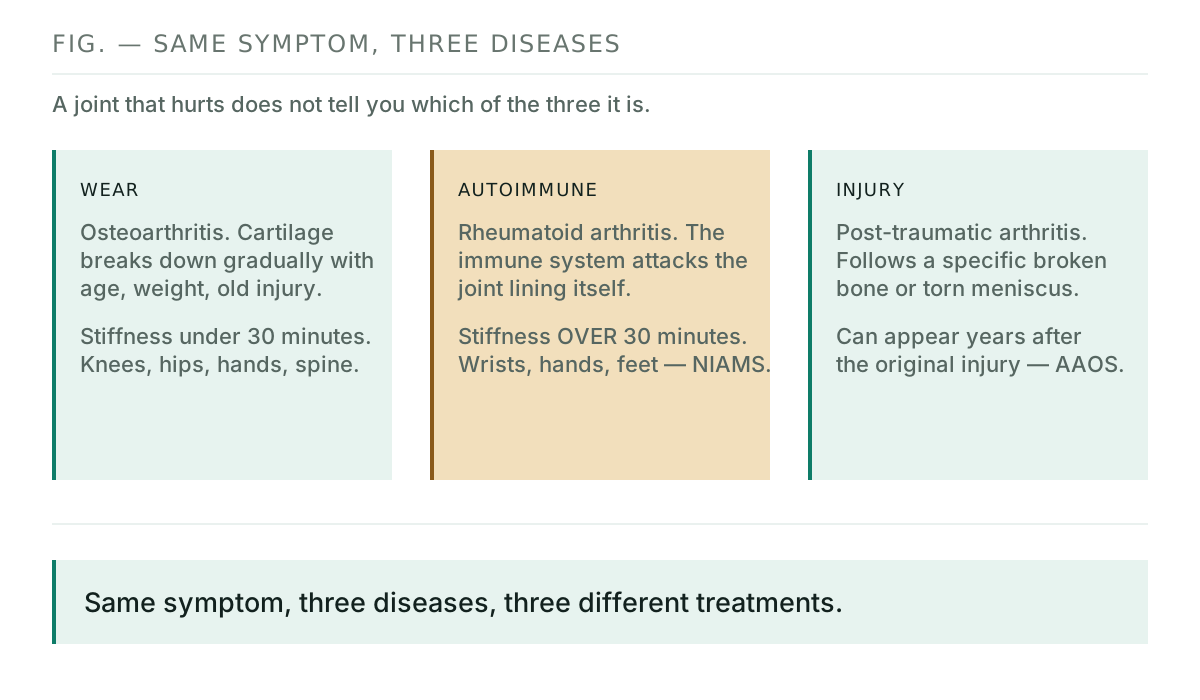
Ordinary wear is osteoarthritis, and it is what most of this article is about: cartilage breaking down gradually with age, weight and old mechanical stress. The American Academy of Orthopaedic Surgeons describes it as a "degenerative, wear-and-tear type of arthritis" in which cartilage becomes frayed and rough, and in advanced cases the bone ends rub directly against each other.
Rheumatoid arthritis is a different disease wearing the same clothes. NIAMS defines it as a chronic autoimmune disease: the immune system, which normally protects the body, instead attacks its own tissue. It can occur in any joint, but NIAMS notes it is more common in the wrists, hands and feet — a distribution pattern that already looks different from osteoarthritis before a single test is run.
Post-traumatic arthritis is the third path, and the one people forget to ask about because it does not feel new. The American Academy of Orthopaedic Surgeons describes it as arthritis that develops after an injury to the joint — a broken bone, a meniscal tear, a ligament injury — and it can surface years after the original event, long after the injury itself seemed to have healed.
Why the length of morning stiffness is a real clue
This is one of the few genuinely load-bearing details a man can notice on his own, before any appointment. NIAMS describes osteoarthritis stiffness as a symptom that usually lasts less than 30 minutes after getting out of bed. Rheumatoid arthritis is described the other way: joint stiffness lasting longer than 30 minutes, typically after waking or after resting for a long period.
Thirty minutes sounds like a small detail to hang a distinction on. It is not. A knee that loosens up by the second cup of coffee is behaving like ordinary wear. A hand that is still locked an hour later, especially alongside stiffness in the other hand too, is behaving like something the immune system is doing on purpose — and that changes who should see it and how soon.
Why a small weight change moves the number a lot
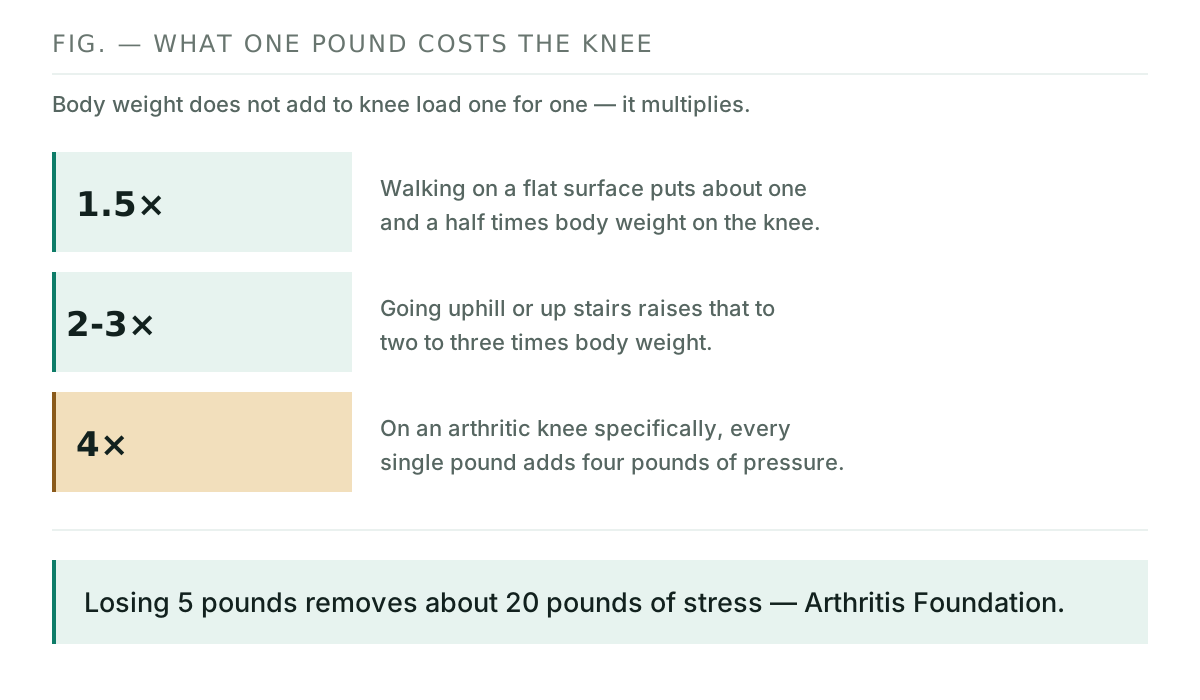
Body weight does not add to knee load one pound at a time. According to the Arthritis Foundation, walking on a flat surface puts roughly one and a half times body weight through the knee, and that climbs to two or three times body weight going uphill or up stairs. On a knee that already has osteoarthritis, the multiplier is worse still: every single pound of body weight adds about four pounds of pressure.
Run that backwards and the number becomes useful rather than discouraging. The Arthritis Foundation's own example: a five-pound weight loss removes roughly twenty pounds of stress from the joint. Their broader finding is just as direct — the more weight lost, the lower the speed at which the disease progresses. This is one of the very few joint interventions with a number attached to it that a man can actually verify on his own scale.
When it stops being "just" wear
Most joint pain after 40 is gradual, and gradual things can wait for a normal appointment. A few patterns should not wait.
- A joint that is suddenly hot, red, swollen and painful without an obvious injury.
- Pain after a fall or impact that stops you from bearing weight on the joint at all.
- A fever alongside joint swelling.
- Morning stiffness lasting well over 30 minutes, day after day, especially in both hands or wrists at once.
None of those are common. All of them are reasons to be seen promptly rather than to wait and see, because each one has a version of itself that genuinely is an emergency, and telling that version apart from the ordinary one is exactly the kind of judgment a doctor's exam and a doctor's blood work exist to make.
What actually helps, by the evidence
There is no cure for osteoarthritis. The National Institute on Aging is straightforward about that: there is no way to reverse it, but the symptoms can usually be managed with lifestyle changes and medication. That is a more useful sentence than it sounds, because it rules out the products that quietly promise reversal and points at what is actually left on the table.
The CDC's own recommended approach rests on three legs: staying physically active, keeping a healthy weight, and protecting the joint from unnecessary additional stress. The National Institute on Aging adds the specifics — low-impact activity such as walking, cycling, swimming or tai chi, started slowly and adjusted with a doctor's input, plus stretching and balance work for flexibility and strength.
Medication has a real role without being the whole answer. Over-the-counter pain relievers and topical arthritis creams help many men day to day, and a doctor may add a prescription or an injection into the joint itself for a flare. On injections specifically, the American Academy of Orthopaedic Surgeons notes that doctors typically limit them to three or four per joint per year — a detail worth knowing before assuming more is simply better.
Surgery sits at the far end, for joint damage that has not responded to everything above. That decision, what leads up to it and what recovery actually looks like, is a large enough question to deserve its own article rather than a paragraph here.
What to do with this
The useful move is not to decide you have "arthritis" in general. It is to work out which of the three diseases above you are actually dealing with, because the answer changes what happens next.
- Time your morning stiffness. Under 30 minutes points one way; well over 30 minutes, especially in both hands, points the other.
- Note whether an old injury is involved. A joint that was broken, torn or operated on years ago behaves differently from one that never was.
- Weigh yourself before you dismiss it as too small to matter. The math above says otherwise, and it is one of the few changes fully within your control.
- Stay active rather than resting completely. Low-impact movement is the recommendation from every source in this article, not just one of them.
- Get seen promptly for anything hot, sudden, or accompanied by fever — and get seen eventually for everything else.
None of that requires you to already know which disease you have. It requires you to bring the right details to the appointment, which is the part a fifteen-minute visit rarely has time to draw out of you unprompted.
Key takeaways
- About 33 million U.S. adults have osteoarthritis, most commonly in the hands, hips, back and knees — CDC.
- Cartilage acts as a shock absorber, and both acute injury and everyday wear and tear can break it down — NIA.
- Osteoarthritis is mechanical wear; rheumatoid arthritis is the immune system attacking the joint lining itself — NIAMS.
- Morning stiffness under 30 minutes suggests wear; over 30 minutes suggests an autoimmune process — NIAMS.
- Post-traumatic arthritis can appear years after a broken bone or torn meniscus — AAOS.
- Every pound of body weight adds about four pounds of pressure on an arthritic knee; losing five pounds removes about twenty — Arthritis Foundation.
- There is no cure for osteoarthritis, but it can usually be managed with activity, weight control and medication — NIA.
Where to go from here
This guide opens the section. It is the first article published here — the rest are being written now, one at a time, and will link in as each one goes live:
- Knee Pain: What's Different About Where It Hurts — front, outside, behind, or sudden swelling, and what each one usually means.
- Shoulder Pain After 40: What the Arm Can't Do — the ten-second test that separates a weak shoulder from a stiff one.
- Hip Pain Explained: Why It's Often Not the Hip — sudden or gradual, and why it is often felt somewhere other than the hip.
- Osteoarthritis vs Rheumatoid Arthritis: What Differs — how long the stiffness lasts, whether both sides hurt, and why one of the two has a clock on it.
- Rotator Cuff vs Frozen Shoulder: Two Fixes, Not One — one tissue heals on its own given time, the other does not, and surgery means opposite things for each.
- Knee replacement — what gets tried first, and what recovery involves.
- Meniscus tear — injury or wear, and why imaging can blur the two.
- Glucosamine for joint pain — what the evidence actually shows.
Frequently asked questions
What is the difference between osteoarthritis and rheumatoid arthritis?
Osteoarthritis is mechanical wear: cartilage breaking down gradually with age, weight and old injury. Rheumatoid arthritis is autoimmune: the immune system attacks the joint lining itself, according to NIAMS. They can produce similar pain but need very different treatment.
How long should morning stiffness last?
NIAMS describes osteoarthritis stiffness as usually lasting less than 30 minutes after waking. Rheumatoid arthritis stiffness is described as lasting longer than 30 minutes, and often an hour or more. The length itself is a genuine clue, not just a detail.
Does losing weight really help joint pain?
Yes, disproportionately. The Arthritis Foundation notes that every pound of body weight adds about four pounds of pressure on an arthritic knee, so a five-pound loss removes roughly twenty pounds of stress — and more weight lost is linked to slower disease progression.
Is joint pain after 40 always arthritis?
No. It can also be post-traumatic arthritis following a specific injury such as a broken bone or a meniscus tear, sometimes appearing years afterward, according to the American Academy of Orthopaedic Surgeons. Not every ache after 40 has a disease name yet.
Which joints does osteoarthritis affect most?
The CDC lists the hands, hips, back, and knees as the joints most commonly affected. The National Institute on Aging adds that hand osteoarthritis tends to run in families, while knee and hip osteoarthritis are more tied to weight and mechanical load.
When should I see a doctor about joint pain?
Promptly for a joint that is suddenly hot, red and swollen, for pain following an injury that stops you bearing weight, or for stiffness lasting over 30 minutes every morning. Gradual, activity-related ache is still worth mentioning at your next visit, just not an emergency.
Sources
- Centers for Disease Control and Prevention — Osteoarthritis
- NIAMS (National Institutes of Health) — Osteoarthritis
- NIAMS (National Institutes of Health) — Rheumatoid Arthritis
- National Institute on Aging (NIH) — Osteoarthritis
- Arthritis Foundation — Why Weight Loss Matters
- American Academy of Orthopaedic Surgeons (OrthoInfo) — Arthritis of the Knee

Male Health Guide Editorial Team
We write about the health problems men over 40 actually search for at 3 a.m. — and we say plainly when the evidence for a popular product is thin. We do not invent credentials and we do not publish sponsored copy as editorial. Read more about how we work.
Medical disclaimer: This article is general information about joint pain and the conditions that cause it, and is not medical advice. It is not a diagnosis, not a recommendation to start or stop any treatment, and not a substitute for an examination by someone who can see and test the joint in question. Please speak to a qualified healthcare professional about your own situation.