Klinefelter Syndrome: The Extra X Many Men Never Know About
Short answer
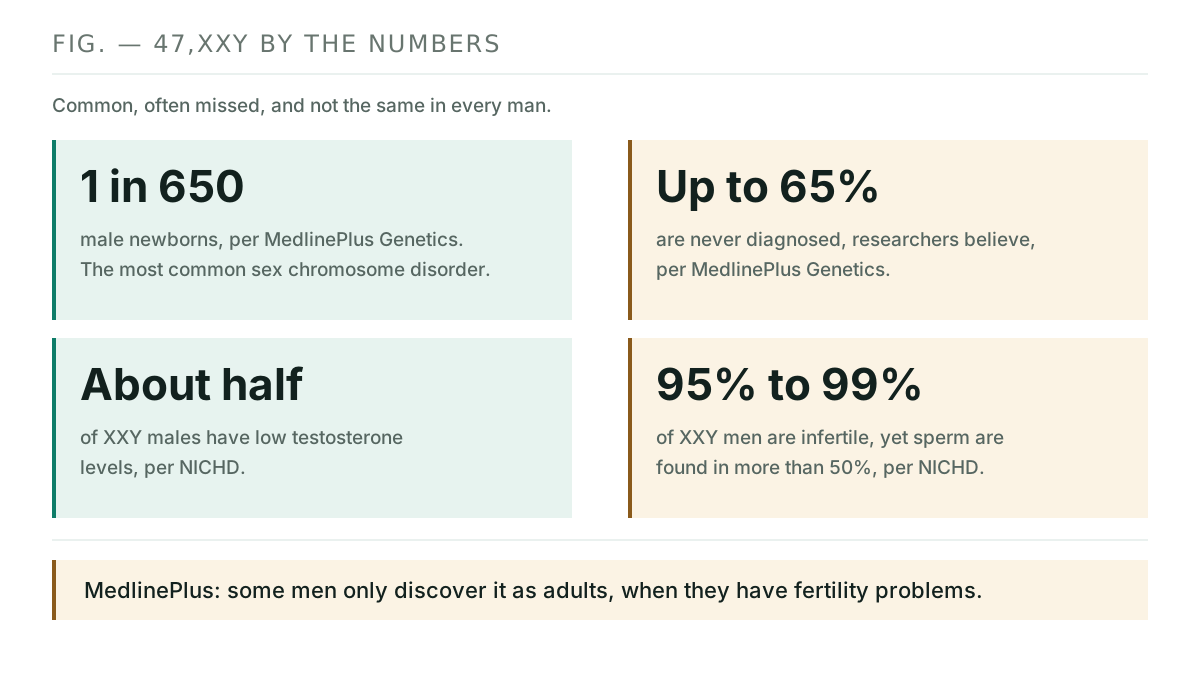
Klinefelter syndrome (47,XXY) is a genetic condition in which a male has an extra X chromosome. It affects about 1 in 650 male newborns, yet researchers believe up to 65% are never diagnosed. It often means small testes and lower testosterone, and MedlinePlus says some men only discover it as adults, when they have fertility problems.
Klinefelter syndrome is present from birth, yet many cases are found late, or never. The reason is in the condition itself: MedlinePlus Genetics says the features can be so mild that it is not diagnosed until puberty or adulthood. For some men, the first clue only appears when they have fertility problems.
This article covers what Klinefelter syndrome is, how common it is, why so many cases go undiagnosed, how it affects testosterone, the signs in adult men, how it is diagnosed, what testosterone therapy can and cannot do, fertility, the long-term health risks, and the outlook. It sits in this site's Testosterone section because, for many men, low testosterone is the part of it they actually feel.
What Klinefelter syndrome is
MedlinePlus describes Klinefelter syndrome, also called 47,XXY, as a genetic condition that occurs in males when they have an extra X chromosome, and says it can cause problems with development and fertility. MedlinePlus Genetics calls it a chromosomal condition that affects male development, and explains the mechanism: most people have 46 chromosomes in each cell, two of them sex chromosomes. Males typically have one X and one Y (46,XY). Most often, people with Klinefelter syndrome have the usual X and Y plus one extra X, for a total of 47 (47,XXY).
MedlinePlus Genetics says the extra copies of genes on that X chromosome may disrupt many aspects of development and are responsible for the common signs and symptoms. It also describes a mosaic form, in which only some cells carry the extra X, and says it is thought that approximately 10 percent of people with Klinefelter syndrome have the mosaic form; they may have milder signs, depending on how many cells carry the extra chromosome. Conditions with more than one extra sex chromosome, such as 48,XXYY or 48,XXXY, are described as variants, and MedlinePlus Genetics notes that doctors have started to classify them as separate conditions.
How common it is, and whether it runs in families
MedlinePlus Genetics states that Klinefelter syndrome affects about 1 in 650 male newborns, and that it is the most common sex chromosome disorder. The MedlinePlus encyclopedia gives a range instead: about 1 out of 500 to 1,000 male infants. Either way, it is far from rare.
MedlinePlus Genetics states that Klinefelter syndrome is not inherited. It says the extra X usually arises during the formation of eggs or sperm in one of the parents, while in the mosaic form it arises as a random error during cell division early in fetal development. The MedlinePlus encyclopedia says it occurs as a random event, that there is no exact cause, and that the condition usually doesn't reoccur in other family members. It also notes that women who get pregnant after age 35 are slightly more likely to have a male child with this syndrome than younger women.
Why so many men never find out
This is the part of the condition that gives this article its title. MedlinePlus Genetics states that "researchers believe that up to 65 percent of people with Klinefelter syndrome are never diagnosed." In some cases, it says, the features are so mild that the condition is not diagnosed until puberty or adulthood.
The National Institute of Child Health and Human Development (NICHD) explains why. Because XXY males do not really appear different from other males, and because they may have no symptoms or only mild ones, they often don't know they have it. Whether a man has visible symptoms depends on many factors, it says, including how much testosterone his body makes, whether he is mosaic, and his age when the condition is diagnosed and treated. MedlinePlus adds that some men may never know, or only discover it as adults when they have fertility problems.
How it affects testosterone
MedlinePlus Genetics says people with Klinefelter syndrome typically have small testes that produce a reduced amount of testosterone, a pattern it calls primary testicular insufficiency. Without treatment, it says, the shortage of testosterone can lead to delayed or incomplete puberty, breast enlargement (gynecomastia), decreased muscle mass, decreased bone density, a reduced amount of facial and body hair, and fatigue.
The NICHD puts a number on it: about half of males with XXY chromosomes have low testosterone levels. It explains that many physical symptoms result from low testosterone, and that the degree depends on how much testosterone is needed at a given age and how much the body makes or has available. That helps explain why the condition can look so different from one man to the next. In our reading, that variation is also why a testosterone result is not the test that settles the question; the chromosome test is, as covered below. How testosterone is measured, and why the timing of the test matters, is covered in this site's testosterone test article.
The signs in adult men
The NICHD lists features an adult male with Klinefelter syndrome may have: infertility, with nearly all men with it unable to father a biologically related child without help from a fertility specialist; small testes, with the possibility of the testes shrinking slightly after the teen years; lower testosterone levels, which lead to less muscle, hair, and sexual interest and function; and breasts or breast growth (gynecomastia). It says that in some cases breast growth can be permanent, and about 10% of XXY males need breast reduction surgery.
MedlinePlus Genetics notes that the other physical changes are usually subtle. Most commonly, affected people are taller than average, and 2 to 3 inches taller than would be expected for their family. The MedlinePlus encyclopedia's broader symptom list includes small, firm testicles, abnormal body proportions (long legs, short trunk), enlarged breasts, less than normal pubic, armpit and facial hair, tall height, small penis size, infertility, sexual problems, and mental health conditions such as depression or anxiety. Breast growth in men has its own article on this site, the gynecomastia page.
How it's diagnosed
MedlinePlus says Klinefelter syndrome may first be diagnosed when a man comes to his health care provider because of infertility, or when a male child does not develop normally during puberty. Some cases are discovered during prenatal tests for other genetic conditions.
The tests it says may be performed are karyotyping, which checks the chromosomes, and semen analysis, along with blood tests to check hormone levels, including estradiol (a type of estrogen), follicle stimulating hormone, luteinizing hormone, and testosterone. In our reading, the karyotype is the test that names the condition, and the hormone tests show its effects. The difference between the testosterone numbers a lab may report is explained in this site's free vs total testosterone article.
What testosterone therapy can and can't do
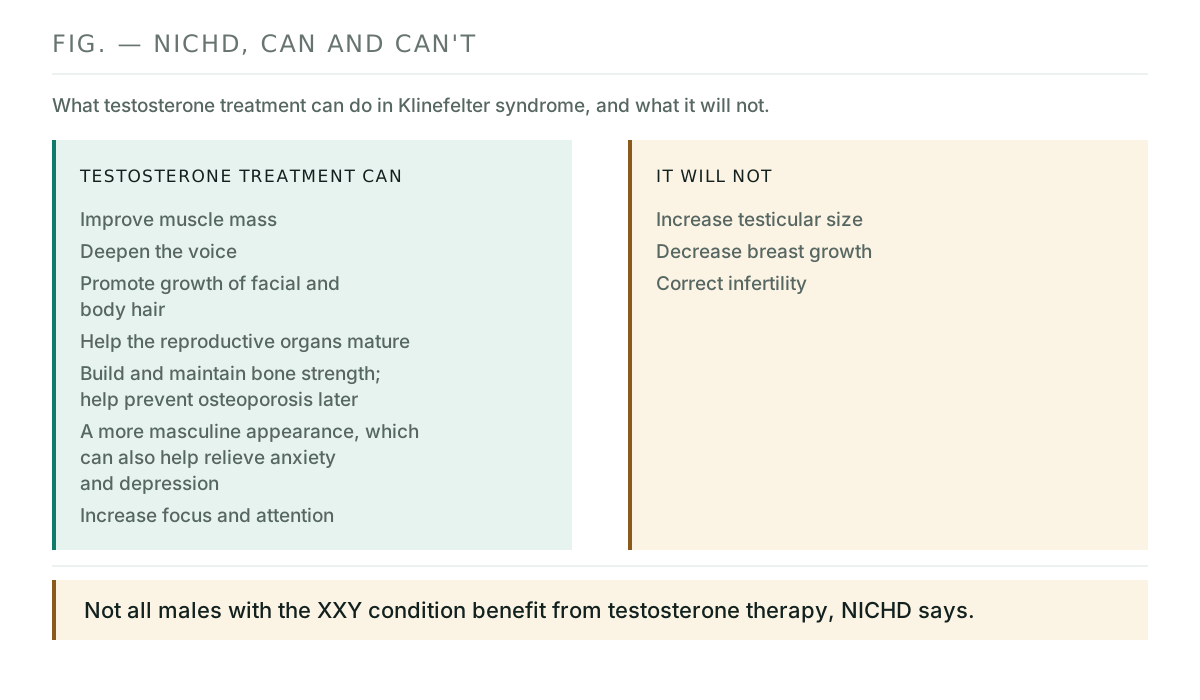
MedlinePlus states that while there is no cure, treatment can help improve symptoms, and that testosterone therapy may be prescribed. It lists what that can help with: growing body hair, deepening the voice, strengthening bones, improving muscle strength and bulk, improving concentration, improving mood and self-esteem, and increasing energy and sex drive. The NICHD's list overlaps, and also includes helping the reproductive organs to mature, helping prevent osteoporosis in later years, and producing a more masculine appearance, which can also help relieve anxiety and depression.
The NICHD is equally clear about the limits. "Testosterone supplementation will not increase testicular size, decrease breast growth, or correct infertility." It also says not all males with the XXY condition benefit: for men whose testosterone is low to normal, the benefits are less clear than for men whose level is very low. Side effects, which it describes as generally mild, can include acne, skin rashes from patches or gels, breathing problems (especially during sleep), and a higher risk of an enlarged prostate gland or prostate cancer in older age.
Testosterone can be given as injections every 2 to 3 weeks, as pills, or through the skin with a patch or gel, according to the NICHD, which advises working closely with an endocrinologist. It also says the earlier symptoms are recognized and treated, the more likely they can be reduced, with early puberty an especially helpful time to start — but that treatment can bring benefits at any age. How testosterone treatment works in general is covered in this site's testosterone replacement therapy article.
Fertility
The NICHD states that between 95% and 99% of XXY men are infertile, because they do not produce enough sperm to fertilize an egg naturally. But it adds a figure that changes the picture: sperm are found in more than 50% of men with Klinefelter syndrome. MedlinePlus Genetics says up to half of people with Klinefelter syndrome may be able to have children using assisted reproductive technologies.
The technique the NICHD names is testicular sperm extraction with intracytoplasmic sperm injection (TESE-ICSI): a surgeon removes sperm from the testes and places one sperm into an egg. It is frank about the trade-offs — the resulting child might have the XXY condition, the procedure is expensive and often not covered by insurance, and there is no guarantee it will work. MedlinePlus advises men with the syndrome who wish to have children to work with an infertility specialist.
Long-term health risks
MedlinePlus lists conditions that men with Klinefelter syndrome have an increased risk of, including ADHD, autism spectrum disorder, autoimmune disorders such as lupus, rheumatoid arthritis and Sjögren syndrome, breast cancer in men, depression, a rare extragonadal germ cell tumor, lung disease, osteoporosis, varicose veins, metabolic syndrome, oral health problems, and obesity.
MedlinePlus Genetics adds detail on several. It describes an increased risk of metabolic syndrome — high fasting blood glucose, high blood pressure, increased belly fat, and high cholesterol and triglycerides — and says adults also have an increased risk of tremors in the arms or hands, breast cancer (if gynecomastia develops), osteoporosis, and autoimmune disorders. On breast cancer, the NICHD says men with breasts are at higher risk than other men and need to be checked regularly. Blood sugar and blood pressure are both covered on this site, in the prediabetes and high blood pressure articles.
The outlook
The NICHD's description of adult life is worth reading in full for anyone newly diagnosed. Most men with Klinefelter syndrome, it says, have lives similar to those of men without it. They complete high school, college and other levels of education, have successful careers, and have friends and families. It adds that, contrary to research published several decades ago, males with the condition are no more likely to have serious psychiatric disorders or to get into trouble with the law.
The practical instruction comes from MedlinePlus: adult males with this condition should see their provider for regular health exams to check for and manage possible health problems. Given the list of risks above, and the fact that so many cases are found late, that is the step that turns a late diagnosis into a useful one.
Key takeaways
- Klinefelter syndrome (47,XXY) means a male has an extra X chromosome; MedlinePlus Genetics puts it at about 1 in 650 male newborns.
- Researchers believe up to 65% of people with it are never diagnosed, and some men only find out during infertility testing.
- It typically means small testes that make less testosterone; the NICHD says about half of XXY males have low testosterone levels.
- Testosterone therapy can help muscle, hair, bones and focus, but the NICHD says it will not increase testicular size, decrease breast growth or correct infertility.
- Most XXY men are infertile, yet sperm are found in more than half, and assisted reproduction has helped some conceive, with no guarantee.
Where to go from here
If Klinefelter syndrome is what brought you here, these pages cover the surrounding ground:
- Varicocele in Men Over 40 — the scrotal vein problem linked to low testosterone, and when a new one needs a check.
- Testosterone Test: How to Get It Right — one of the blood tests used in the workup.
- Testosterone Replacement Therapy Explained — how the treatment works in general.
- Gynecomastia Explained — breast growth in men, one of the adult signs.
- Low Testosterone Symptoms — the part many men actually feel.
- All testosterone articles
Frequently asked questions
What is Klinefelter syndrome?
MedlinePlus describes Klinefelter syndrome, also called 47,XXY, as a genetic condition that occurs in males when they have an extra X chromosome. It can cause problems with development and fertility, and some men have no symptoms and never know they have it.
How common is Klinefelter syndrome?
MedlinePlus Genetics states that it affects about 1 in 650 male newborns and is the most common sex chromosome disorder. The MedlinePlus encyclopedia gives a range of about 1 out of 500 to 1,000 male infants.
Can a man have Klinefelter syndrome and not know it?
Yes. MedlinePlus Genetics states that researchers believe up to 65 percent of people with Klinefelter syndrome are never diagnosed. MedlinePlus notes that some men only discover it as adults when they have fertility problems.
Does Klinefelter syndrome cause low testosterone?
Often. MedlinePlus Genetics says affected people typically have small testes that produce a reduced amount of testosterone. The NICHD states that about half of males with XXY chromosomes have low testosterone levels, and that these levels can be raised with supplemental testosterone.
Does testosterone therapy fix infertility in Klinefelter syndrome?
No. The NICHD states that testosterone supplementation will not increase testicular size, decrease breast growth, or correct infertility. It says assisted reproductive technology such as TESE-ICSI has made it possible for some men with Klinefelter syndrome to conceive, with no guarantee it will work.
How is Klinefelter syndrome diagnosed?
MedlinePlus lists karyotyping, which checks the chromosomes, and semen analysis, along with blood tests for hormone levels including estradiol, follicle stimulating hormone, luteinizing hormone and testosterone. It notes the condition may first be diagnosed when a man sees a provider because of infertility.
Sources
- MedlinePlus (National Library of Medicine) — Klinefelter syndrome
- MedlinePlus Genetics (National Library of Medicine) — Klinefelter syndrome
- Eunice Kennedy Shriver National Institute of Child Health and Human Development (NIH) — What are common symptoms of Klinefelter syndrome (KS)?
- Eunice Kennedy Shriver National Institute of Child Health and Human Development (NIH) — What are the treatments for symptoms in Klinefelter syndrome (KS)?

Male Health Guide Editorial Team
We write about the health problems men over 40 actually search for at 3 a.m. — and we say plainly when the evidence for a popular product is thin. We do not invent credentials and we do not publish sponsored copy as editorial. Read more about how we work.
Medical disclaimer: This article is general information, not medical advice. We are not doctors, and nothing here diagnoses, treats or cures any condition. Klinefelter syndrome is diagnosed with a chromosome test ordered by a qualified healthcare professional, and testosterone treatment should be managed with an endocrinologist.