High Testosterone in Men: Causes, Signs and Next Steps
Short answer
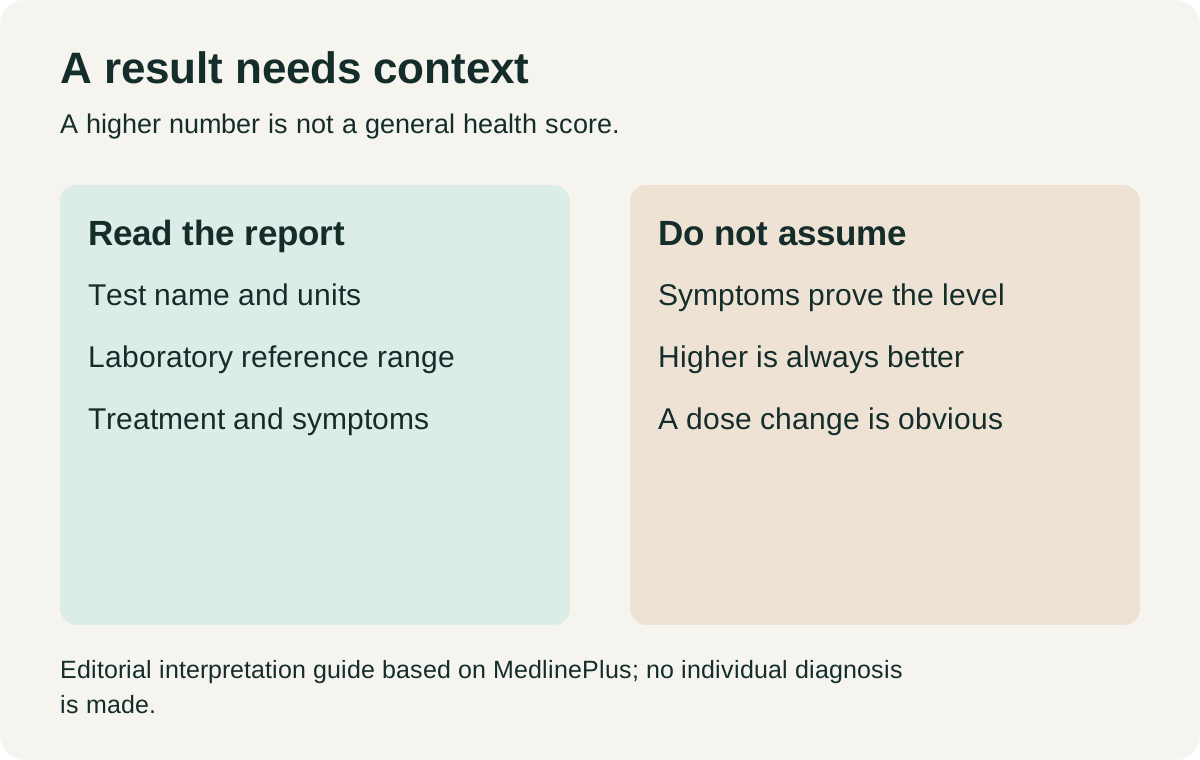
High testosterone in men should be interpreted using the laboratory range, test type, symptoms and any hormone or steroid use. Symptoms alone cannot confirm it. A result above range is a reason to discuss the context and possible causes with a clinician, not to adjust a prescription or start a hormone-lowering supplement yourself.
High testosterone in men can mean several different things in an online search: a result above the laboratory range, a change during prescribed treatment, or worries about acne and mood. Those questions overlap, but they are not interchangeable. The first step is to work out which one you actually have.
This is not a guide to pushing a number higher or lowering it on your own. It explains how to approach an unexpected result without treating every symptom as proof of a hormone problem. If you are using testosterone, bring the prescription details into the conversation rather than trying to interpret the test as if you were not on treatment.
What counts as high testosterone in men?
High testosterone usually means a result above the reference range used by the laboratory for that test. The interpretation also depends on the test type, age, symptoms and treatment. There is no single online number that can replace the laboratory report and a clinician's assessment of what it means for you.
MedlinePlus explains that a testosterone test alone cannot diagnose a condition. A flagged result is information to interpret, rather than a diagnosis printed automatically by the laboratory.
Keep the actual report, including the units and reference interval. Saying your result was high without those details can leave out the information needed to compare it with an earlier test. Our guide to normal testosterone levels and reference ranges explains why ranges do not work like a universal performance score.
A practical way to frame the appointment is to ask whether the result needs confirmation, whether your treatment or timing affects its meaning, and what would change the next step. You do not need to choose a target from someone else's laboratory report before you can ask those questions.
Can symptoms tell you that testosterone is too high?
Symptoms can raise a question but cannot establish a testosterone level. Acne and mood changes can have many explanations. Even signs associated with higher testosterone need to be considered alongside testing, medicines and medical history. A symptom checklist cannot distinguish an endocrine condition from an unrelated problem or a treatment effect.
Cleveland Clinic lists acne and mood changes among possible effects in adult men. That does not make either symptom a specific test for testosterone. It also does not mean the absence of those symptoms makes an unexpected blood result irrelevant.
If you noticed a change after beginning treatment, describe when it happened, how much it affects you and whether anything else changed. Mood, skin and sleep are worth discussing as symptoms in their own right, rather than only as a way to guess a hormone number.
Our suggestion is to write down the concern in ordinary language before interpreting it: new acne after a medicine change, for example, is a clearer account than a confident claim that your hormones must be too high. The clinician can then examine both the symptom and the possible connection.
What can cause an above-range testosterone result?
Possible explanations include hormone or anabolic steroid use and certain testicular or adrenal conditions. The significance depends on the full history and the result itself. A list of causes does not tell you which one you have, and an abnormal value does not automatically mean a serious disease is present.
MedlinePlus lists steroid use, testicular tumors and adrenal disorders among possible causes in males. Those are different situations requiring different assessments. The point of discussing them is to explain why a result should be interpreted, not to suggest that a tumor is the likely explanation for any flagged number.
A clinician needs to know about prescribed hormones, nonprescription products and substances used for training or bodybuilding. Bring product names or labels if you are unsure what they contain. That information is part of understanding exposure, not a reason to withhold care.
If you are not taking a hormone product, say so. If you are, explain what you take rather than assuming the clinician can infer it from the blood result. A short medication timeline can prevent a conversation about the test from becoming detached from the circumstances in which it was taken.
Does total testosterone mean the same thing as free testosterone?
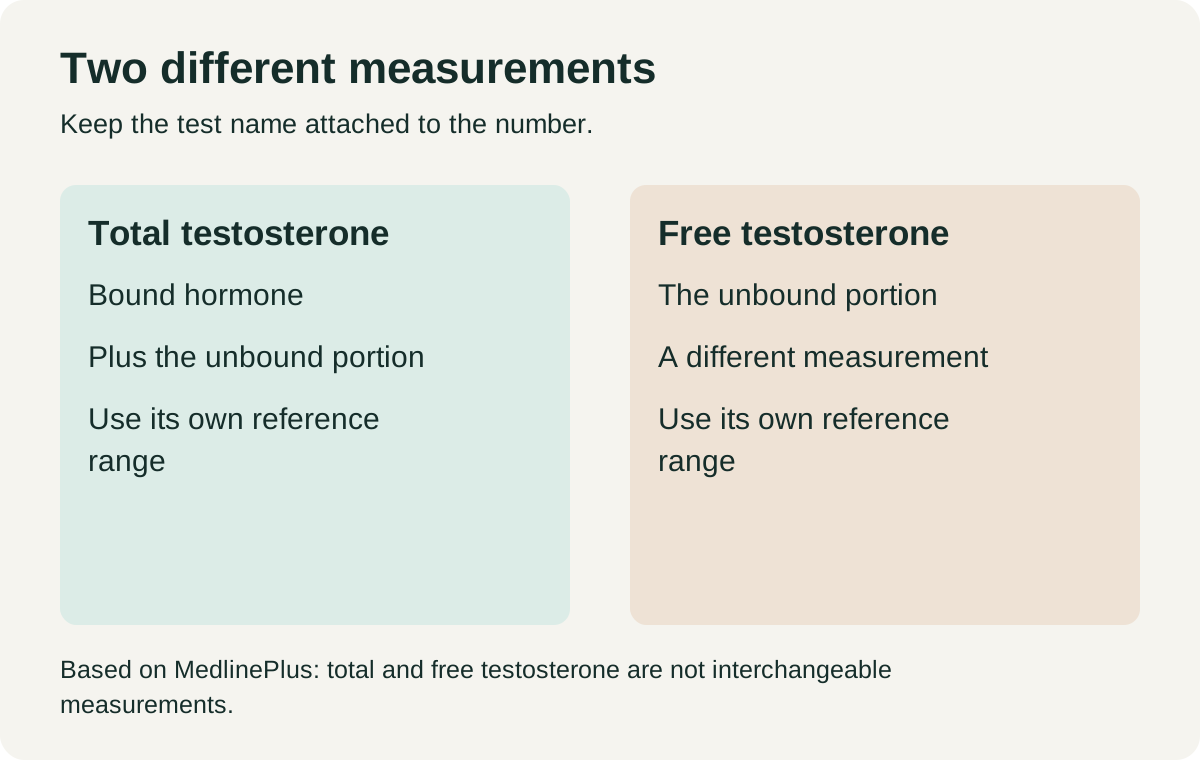
No. Total testosterone includes hormone that is bound to proteins as well as the unbound portion. Free testosterone refers to the unbound portion, and the tests answer different questions. Compare the result with the appropriate laboratory range for that measurement rather than treating total and free values as interchangeable.
The MedlinePlus testosterone test overview explains that much of the hormone is bound to sex hormone-binding globulin. A report that says total should not be compared with a free testosterone figure found elsewhere.
Our companion article on free versus total testosterone explores that distinction. For the immediate question of a high result, the useful habit is simply to keep the name of the test attached to the number.
Keep the label attached to the result. Test name, units and the laboratory's reference interval belong together. None should be substituted with a screenshot from another person's test.
Sources: MedlinePlus, Testosterone; How to Understand Your Lab Results.
If different reports seem to disagree, bring both. Ask whether the difference reflects the measurement, timing or a real clinical change instead of deciding from the numbers alone.
What if the result is high while you are on TRT?
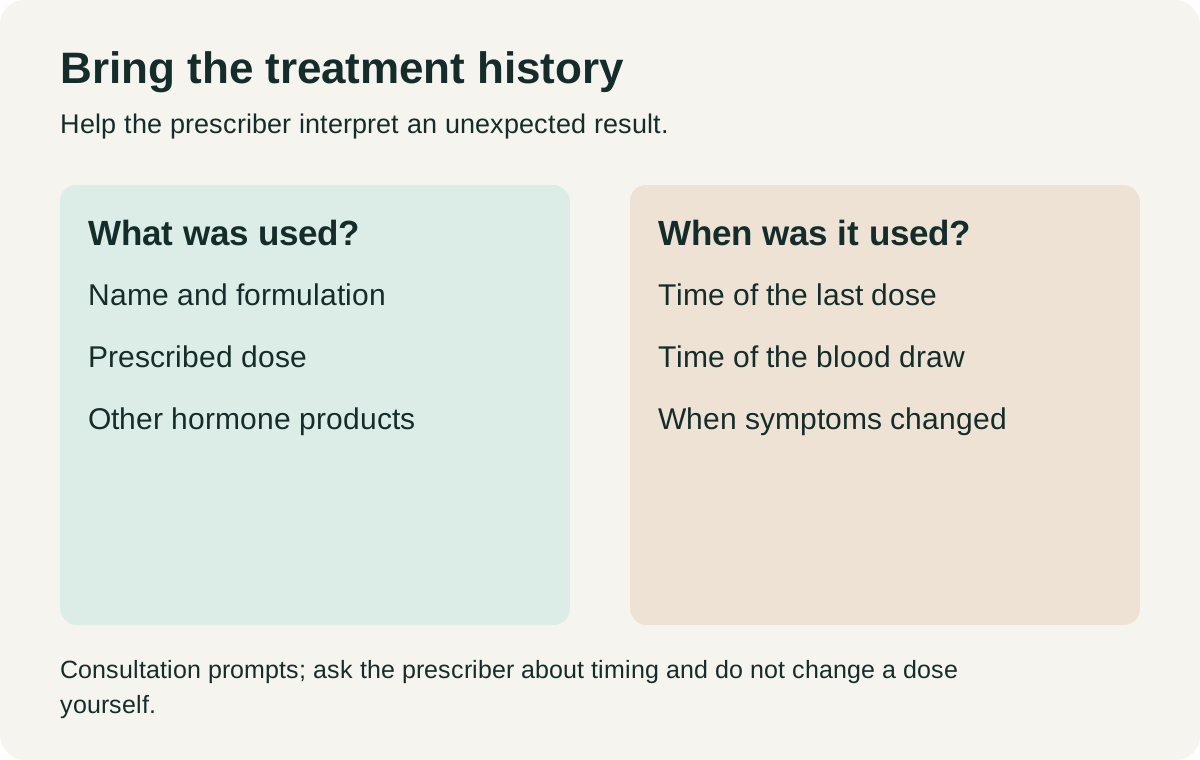
Tell the prescribing clinician the formulation, prescribed dose, when you last used it and when the blood was drawn. Monitoring is part of testosterone treatment, and the timing question depends on the formulation. Do not use a general online range to make your own dose changes or add another hormone medicine.
The Endocrine Society's patient guidance emphasizes treatment selection and follow-up. An unexpected result is something to review within that plan, not a reason to treat the prescription as a bodybuilding experiment.
Our TRT guide describes the broader process, and the article on getting the testosterone test right explains why context around collection matters. Ask the prescriber which collection timing they want for your particular preparation.
A practical message can be brief: this is my result, this is when I took the medicine, and this is when the sample was collected. Include any symptoms. Then ask what to do next. That gives the treating team the information needed to advise you, without assuming that a result outside the printed interval settles the dosing question on its own.
Is an above-range result the same as anabolic steroid misuse?
No. A laboratory finding is not proof of misuse. Prescribed replacement therapy and nonmedical use of high-dose anabolic steroids are different contexts. However, a clinician should know about any steroid or hormone use because it changes the assessment. Being open about the products used helps make that conversation safer and more accurate.
MedlinePlus distinguishes medical steroid use from misuse and describes health risks linked with misuse, including cardiovascular, mood and reproductive problems. Those findings should not be casually assigned to every man with a result above his laboratory range.
The reverse mistake is to assume that anything described as testosterone must be harmless because the body also produces it. Exposure, treatment purpose and monitoring matter. Tell the clinician about injections, gels, tablets or other products even if they were obtained outside a conventional prescription.
If stopping a nonmedical product is the concern, ask for medical help rather than trying to build a withdrawal plan from forum advice. MedlinePlus notes that withdrawal can involve symptoms such as fatigue, sleep problems and depression. The relevant question is how to get appropriate support, not whether you can manage the whole situation secretly with another supplement.
Does higher testosterone always mean better fertility or sexual function?
No. A higher blood testosterone result does not establish better fertility or sexual function. Testosterone treatment can suppress sperm production, which is why pregnancy plans belong in the treatment discussion. Symptoms, test results and reproductive goals need to be considered together rather than treated as a competition to reach the highest number.
The Endocrine Society advises against testosterone therapy when a man is planning fertility in the near term. That advice concerns the treatment and reproductive goal; it is not a claim that every naturally high testosterone result causes infertility.
Our article on testosterone and erectile dysfunction addresses the separate question of sexual symptoms. Difficulty with erections or a change in desire does not provide a reliable reading of your testosterone level, whether you suspect it is low or high.
For the appointment, be explicit about priorities. Wanting a child, improving a distressing symptom and making sense of a blood result can lead to different discussions. A treatment intended to address one concern should not be assumed to solve the others automatically.
These distinctions are easy to lose when a hormone result is presented as a general score for masculinity. It is a medical measurement, not a verdict on your health, worth or sexual performance.
Should you try to lower testosterone yourself?
Do not start a hormone-lowering product or change a prescription solely because an online checklist suggests high testosterone. The next step is to understand the result and the cause. Treatment, if needed, depends on that cause, and a product marketed for hormone balance does not establish what is happening in your body.
MedlinePlus explains why laboratory results need clinical context. A result outside a reference range can require attention without telling you which treatment, if any, is needed.
The practical risk in guessing is that you may respond to the wrong question. A collection or interpretation issue, a medicine-related result and a newly identified endocrine condition are not one problem with one supplement solution. Ask what the clinician thinks the result represents before discussing how to change it.
Our suggestion is to avoid adding a new product while you are trying to explain an unexpected result, unless your clinician recommends it. Bring the products you already take into the discussion. That makes it easier to distinguish the original concern from effects introduced by a new experiment.
You can ask for a clear timeline for follow-up, especially if you are already on treatment. Uncertainty is easier to manage when you know who is reviewing the result and when to contact them again.
What should you ask at the appointment?
Ask whether the result needs confirmation, what the laboratory range means, whether medicines affect its interpretation and what further assessment is appropriate. Bring the original report and your treatment history. Also explain symptoms and fertility plans so the discussion is about your situation rather than the number alone.
Our suggested checklist is deliberately short:
- Is this total or free testosterone, and which reference range applies?
- Does the timing of the blood draw or my treatment matter?
- What possible explanation are we investigating first?
- What should I do with my current prescription while waiting?
- When should the result or symptoms be reviewed again?
A flagged laboratory value without acute symptoms is a different situation from feeling suddenly unwell. Severe chest pain, major breathing difficulty or signs of a stroke need emergency care rather than waiting for a hormone appointment. This guide cannot decide the cause or urgency of an individual person's symptoms.
For ongoing concerns, leave the conversation with a concrete next step: a repeat sample if advised, a treatment review or further assessment. The useful outcome is an explanation and a plan, not reassurance based on a higher-is-better slogan or alarm based on a single number.
Key takeaways
- High testosterone in men is a finding to interpret, not a diagnosis from a symptom list.
- Use the test type, units and reference interval printed on your own report.
- Tell the clinician about TRT, steroids and nonprescription products.
- On treatment, ask the prescriber how dose timing and sample timing affect interpretation.
- Higher is not automatically better for symptoms, fertility or overall health.
- Do not add hormone-lowering products or adjust a prescription without individual advice.
Where to go from here
Frequently asked questions
What is considered high testosterone in men?
A result above the reference interval for the particular laboratory test is usually flagged as high. The meaning also depends on symptoms, test type, treatment and other findings. Keep the report, units and range together, and ask a clinician whether confirmation or further assessment is appropriate.
Can acne or irritability prove my testosterone is high?
No. Acne and mood changes can have several explanations and cannot measure your testosterone. Describe when symptoms started, whether they followed a treatment change and how they affect you. A clinician can assess the symptoms and decide whether testing or another explanation needs attention rather than relying on a checklist.
Does one high testosterone test mean I have a tumor?
No. A high result does not establish that diagnosis. MedlinePlus lists steroid use and certain testicular or adrenal conditions among possible explanations in males. A clinician interprets the finding with your medical history, medicines and other results before deciding what needs investigating and whether further tests are appropriate.
What should I do if testosterone is high while I am on TRT?
Contact the prescribing clinician with the report, formulation, prescribed dose, last dose time and blood collection time. Ask how the result should be interpreted and what to do next. Do not change a prescription or add a hormone medicine solely on the basis of an online target range.
Does high testosterone mean better fertility?
No. A blood testosterone result is not a measure of fertility. Testosterone treatment can suppress sperm production, and the Endocrine Society advises against it when fertility is planned in the near term. Discuss reproductive plans before treatment rather than assuming that raising the number will improve the chance of pregnancy.
Can a supplement safely lower a high testosterone result?
A product marketed for hormone balance does not establish why a result is high or whether lowering it is appropriate. Discuss the finding with a clinician before starting a new product. The useful next step is interpreting the test and possible cause, followed by an individual plan when needed.
Sources
- MedlinePlus / NLM: Testosterone levels test
- MedlinePlus / NLM: Testosterone test overview
- Cleveland Clinic: Testosterone: function and imbalances
- MedlinePlus / NLM: How to understand your lab results
- Endocrine Society: Hypogonadism in men
- MedlinePlus / NLM: Anabolic steroids
How we prepared this guide. We compared the named sources listed above on October 24, 2026. Practical suggestions for organizing a consultation are labeled as ours; they are not results of a clinical trial. This article is not medically reviewed, and no personal treatment experience is claimed.

Male Health Guide Editorial Team
We write about the health problems men over 40 actually search for at 3 a.m. — and we say plainly when the evidence for a popular product is thin. We do not invent credentials and we do not publish sponsored copy as editorial. Read more about how we work.
Medical disclaimer: This article is general information, not individual medical advice. We are not doctors. A qualified clinician should assess your symptoms, test results and treatment. Seek urgent care for severe or sudden symptoms.