How to Increase Testosterone Naturally: What Works
Short answer
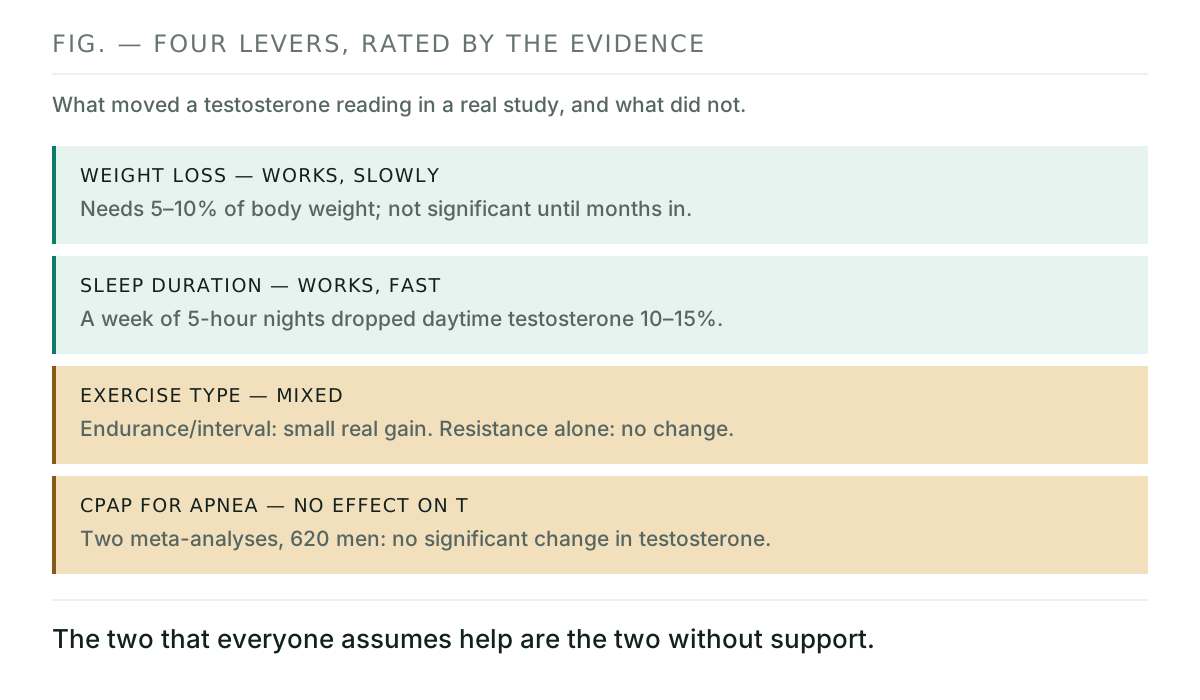
If you want to know how to increase testosterone naturally, two things have real evidence: weight loss and sleep. Weight loss needs 5 to 10 per cent of body weight and takes months to matter; a week of short sleep alone can drop it 10 to 15 per cent. Two things everyone assumes help, lifting weights and CPAP, have not moved the number in the best studies available.
This article is about behaviour, not pills. If you came here looking for zinc, ashwagandha or a branded “booster” blend, that is a separate question with a separate answer, and we cover it on its own page rather than mixing it in here. What follows is what the published evidence says about the things you can do without a prescription or a supplement aisle.
We built this page the way we build every page here: by reading the studies rather than repeating what other sites repeat. Two of the four things on this list turned out to work less well, or more slowly, than the popular version of the advice suggests. One of the four surprised us.
We earn nothing from any of this. There are no affiliate links on this site, nothing here is sponsored, and we do not sell a programme, a device or a supplement, which is why this page can tell you plainly when a popular piece of advice is not backed by what was actually measured.
Weight loss works, but it is a slow lever and a big one
Of everything in this article, weight loss has the most direct support from the guideline itself. The American Urological Association counsels every man with testosterone deficiency on lifestyle modification, and weight is the one it returns to first: losing weight, or maintaining it within a recommended range, along with more physical activity, has the potential to increase total testosterone and reduce symptoms.
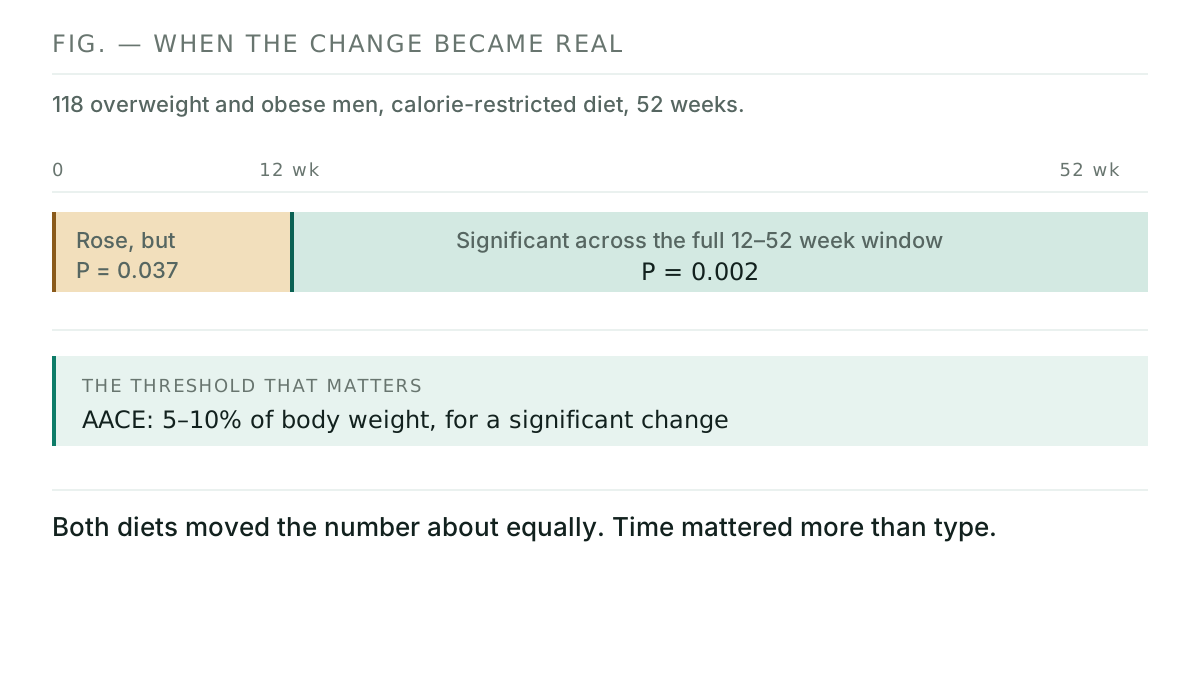
The size of the change needed is the detail almost nobody repeats. The American Association of Clinical Endocrinology, cited directly in the guideline, is specific about it.
The AACE suggests that significant improvements in testosterone levels do not occur until a patient loses 5 to 10 per cent of his body weight. Smaller changes are not the threshold this evidence is built on. Cited in the AUA Testosterone Deficiency Guideline
That is not a small ask, and the guideline does not pretend it is. It also adds an honesty check worth carrying into the rest of this article: clinicians should counsel that lifestyle change is worth doing for overall health regardless, because the testosterone increase alone might not be large enough to be clinically meaningful.
What the actual studies measured, and how long it took
Two studies cited in the guideline put real numbers on this. The first followed 29 morbidly obese men, mean age 31, mean BMI 56.8, before and after gastric bypass surgery. Twenty-two of them had a total testosterone below 300 ng/dL at baseline.
Six months after surgery, total testosterone had increased significantly, and 22 of the 29 men (75.9 per cent) showed a normalised total testosterone level. Cited in the AUA Testosterone Deficiency Guideline, 2016 cohort
Surgery is an extreme case, and most men reading this are not candidates for it. The second study is closer to an ordinary attempt: 118 overweight and obese men with normal baseline testosterone, placed on a calorie-restricted diet, either low-fat/high-protein or low-fat/high-carbohydrate, for 52 weeks.
Both diets raised testosterone about equally — the type of diet did not matter. The timing did. Testosterone increased in the first 12 weeks, but that early change did not reach statistical significance; the improvement only became significant across the full 12-to-52 week window.
If you retest at six weeks and see nothing, that is consistent with the evidence, not a sign it is not working. The studies behind this advice measured change in months, not weeks.
Diet and exercise together beat either one alone
The guideline adds one more finding worth knowing before you choose a method: studies that randomised men to combined diet and exercise produced significantly larger increases in testosterone than either calorie restriction or exercise alone, and men who did quantitatively more exercise tended to see the largest gains. Pairing the two is not a minor optimisation — it is where the better numbers actually came from.
That single finding is worth carrying into the rest of this article, because it comes up again below in a way that contradicts a piece of gym-floor folklore most men have heard stated as fact.
Sleep is not a lifestyle nicety here. It is the fastest lever measured
Testosterone is produced overnight. We have covered elsewhere that peak levels occur around 3 to 8 a.m. and that a large share of the day's decline happens in the first half hour after waking. What has not been covered yet is what happens when the sleep itself is cut short, because a study measured it directly and precisely.
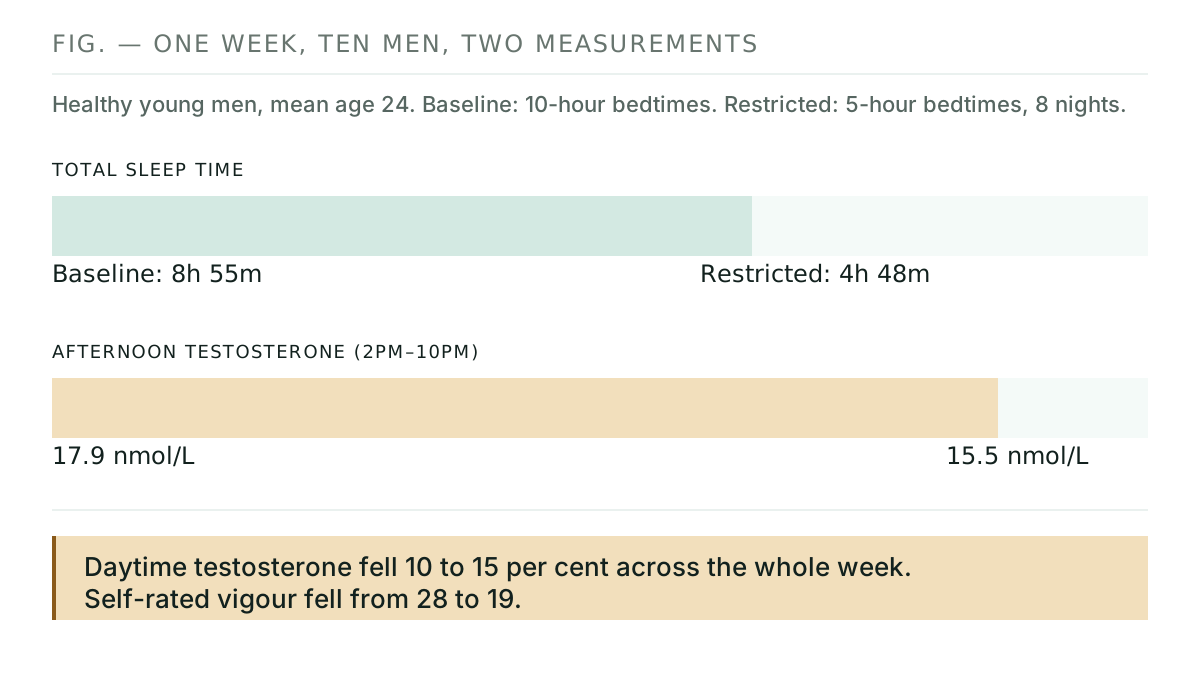
Ten healthy young men, mean age 24, had their total sleep time cut from 8 hours 55 minutes to 4 hours 48 minutes across eight nights of restricted sleep. Daytime testosterone fell 10 to 15 per cent; the afternoon reading dropped from 17.9 to 15.5 nmol/L. Self-rated vigour fell from 28 to 19 over the same week. Leproult & Van Cauter, JAMA, 2011
Set that beside the weight-loss numbers above and the contrast is the point. Losing 5 to 10 per cent of body weight, sustained for months, produces a testosterone change that becomes statistically real somewhere between three months and a year. A week of genuinely short sleep produced a measurable fall inside seven nights, in healthy young men with nothing else wrong.
This is a small study — ten men, one week, a laboratory setting — and it should be read as a demonstration of direction and speed, not as a promise that fixing your sleep will add a precise number of points to your next lab result. But as a lever available tonight, with no cost and no supplement, it is the strongest single piece of evidence in this article.
If sleep itself is the problem — not just staying up too late, but broken or shortened nights you cannot explain — our guide to sleep after 40 sorts that complaint into its five separate causes, because “I sleep badly” is not one problem and does not have one fix.
The exercise that moved the number was not the one you would guess
“Lift weights, raise your testosterone” is close to gospel in fitness content, and it is not what the best available evidence in men over 40 actually found. A 2018 systematic review pooled 22 studies in men aged 60 and over — nine randomised controlled trials and 13 uncontrolled trials — comparing endurance training, resistance training and interval training against resting testosterone.
| Training type | Effect on resting testosterone | Statistically significant? |
|---|---|---|
| Endurance training | Small increase (SDM 0.398) | Yes (P = 0.010) |
| Interval training | Small increase (SDM 0.283) | Yes (P = 0.028) |
| Resistance training | Essentially none (SDM -0.003) | No (P = 0.986) |
Resistance training's effect depended on which fraction of the hormone was measured — free testosterone moved slightly upward, total testosterone barely at all, and bioavailable testosterone trended down, none of it reaching significance. The authors' conclusion is direct: resistance training does not significantly influence basal testosterone in older men, while aerobic and interval training produced small but real increases.
It is about men aged 60 and over, short-term training, and the resting number between sessions — not the well-documented temporary spike testosterone shows immediately after a hard lifting session, and not a reason to stop strength training, which builds muscle and strength for reasons that have nothing to do with this particular hormone.
Read together with the guideline's own finding above — that combined diet and exercise beat either alone, and that doing quantitatively more exercise tracked with bigger gains — the practical read is that doing more, and including some aerobic or interval work, has better support than assuming any single type of workout is the one that counts.
CPAP treats the apnea. It has not been shown to treat the testosterone
This is the assumption we expected to confirm and did not. Untreated sleep apnoea belongs on the list of things that can push a testosterone reading down without the hormone system being at fault — that much is well established, and it is why we tell readers to settle it before testing. What is not established is that treating the apnoea with CPAP reliably brings the number back up.
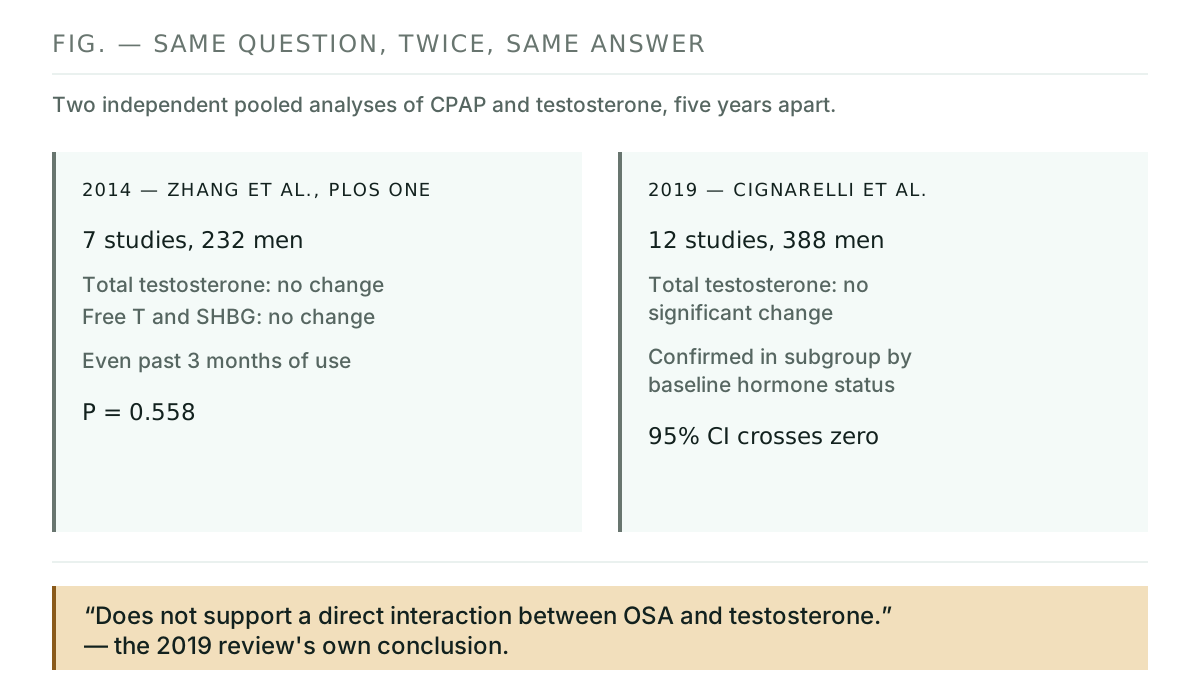
A 2014 meta-analysis of 7 studies and 232 men found no change in total testosterone before and after CPAP treatment, even in men treated for more than 3 months. A 2019 review of 12 studies and 388 men found the same: CPAP use was not associated with a significant change in total testosterone, confirmed in a subgroup analysis by baseline hormone status. Zhang et al., PLOS ONE, 2014; Cignarelli et al., Frontiers in Endocrinology, 2019
The 2019 authors put it plainly: their review does not support the hypothesis of a direct interaction between sleep apnoea and testosterone, and strategies other than CPAP should be considered for managing low testosterone in men with apnoea.
None of this is a reason to skip CPAP if you have been diagnosed with apnoea. It treats oxygen drops during sleep, which matter for the heart, for daytime alertness and for safety, independent of what it does or does not do to a hormone level. It simply is not the lever this specific article is about. If you are not sure whether what you have is apnoea or ordinary snoring, what separates snoring from sleep apnea is the place to start.
A plausible reason, though it is our reading rather than a tested finding
One explanation for why CPAP does not move the number: it corrects oxygen desaturation events, but does not necessarily lengthen total sleep time or restore normal sleep architecture. The sleep-restriction study above suggests duration, not oxygen level alone, may be doing more of the work — though that connection has not been tested directly and is our reading of two separate literatures, not a finding from either one.
What this adds up to, if you want to try before you test again
Put together, the evidence points at a short, honest list rather than a long, hopeful one.
- Treat weight loss as a months-long project, not a weeks-long one, and aim for 5 to 10 per cent of body weight if the goal is a measurable hormone change.
- Fix sleep duration before anything else on this list. It is the fastest-acting item here, and it costs nothing.
- Combine diet and exercise rather than picking one, and do not assume resistance training alone is doing the hormonal work — include some aerobic or interval sessions.
- Treat apnoea with CPAP for the reasons CPAP is actually good for, and do not expect it, alone, to move a testosterone reading.
- Retest on the guideline's own schedule, not your own impatience: two early mornings, the same lab, months rather than weeks after starting a change.
If you try this and the number still will not move, that is useful information, not a failure on your part — it points toward the diagnosis in low testosterone after 40 rather than away from it. And if a supplement is next on your list, we have written that article separately, with the same rule we used here: report what was actually studied, not what the label promises.
Key takeaways
- The AACE says significant testosterone improvement needs 5 to 10 per cent body-weight loss; a 52-week diet study found the increase was not statistically significant until weeks 12 to 52.
- Combined diet and exercise beat either alone in randomised comparisons, and doing quantitatively more exercise tracked with larger gains.
- Eight nights of 5-hour sleep in healthy young men dropped daytime testosterone 10 to 15 per cent — the fastest-acting lever measured in this article.
- In men 60 and over, a 2018 meta-analysis found resistance training did not significantly change resting testosterone (P = 0.986), while endurance and interval training produced small, significant increases.
- Two meta-analyses covering 620 men found CPAP treatment for sleep apnoea was not associated with a significant change in total testosterone.
- CPAP remains the right treatment for apnoea itself — heart, alertness and safety — independent of its lack of measured effect on this specific hormone.
- The guideline's own advice: pursue these changes for overall health regardless, because the testosterone increase alone might not be clinically meaningful on its own.
Where to go from here
This article covers behaviour. These pages cover the diagnosis and the alternative some men consider next:
- Low Testosterone After 40: The Number and What It Means — the guide to the whole subject.
- Low Testosterone Symptoms: Which Ones Actually Point at It — worth reading before you decide anything is “working.”
- The Testosterone Test That Actually Tells You Something — how to retest properly once you have tried something here.
- Sleep After 40: What Changed and What Restores It — if broken sleep, not just short sleep, is the real problem.
- Snoring or Sleep Apnea? What Separates Them — settle this before you test, even though CPAP will not move the hormone reading on its own.
Frequently asked questions
How much weight do I need to lose to increase testosterone?
The AACE, cited in the AUA guideline, says significant improvement does not occur until a patient loses 5 to 10 per cent of body weight. In a 52-week diet study, testosterone rose in the first 12 weeks but the increase was not statistically significant until weeks 12 to 52 — this is a slow lever, not a quick one.
Does poor sleep lower testosterone?
Yes, and the effect is fast. In a study of healthy young men, eight nights of 5-hour sleep dropped daytime testosterone by 10 to 15 per cent, with the afternoon reading falling from 17.9 to 15.5 nmol/L. Total sleep time fell from 8 hours 55 minutes to 4 hours 48 minutes over the same nights.
Does lifting weights increase testosterone?
In the best current evidence, in men aged 60 and over, short-term resistance training did not significantly change resting testosterone. Endurance and interval training did produce small, significant increases in the same review. Resistance training still builds muscle and strength for reasons that do not depend on moving this number.
Does CPAP raise testosterone in men with sleep apnea?
The evidence says no. Two separate meta-analyses, pooling 232 and 388 men with obstructive sleep apnea, both found CPAP treatment was not associated with a significant change in total testosterone. CPAP remains the correct treatment for apnea itself; testosterone specifically is not one of its measured benefits.
Can I raise testosterone naturally instead of taking therapy?
The guideline encourages men with mild deficiency who are overweight or inactive to try low-risk lifestyle changes first, then retest before deciding on therapy. It also states plainly that these changes should be pursued for overall health, because the testosterone increase alone might not be large enough to matter clinically.
Why does diet and exercise together work better than either alone?
Studies that randomised overweight or obese men to combined diet and exercise programmes produced significantly greater increases in total testosterone than calorie restriction or exercise alone. Men who did quantitatively more exercise tended to see the largest increases from their starting point.
Sources
- American Urological Association — Testosterone Deficiency Guideline (Statement 21 discussion, weight-loss and exercise studies)
- Leproult & Van Cauter, JAMA, 2011 — Effect of 1 Week of Sleep Restriction on Testosterone Levels in Young Healthy Men
- Hayes & Elliott, Frontiers in Physiology, 2018 — Short-Term Exercise Training Inconsistently Influences Basal Testosterone in Older Men
- Zhang et al., PLOS ONE, 2014 — Efficacy of Continuous Positive Airway Pressure on Testosterone in Men with Obstructive Sleep Apnea: A Meta-Analysis
- Cignarelli et al., Frontiers in Endocrinology, 2019 — Effects of CPAP on Testosterone Levels in Patients With Obstructive Sleep Apnea: A Meta-Analysis Study

Male Health Guide Editorial Team
We write about the health problems men over 40 actually search for at 3 a.m. — and we say plainly when the evidence for a popular product is thin. We do not invent credentials and we do not publish sponsored copy as editorial. Read more about how we work.
Medical disclaimer: This article is general information about lifestyle factors studied in relation to testosterone and is not medical advice. It is not a substitute for diagnosis or treatment, and it does not replace CPAP or any other prescribed therapy. Please speak to a qualified healthcare professional about your own situation.