Testosterone Gel: Safe Handling and Monitoring Explained

A testosterone gel prescription can look simple: apply it each morning and get on with the day. The details that matter often come afterward, when you shower, hug a child, share skin contact with a partner or arrive for a blood test.
We read the AndroGel 1.62% label, patient instructions and the FDA's newer testosterone updates. This guide focuses on the gel routine and monitoring, including why instructions from a different brand or concentration should not be borrowed.
Short answer
Testosterone gel delivers prescription testosterone through the skin for men being treated for testosterone deficiency. It needs a confirmed diagnosis, product-specific application instructions and follow-up. Gel can transfer to another person's skin, especially a child's or partner's. Blood pressure, blood counts, testosterone levels, prostate assessment and fertility plans belong in the treatment discussion.
Testosterone gel is a delivery method, not a diagnosis
Testosterone gel replaces testosterone through absorption across the skin. Choosing a gel does not establish why a man's level is low or whether treatment will address his symptoms. Diagnosis and treatment goals come first. The formulation is a separate decision that also considers application, household contact and the ability to follow a monitoring plan.
The Endocrine Society's 2018 guideline recommends symptoms and consistently low testosterone results for diagnosing hypogonadism, with repeat morning testing. The prescribing team also needs to consider the cause. One tired week or an isolated laboratory number does not supply that whole assessment.
Our low-testosterone guide covers the broader evaluation. This article starts at the practical point where a gel is being discussed or prescribed. It does not rank treatments, diagnose a hormone problem or promise that replacing testosterone will resolve every change noticed after 40.
Before choosing the formulation, describe an ordinary morning and the people you have close contact with. Ask what the treatment is meant to improve and when that benefit will be reviewed. A product that is easy to obtain still needs to fit your circumstances and your treatment goals.
Keep the diagnostic conversation separate from shopping for a formulation. Questions about a pump, a packet or insurance coverage are reasonable, but they cannot answer why testosterone is low. Ask for a plain explanation of the findings, any further assessment needed and the options being considered before comparing the convenience of different products.
The brand, concentration and application site must match
Testosterone gels differ in strength, approved application areas and instructions. AndroGel 1.62% is applied to clean, dry, intact skin on the shoulders and upper arms; that instruction should not be copied to every gel. Confirm your exact product with the pharmacist, including the prescribed quantity, pump preparation and the interval before washing.
The AndroGel 1.62% label, revised October 2025, specifies avoiding showering, swimming or washing the application area for at least two hours afterward. That is a product-specific example, not a universal two-hour rule. Do not apply it to the genitals or substitute an application site from another formulation.
A photograph of the front label can help when asking a question. Include the concentration, not just the brand. If a refill looks different, have the pharmacy reconcile the instructions before using it. An older bottle's directions should not become the default for a new strength or device.
Ask the pharmacist to demonstrate the device if anything is unclear. A pump's first-use preparation and the amount delivered with each press are not details to estimate from an online video. Do not add gel because yesterday felt disappointing or reduce the quantity because the container seems to be running low.
Preventing skin transfer is part of every application
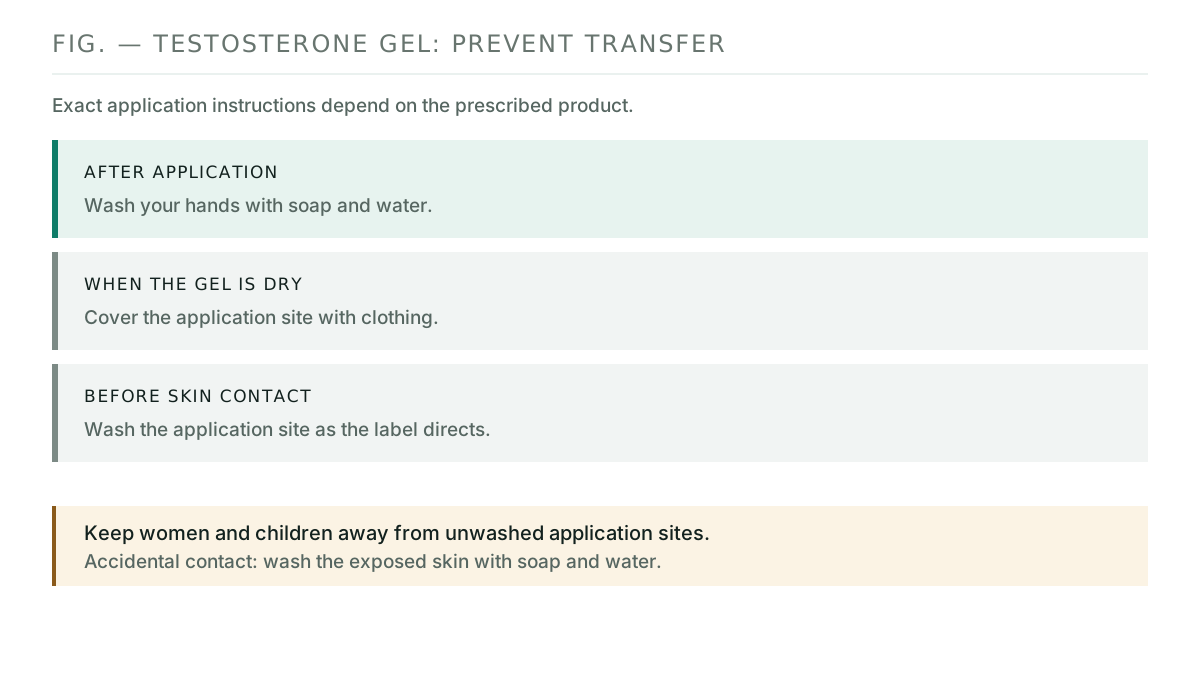
Testosterone gel remaining on treated skin can expose another person through contact. Wash your hands after applying it, allow the gel to dry and cover the area with clothing. Before expected direct skin contact, wash the application area with soap and water. Children and women should avoid unwashed or uncovered treated skin.
MedlinePlus gives these precautions prominent placement because exposure can harm women and children. If contact occurs, the exposed person should wash the affected skin with soap and water as soon as possible. If signs of unintended testosterone exposure appear in another person, contact the clinician promptly. The AndroGel label instructs stopping gel treatment until the cause has been identified.
Those signs can include new body hair or acne in a woman, or genital enlargement, pubic hair or unusual sexual or aggressive behavior in a child. A pregnant partner's exposure needs medical advice. Explain which product was involved and what contact occurred rather than trying to judge the absorbed amount yourself.
Build the instructions into the routine before the first application. Keep the product secure, complete handwashing and covering, and explain the precautions to anyone who needs to know. The point is a repeatable household routine, not an assumption that drying alone removes every transfer risk.
Blood tests and blood pressure checks guide follow-up
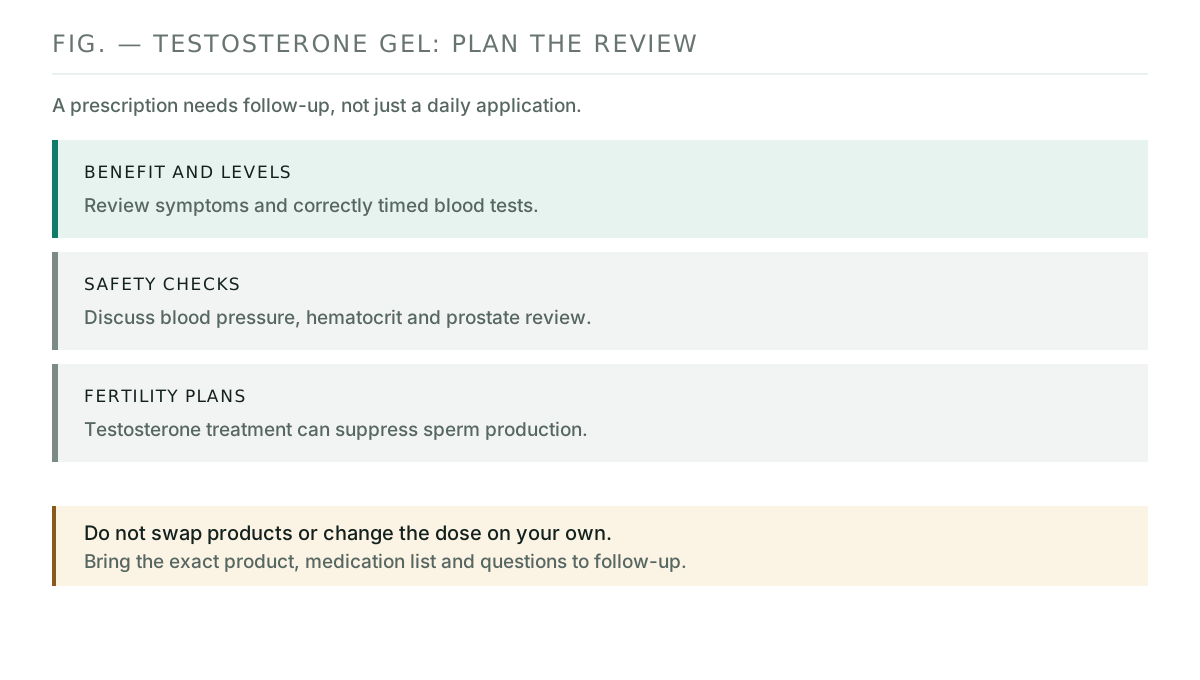
Testosterone gel monitoring should include the treatment response, adverse effects, testosterone concentration and blood count, with blood pressure and prostate assessment as appropriate. Test timing depends on the product. Ask when to apply the gel relative to a blood draw, rather than borrowing a schedule from an injection regimen or another gel.
Hematocrit is the proportion of blood occupied by red blood cells. Testosterone can raise it, so follow-up should include a plan for checking it. Ask who reviews the result and what happens if it becomes too high. Do not arrange your own dose change or blood-removal routine from a number in an article.
The Endocrine Society guideline recommends monitoring symptoms, adverse effects and adherence alongside laboratory measurements. The testosterone testing guide explains why the circumstances around a blood draw matter. Tell the ordering clinician the product name, application time and whether you have missed or changed any doses.
Bring previous results if more than one clinic is involved. A result without the medication history can be difficult to interpret. Ask for the next appointment and test dates in writing so that follow-up is a planned part of care rather than something triggered only when the prescription runs out.
You can also ask how results will reach you. Will the clinic telephone, post a note in the patient portal or discuss them at the next visit? Know whom to contact if a result arrives without an explanation. Having access to a number is useful, but it is not the same as having its clinical interpretation.
Recent FDA changes need their dates kept in view
The FDA announced testosterone labeling changes in February 2025 and requested further updates in June 2026. These are different actions, and an older product label may still display earlier wording. The newer announcements do not remove the need for diagnosis, product-specific instructions, blood pressure monitoring or an individualized discussion of prostate health.
The February 2025 FDA announcement called for removing cardiovascular-outcome language from boxed warnings after review of TRAVERSE, while adding or strengthening blood pressure warnings. Reassuring findings about major cardiovascular outcomes are not the same as saying testosterone cannot raise blood pressure or has no other risks.
The FDA's current testosterone information page says the June 2026 request included removing the age-related hypogonadism limitation and revising prostate cancer and BPH safety information. The AndroGel label consulted here is dated October 2025. We do not present its older limitation as the FDA's latest position.
A request to update labeling does not establish that every manufacturer's document has already changed. Ask the clinician or pharmacist which current instructions apply to your exact product. Prostate history, urinary symptoms and any previous abnormal PSA still deserve an individualized conversation instead of a blanket reassurance or prohibition drawn from a headline.
Fertility plans can change the treatment decision
External testosterone can suppress sperm production, so testosterone gel is not a fertility treatment. Men who hope to have children should discuss that before starting, even when the immediate concern is low testosterone or sexual symptoms. The Endocrine Society recommends against starting testosterone therapy when fertility is planned in the near term.
Do not assume that normal erections, a high testosterone result or feeling better establishes normal sperm production. Tell the prescriber about plans for pregnancy now or later. If you are already using gel and your priorities change, ask for a review rather than stopping, replacing or adding hormones independently.
The TRT overview covers the larger treatment discussion. This gel guide adds a practical point: absorption through the skin does not make the hormone local-only. A medicine applied outside the body can still affect hormone signaling and reproductive function inside it.
A useful question is, "Does my fertility plan change whether I should start this treatment, and should I see a reproductive specialist?" Have that conversation before committing to a routine. It is easier to include the right evaluation at the beginning than to discover later that an important goal was never discussed.
New symptoms need attention beyond the skin
Testosterone gel can cause skin irritation and other adverse effects, including increased blood pressure or red blood cell levels. New swelling, urinary changes, breathing problems during sleep or breast changes need review. Chest pain, sudden shortness of breath or stroke symptoms require emergency care rather than waiting for a routine testosterone appointment.
The medicine review should include existing sleep apnea, cardiovascular problems and all other treatments. Tell the team about diabetes medicines, blood thinners and corticosteroids, because the AndroGel label identifies interactions or monitoring issues. The pharmacist needs the full list, including occasional products, not only the medicines you associate with hormone treatment.
Do not use a longer list of potential effects as a forecast that all of them will happen. It is a guide to what should be discussed and reported. Note what changed, when it began and whether anything else changed at the same time. The clinical assessment can then consider causes and the appropriate next step.
Include changes that seem embarrassing or unrelated. A new breast lump, troublesome acne or a worsening urinary problem may otherwise be left out of a short appointment. You do not need to prove the gel caused a symptom before bringing it to the clinician's attention.
MedlinePlus lists a painful, swollen, warm or red lower leg among symptoms needing immediate medical contact. When symptoms suggest immediate danger, such as chest pain with sudden breathlessness or stroke signs, seek emergency care. A normal result at the previous review is not a reason to ignore a new urgent problem.
The gel is also flammable until dry. Stay away from flames and smoking while applying it and until it has dried fully. Safe use includes this ordinary handling detail as well as the laboratory plan; neither replaces the other.
For the wider discussion, see testosterone side effects. Bring specific questions back to the prescribing team. Internet comparisons cannot determine whether a symptom is a reaction, whether another condition needs assessment or which change is safe for you.
A useful review checks whether the gel fits real life
A testosterone gel review should check whether the intended symptoms improved, whether monitoring is current and whether application and transfer precautions are workable. Normalizing a blood result is not the only goal. If benefit is unclear or the routine creates difficulties, discuss the findings with the prescriber rather than changing formulations or quantities yourself.
Start with the goals agreed at the first appointment. What has improved, what has stayed the same and what has become harder? This is more useful than comparing your prescription with someone else's or judging treatment from a single good or bad morning.
Be honest about missed applications and practical problems. Perhaps your working day makes timing difficult, you have questions about showering, or a refill device is confusing. Those details belong in the review. They help the clinician distinguish an unsuitable routine from an unexplained laboratory result or an insufficient treatment benefit.
If you forget a dose, use the instructions for your product or ask the pharmacist. MedlinePlus advises against applying a double dose to make up for a missed one. Do not compensate by using a larger area, an extra pump press or another testosterone product.
A change to an injection, another gel or another concentration needs new directions. Ask whether application timing, blood testing and contact precautions will change. Familiarity with one product can otherwise make it easy to overlook a difference that matters with the next one.
| Bring to the review | Question to ask |
|---|---|
| The exact product and concentration | Do my written instructions match this refill? |
| Symptoms and any new problems | Is the intended benefit clear enough to continue? |
| Application and test times | Were the results collected under the right conditions? |
| Household contact and fertility plans | Does the routine still fit my circumstances? |
Before leaving, confirm the next review date, the tests needed and the contact route for questions or side effects. A repeat prescription should not silently replace reassessment. The useful plan is one you understand well enough to follow and the team can review with you over time.
Key takeaways
- Testosterone gel requires a diagnosis and treatment goals; it is not a diagnosis based on age or fatigue alone.
- Brand and concentration determine application areas, device instructions and washing intervals.
- Handwashing, covering treated skin and washing before direct contact reduce secondary exposure risk.
- Monitoring includes treatment response, testosterone, blood count, blood pressure and an appropriate prostate discussion.
- The FDA's June 2026 update request is newer than the October 2025 AndroGel label consulted here.
- Discuss fertility before treatment because external testosterone can suppress sperm production.
Where to go from here
These pages cover the surrounding ground:
- Low testosterone after 40 — the diagnostic and treatment pathway.
- TRT explained — the larger discussion of testosterone replacement.
- Testosterone testing — why timing and repeat measurements matter.
- Testosterone side effects — the wider safety conversation.
- All testosterone articles
Frequently asked questions
What is testosterone gel used for?
Testosterone gel delivers prescription testosterone through the skin for men being treated for testosterone deficiency. The choice needs a diagnosis, discussion of symptoms and a monitoring plan. A gel is one delivery method, not a general treatment for every change after forty or a reason to start testosterone from one laboratory result.
Can testosterone gel transfer to my partner or child?
Yes. Testosterone remaining on treated skin can expose another person. Wash your hands after application, let the gel dry and cover the area. Wash the application site before expected direct skin contact. If exposure occurs, the other person should wash the affected skin promptly and seek advice about possible exposure symptoms.
Where should AndroGel 1.62 percent be applied?
The consulted AndroGel 1.62% label specifies clean, dry, intact skin of the shoulders and upper arms. It says to avoid washing the application area, showering or swimming for at least two hours. Other products may differ. Confirm the exact brand and concentration with the pharmacist instead of copying these instructions to another gel.
Does testosterone gel affect fertility?
External testosterone can suppress sperm production, including when delivered as a gel. It is not a fertility treatment. Tell the prescriber before starting if you hope to have children. The Endocrine Society recommends against starting testosterone therapy when fertility is planned soon; discuss an appropriate evaluation rather than adding or changing hormones yourself.
What monitoring is needed while using testosterone gel?
Monitoring should assess symptoms, adverse effects, testosterone levels and blood count, plus blood pressure and prostate assessment as appropriate. Blood draw timing depends on the product and prescribing plan. Tell the clinician when you applied the gel and about missed doses. Do not change the quantity from a laboratory result without advice.
Did the FDA remove all testosterone safety warnings?
No. The February 2025 action removed cardiovascular-outcome boxed-warning language while adding or strengthening blood pressure warnings. In June 2026, FDA requested further updates concerning age-related hypogonadism and prostate safety information. These actions do not remove transfer precautions or the need for diagnosis, individualized risk assessment and continuing monitoring during treatment.
Sources
- DailyMed / ASCEND Therapeutics — AndroGel 1.62% prescribing information, revised October 2025; relevant sections read
- MedlinePlus — Testosterone Topical: transfer precautions, instructions and adverse effects
- FDA — Testosterone Information: June 2026 requested labeling updates
- FDA — February 28, 2025 class-wide labeling changes, including blood pressure warnings
- Endocrine Society — 2018 guideline resource: diagnosis, fertility and monitoring recommendations

Male Health Guide Editorial Team
We write about the health problems men over 40 actually search for at 3 a.m. — and we say plainly when the evidence for a popular product is thin. We do not invent credentials and we do not publish sponsored copy as editorial. Read more about how we work.
Medical disclaimer: This article is general information, not medical advice. We are not doctors, and nothing here diagnoses, treats or cures any condition. This article explains product instructions and evidence, not whether testosterone is suitable for you. Do not start, stop, combine or change testosterone products without your prescribing clinician. Seek emergency care for chest pain, sudden breathlessness, stroke symptoms or another immediate danger.